Brush insert vs Micro-mesh
Brush inserts cost $200 to $800 and micro-mesh $1,800 to $4,500. How the two compare on debris type, flow, maintenance and payback.
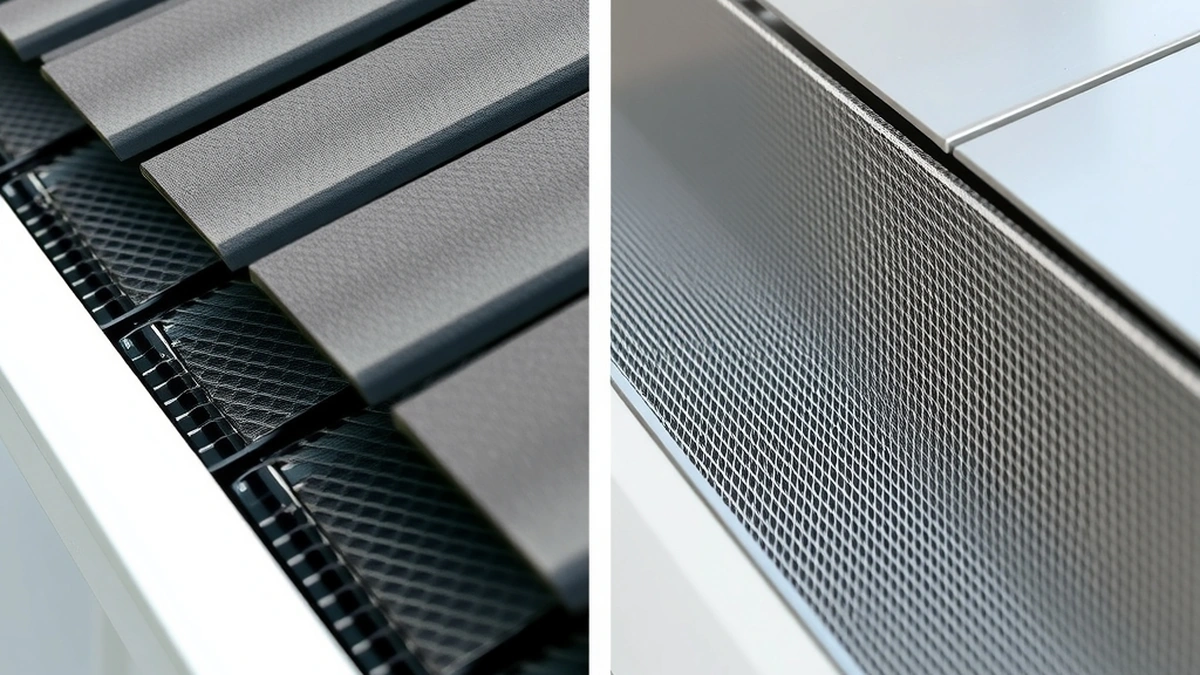
A brush insert costs $200 to $800 installed and holds back coarse leaves only; micro-mesh costs $1,800 to $4,500 and stops needles and grit too. If your debris is fine, the extra spend is the whole difference.
- Brush insert, 200 ft
- $200–$800
- Micro-mesh, 200 ft
- $1,800–$4,500
- Gap at 200 ft
- $1,000–$4,300
- Cleaning per visit
- $150–$400
Some links on this page are affiliate links.If you buy through them we may earn a commission at no extra cost to you. We do not accept payment for rankings. Read the full disclosure.
Brush insert versus micro-mesh is a $200 to $800 product against an $1,800 to $4,500 one, and the price gap is almost entirely about aperture. A brush insert has no aperture at all: it is a bundle of bristles with irregular gaps that pass anything narrow. Micro-mesh is a screen with pores small enough to hold pine needles and shingle grit on the surface.
What Each Product Is
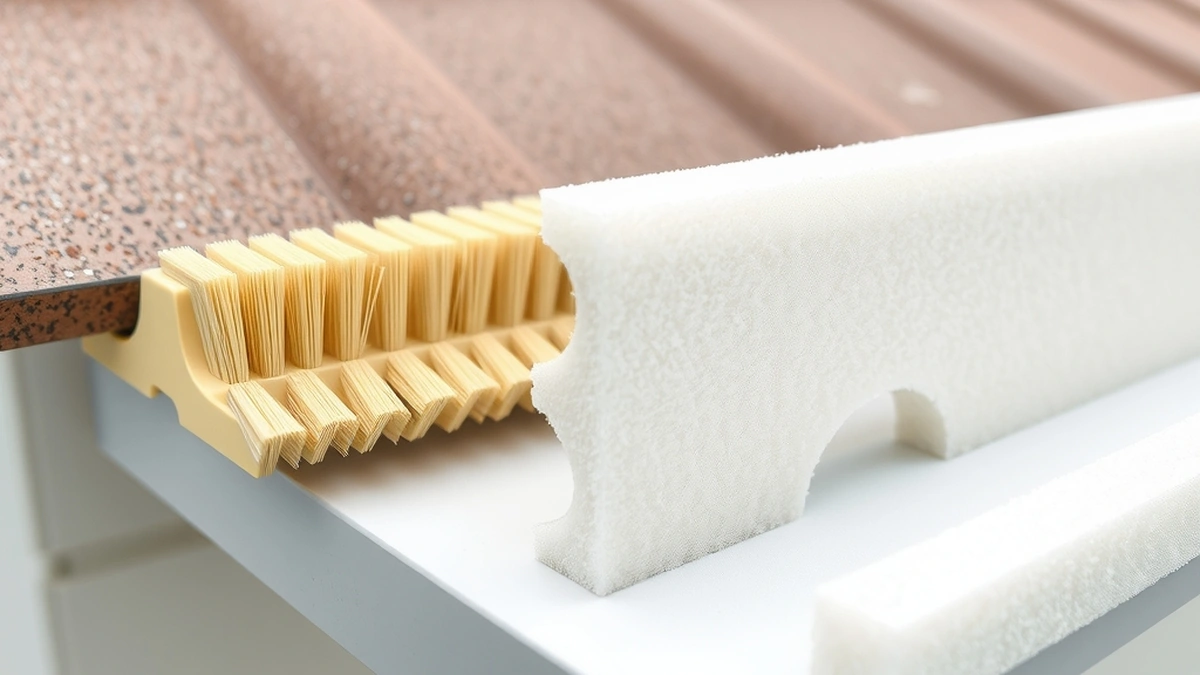
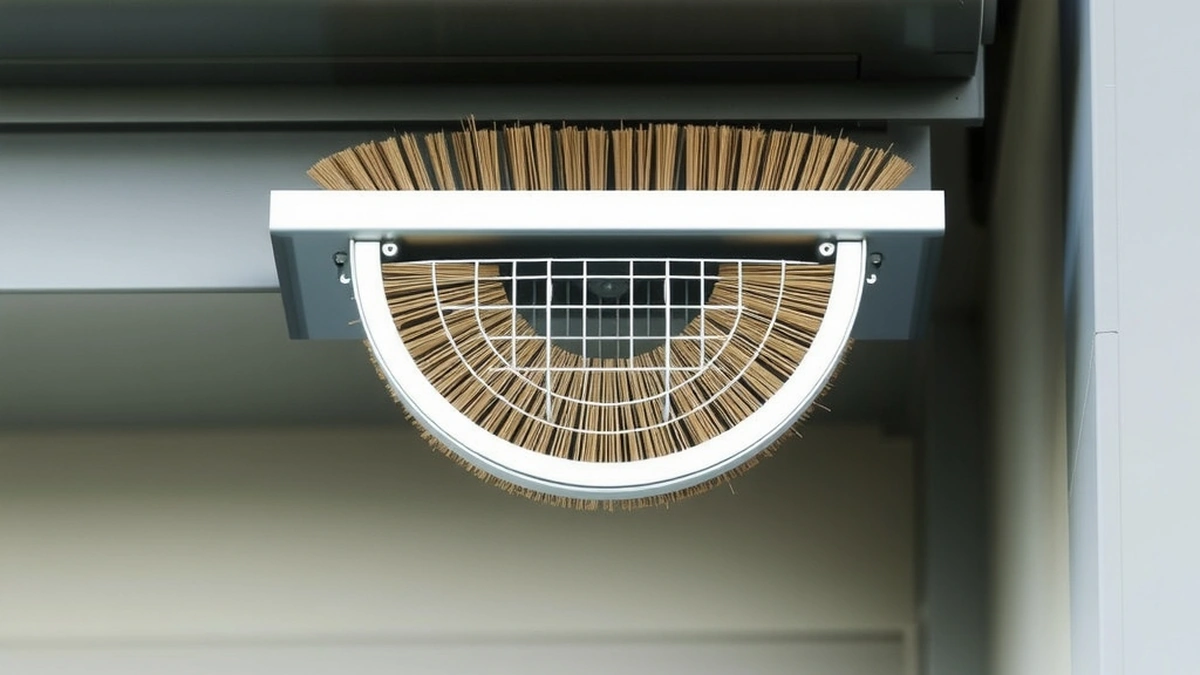
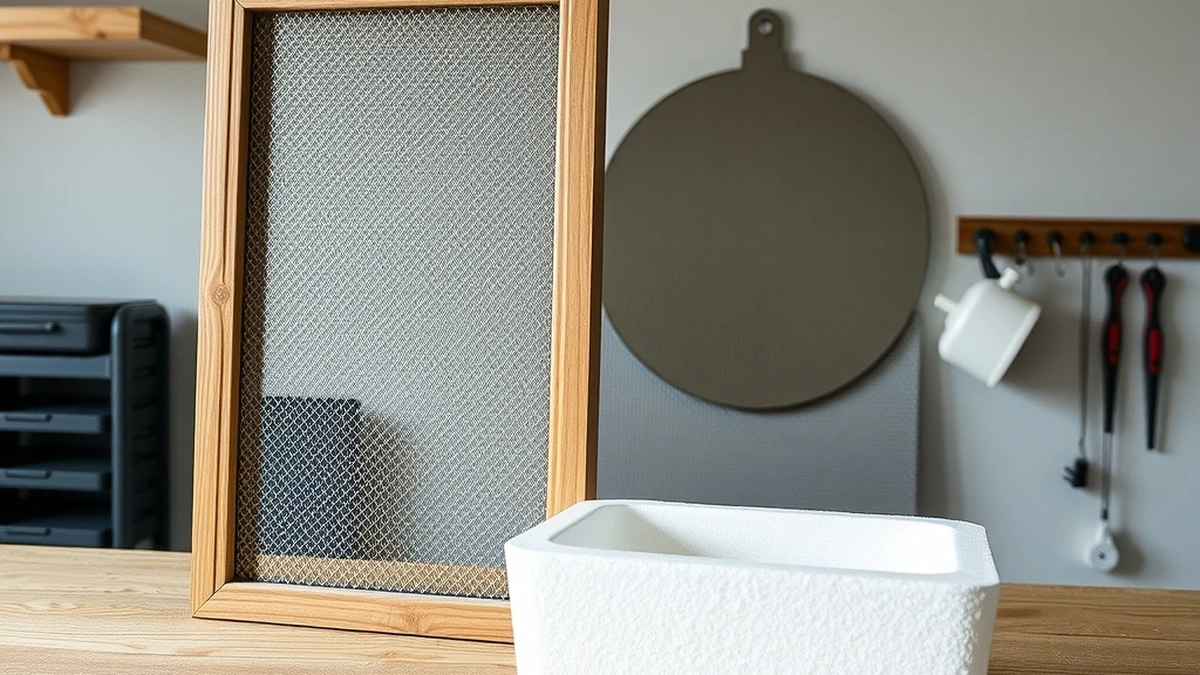
A brush gutter insert is a cylinder of stiff polypropylene bristles, 3 to 4 inches across, laid end to end inside the gutter trough. Water threads between the fibers; coarse leaves rest on top. A micro-mesh guard is a panel of fine stainless or coated mesh on a metal frame, fixed over the gutter opening, with apertures generally under a millimeter.
The numbers frame the comparison. Brush or foam inserts installed run $200 to $800 on a typical home. Micro-mesh runs $1,800 to $4,500. A DIY screen sits between at $300 to $900, reverse-curve at $2,000 to $5,000, and dealer-sold systems at $3,000 to $8,000. Cleaning, the cost both products are meant to reduce, is $150 to $400 per visit.
How Each One Separates Debris
The brush relies on physical obstruction. A leaf wider than the gap between two bristles cannot pass, so it sits on the bundle until it dries and is blown or brushed off. There is no filter, and the effective gap varies along the length as the bristles compress and relax.
The mesh relies on pore size. Water reaches the panel, spreads across the weave, and drains through openings too small for needles to follow. Debris accumulates on the surface, where it dries and can be cleared with a brush.
That difference determines which debris each product handles. The brush stops whole leaves, twigs and seed pods. The mesh stops those plus needles, grit, catkins and leaf fragments. Neither stops silt, pollen or dissolved dirt, all of which reach the trough eventually.
Head to Head
| Spec | Brush insert | Micro-mesh |
|---|---|---|
| Installed, 200 ft | $200–$800 | $1,800–$4,500 |
| Cost per linear foot | $1.00–$4.00 | $9.00–$22.50 |
| Aperture | None; irregular bristle gaps | Under 1 mm |
| Coarse leaves | Held | Held |
| Pine needles | Pass through | Held |
| Shingle grit | Passes through | Mostly held |
| Flow in heavy rain | Reduced by bristle mass | Near-full opening |
| Fasteners | None | Frame clipped or screwed |
| Cleaning method | Lift out and rinse | Brush or rinse the surface |
| Repair path | Replace the section | Replace a panel or refasten |
Flow Capacity
This is the underrated difference. A 5-inch K-style gutter has a fixed cross-section, and a 3-inch brush sitting inside it removes a large share of the open area. Water still passes, but it passes slowly, and in a storm that delivers an inch in twenty minutes the insert becomes the constraint.
A micro-mesh panel sits above the opening rather than inside it, so the trough keeps its full capacity. Its own limit is different: when the panel is partly covered in wet debris, water sheets over the front edge instead of draining through. Both products can overflow, but they overflow for different reasons, and only one of them is fixed by clearing the surface.
Maintenance Load
Brush insert upkeep is a lift, rinse and scoop, once or twice a year, because fines that passed the bristles are sitting on the gutter floor underneath. Micro-mesh upkeep is a surface clear, because most of what the panel catches stays on top where it can be reached.
In labor terms the mesh job is shorter. In cash terms both are usually hired at $150 to $400 a visit, and the mesh system reduces the volume of debris to be removed rather than removing the visit.
Where the Brush Insert Wins
The brush is the right buy in a narrow but real set of cases:
- A short run, under 80 feet, where the per-foot cost of mesh is hard to justify.
- Broadleaf debris only, with no conifers and no aging shingle roof.
- A rental or a house being sold, where a cheap barrier is enough.
- A first season of data gathering, to see what actually lands on the roof.
Outside those cases the insert is a stopgap. The brush insert problems page sets out what happens in year two under a needle load, and it is not subtle.
Making the Choice
- Note the debris on the roof edge in late fall: whole leaves, needles, grit, or a mix.
- Measure the run and price both products per linear foot, using $1.00 to $4.00 for brush and $9.00 to $22.50 for mesh.
- Multiply the difference by the annual cleaning bill you are trying to avoid, at $150 to $400 a visit.
- If the debris includes needles or grit, skip the brush and price mesh.
- If the debris is coarse and the run is short, buy the brush and plan on annual lifting.
The micro-mesh gutter guard guide covers the installation and aperture detail, and reverse-curve vs micro-mesh covers the other half of the mesh comparison. For the overall budget picture see gutter guard cost and brush insert cost.
Bottom Line
Brush insert versus micro-mesh comes down to one question: does your debris include anything narrow enough to slip between bristles? If yes, the $200 to $800 product does not solve your problem and the $1,800 to $4,500 one does. If no, the brush insert is a defensible cheap barrier and the mesh system is a convenience purchase. Pay for aperture only if you have the debris that needs it.
Frequently asked questions
Is micro-mesh worth $1,600 more than a brush insert?
It is worth it where pine needles, shingle grit or seed pods are the debris load, because those pass straight between brush bristles and settle in the trough. Where the debris is broad leaves, the brush insert performs a similar job for a fraction of the price.
Do brush inserts block pine needles?
No. The gaps between bristles are wide and irregular, and needles slip through with the water. A micro-mesh aperture narrow enough to hold needles is the only one of the two that addresses them.
Which one lasts longer?
Micro-mesh systems are built from stainless or coated mesh on a metal frame and are sold as long-life products, while brush inserts are consumable bristle cylinders that flatten, go brittle and need replacing. The brush is the cheaper product in both directions.
Which handles heavy rain better?
Micro-mesh, generally. A mesh panel keeps most of the gutter's opening clear, whereas a 3-inch brush inside a 5-inch trough occupies a large share of the cross-section and can throttle flow in a downpour.
Can I start with brush inserts and upgrade later?
You can, but the insert has to be lifted out and discarded or reused on another run, and the cost of the first product is not credited against the second. Treat the $200 to $800 as a trial, not a deposit.
Which one needs more cleaning?
Both need surface clearing. Micro-mesh holds needles and grit on top where they can be brushed off, while a brush insert passes fines into the trough, so the micro-mesh cleaning is faster and the brush cleaning is dirtier.
Sources
Some links are affiliate links.If you buy through them we may earn a commission at no extra cost to you. We do not accept payment for rankings. Read the full disclosure.