Foam insert vs micro-mesh: which is worth the money
Foam inserts cost $200 to $800; micro-mesh costs $1,800 to $4,500. Compare per-foot price, debris performance, lifespan, and payback before you buy.
Foam inserts run $200 to $800 installed, or $1 to $4 per linear foot on a 200-foot house. Micro-mesh runs $1,800 to $4,500, or $9 to $22.50 per foot. Foam is a short-term block against coarse debris; micro-mesh is a filtration system that lasts a decade.
- Foam insert installed
- $200 - $800
- Micro-mesh installed
- $1,800 - $4,500
- Per foot, 200 ft house
- $1 - $4 vs $9 - $22.50
- Expected life
- 2-4 years vs 10-15 years
Some links on this page are affiliate links.If you buy through them we may earn a commission at no extra cost to you. We do not accept payment for rankings. Read the full disclosure.
Foam inserts cost $200 to $800 installed on a typical house. Micro-mesh costs $1,800 to $4,500. On a 200-foot run that is $1 to $4 per linear foot against $9 to $22.50, so the micro-mesh quote is six to nine times the foam quote at the low ends of both ranges. The two are not competing at the same job, and the price gap is the honest place to start.
Two products doing different work
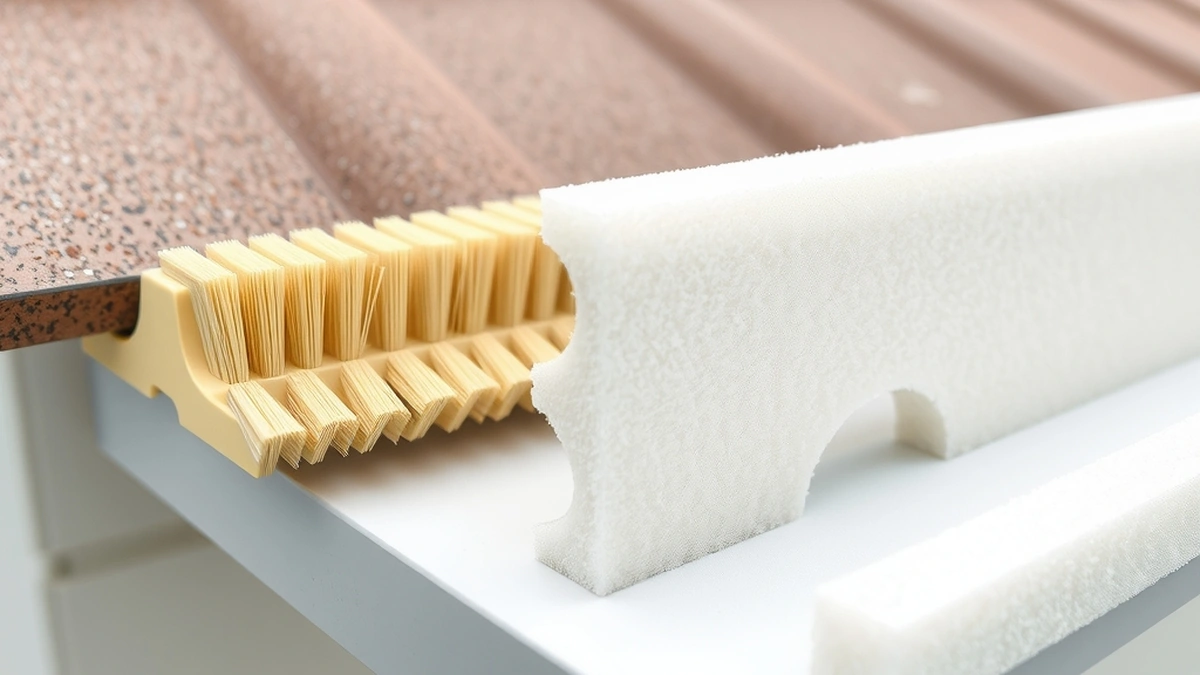
A foam insert is a shaped polyurethane or polyethylene block that sits inside the gutter trough. Water is meant to run over the top and through the pores while leaves stay on the surface. It is a displacement product: it fills the channel so debris cannot settle into it.
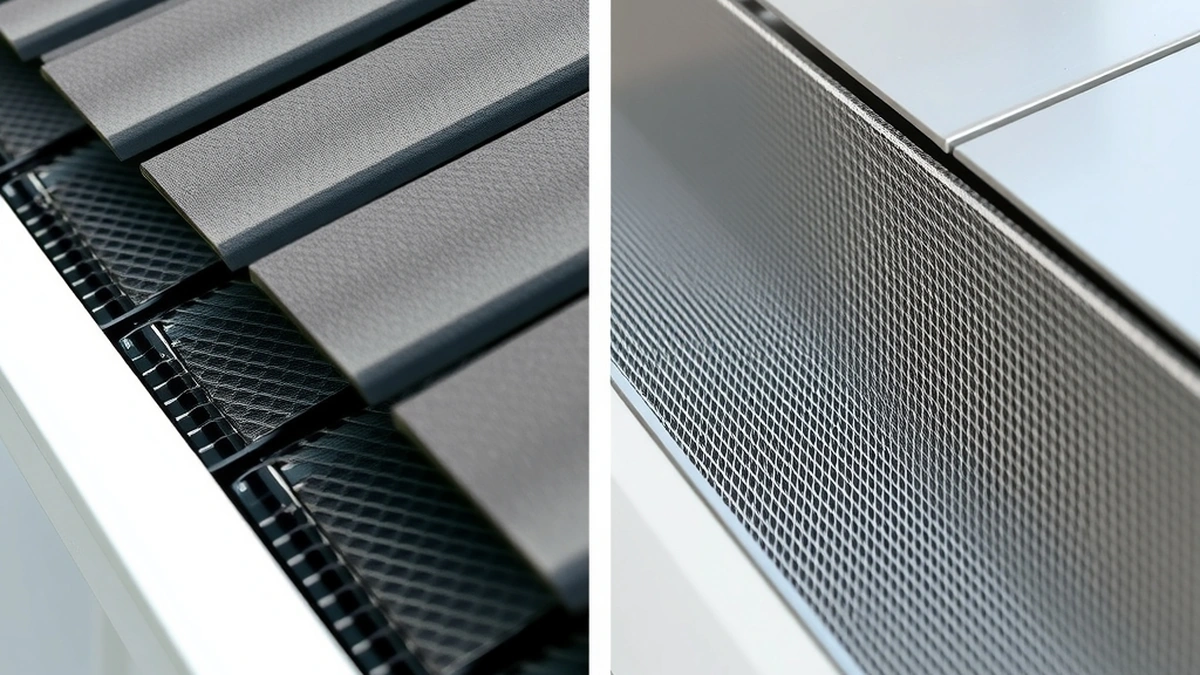
Micro-mesh is a filtration system. A woven stainless or coated wire cloth with an aperture under a millimeter is bonded to an aluminium frame, and the panel is fastened over the gutter opening. Water passes through the mesh; debris sheds off the top and blows away.
That difference in mechanism explains almost everything else, including price. Foam is a cut-to-length block with no frame, no fasteners, and no fitting. Micro-mesh is a fabricated panel that has to be measured, mitered at corners, and fixed to the building.
The price gap, with the arithmetic
| Item | Foam insert | Micro-mesh |
|---|---|---|
| Installed, typical house | $200 - $800 | $1,800 - $4,500 |
| Per foot at 200 ft | $1.00 - $4.00 | $9.00 - $22.50 |
| Per foot at 150 ft | $1.33 - $5.33 | $12.00 - $30.00 |
| Material share of price | High | Low |
| Labour share of price | Low | High |
The per-foot figures are plain division. Foam at 200 feet: $200 ÷ 200 = $1.00, and $800 ÷ 200 = $4.00. Micro-mesh at the same length: $1,800 ÷ 200 = $9.00, and $4,500 ÷ 200 = $22.50. At 150 feet the totals do not change, so the rate rises: $200 ÷ 150 = $1.33 and $1,800 ÷ 150 = $12.00.
The ratio at the midpoint is about six to one. That is not a markup on the same product. It is the cost of a rigid frame, a stainless cloth, fasteners, and a crew that knows how to fit corners on a roof.
Performance, honestly compared
| Test | Foam insert | Micro-mesh |
|---|---|---|
| Coarse leaves | Blocks well until saturated | Sheds off the top |
| Pine needles | Packs into pores | Sheds, stays clear |
| Shingle grit | Passes into gutter | Traps at the surface |
| Water flow in a downpour | Slows as pores clog | High, by design |
| Ice and snow load | Holds water, freezes | Sheds, but can ice over |
| Cleaning method | Pull out and rinse | Brush the surface |
| Expected life | 2 - 4 years | 10 - 15 years |
Foam’s weakness is that it is a sponge with good intentions. Once the pores load with grit and pollen, water stops passing and starts running over the front lip, which is the same overflow you were trying to prevent. In a climate with heavy spring pollen, an insert can be ineffective by June.
Micro-mesh’s weakness is installation quality. A panel that is not fastened flat, or a gutter that is already pitched the wrong way, will produce a waterfall at the low end. The product is not self-correcting.
Where foam is the right buy
Foam makes sense in four situations. You are renting and want a cheap fix. The debris is coarse and light, such as maple leaves on a short run. The gutter is a temporary arrangement, like a shed or a garage. Or you want to test whether a guard changes anything before spending six to nine times more.
At $200 to $800 it is also the only guard most people can install on a Saturday without a second pair of hands. Cut it with a utility knife, press it into the trough, and it is done.
Where micro-mesh earns its price
Micro-mesh earns the money where debris is fine and the cleaning bill is real. Professional gutter cleaning runs $150 to $400 per visit, so twice a year is $300 to $800. At the low end of the mesh range, $1,800 ÷ $800 = 2.25 years to break even on cleaning; at the high end, $4,500 ÷ $300 = 15 years.
That spread is the whole argument. On a house with heavy tree cover and paid cleaning, the system pays for itself inside three years. On a house with one maple and a homeowner who cleans the gutters himself, it never pays back in cash, only in ladder trips avoided.
Six steps to choose
- Measure the actual gutter run in linear feet, not the house footprint.
- Multiply by the per-foot rate for each product at that length, not at 200 feet.
- Note what falls on the roof. Coarse leaves favour foam; needles, grit, and seed pods favour mesh.
- Check the gutter’s pitch and hangers. Neither product fixes a trough that drains backwards.
- Add the annual cleaning bill you actually pay, then divide the purchase price by it.
- If the answer is under three years, buy the mesh. If it is over ten, buy the foam and accept the maintenance.
For the full price structure behind both numbers, see foam insert cost and micro-mesh cost. The broader per-foot comparison across all five guard types is in gutter guard cost.
The short version
Foam is a $200 to $800 consumable that buys a season or two of easier cleaning. Micro-mesh is a $1,800 to $4,500 installation that buys a decade. Buy foam when the run is short, the debris is coarse, or the budget is the binding constraint. Buy mesh when needles and grit are the problem, the gutters are sound, and you are already paying someone $300 to $800 a year to climb a ladder.
The mistake to avoid is buying foam for a needle problem and then buying mesh two years later. That path costs $200 to $800 more than going straight to mesh, and it puts you on the roof twice.
Frequently asked questions
Is foam better than micro-mesh?
Only on price and speed. Foam costs $200 to $800 against $1,800 to $4,500 for micro-mesh, but it blocks debris rather than filtering water, so it needs pulling out and rinsing several times a year.
Which one lasts longer?
Micro-mesh, by a wide margin. Foam degrades under UV and holds moisture, so most inserts are spent within two to four years. A framed stainless mesh panel is commonly rated for ten to fifteen years.
Do foam inserts cause rust or rot?
They can trap water against the gutter floor, which keeps the trough wet long after rain. On steel gutters that promotes corrosion, and the trapped grit turns into a growing medium for moss and algae.
Can micro-mesh handle a heavy storm?
Yes, if the roof pitch and gutter sizing are right. The mesh passes a high volume of water and sheds leaves off the top. The failure mode is a gutter that was already undersized, not the panel itself.
What is the price difference on a 150-foot house?
Foam is $1.33 to $5.33 per foot at 150 feet, so $200 to $800 total. Micro-mesh at the same length is $12 to $30 per foot, or $1,800 to $4,500 total, because the job minimum is spread over fewer feet.
Which is better for pine needles?
Micro-mesh. A foam block lets needles work into the pores and mat on the surface, and they are difficult to rinse out. A mesh aperture under a millimeter sheds needles off the panel instead of catching them.
Sources
Some links are affiliate links.If you buy through them we may earn a commission at no extra cost to you. We do not accept payment for rankings. Read the full disclosure.