Micro-mesh vs foam insert: filtration or displacement
Foam inserts cost $200 to $800 and displace debris; micro-mesh costs $1,800 to $4,500 and filters it. Compare lifespan, moisture, and cost per year.
Foam inserts cost $200 to $800, last two to four years, and displace debris in the trough. Micro-mesh costs $1,800 to $4,500, lasts ten to fifteen, and filters at the surface. Foam is cheap and wet; mesh is expensive and dry.
- Foam insert
- $200 - $800
- Micro-mesh
- $1,800 - $4,500
- Per foot at 200 ft
- $1 - $4 vs $9 - $22.50
- Lifespan
- 2 - 4 years vs 10 - 15 years
Some links on this page are affiliate links.If you buy through them we may earn a commission at no extra cost to you. We do not accept payment for rankings. Read the full disclosure.
A foam insert costs $200 to $800 and works by filling the gutter so leaves cannot settle. Micro-mesh costs $1,800 to $4,500 and works by filtering water at the surface while debris stays on top. The price gap is five to nine times at 200 feet, and the practical gap is that one product keeps the trough dry and the other keeps it wet.
The two mechanisms
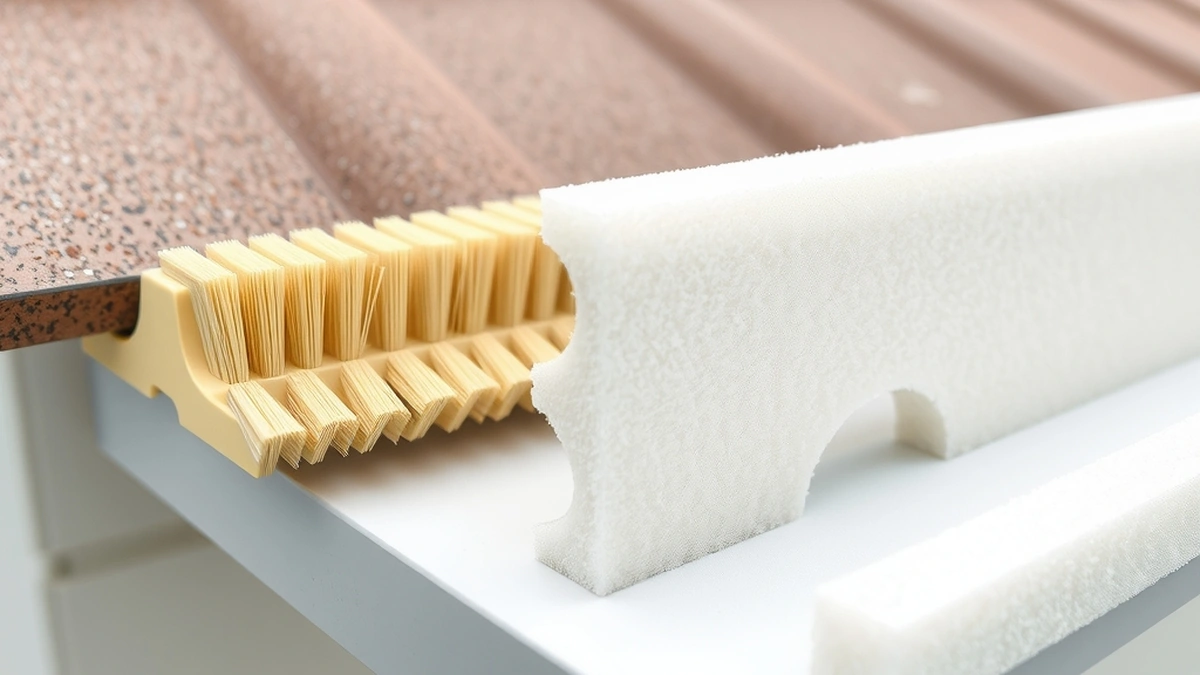
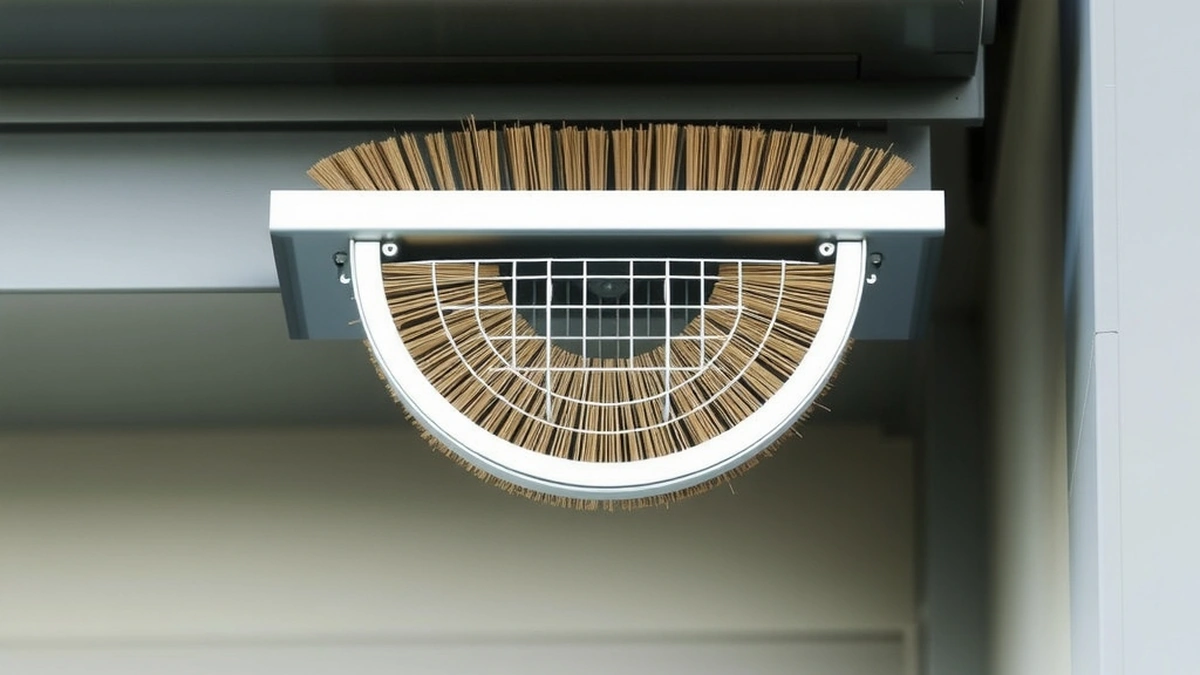
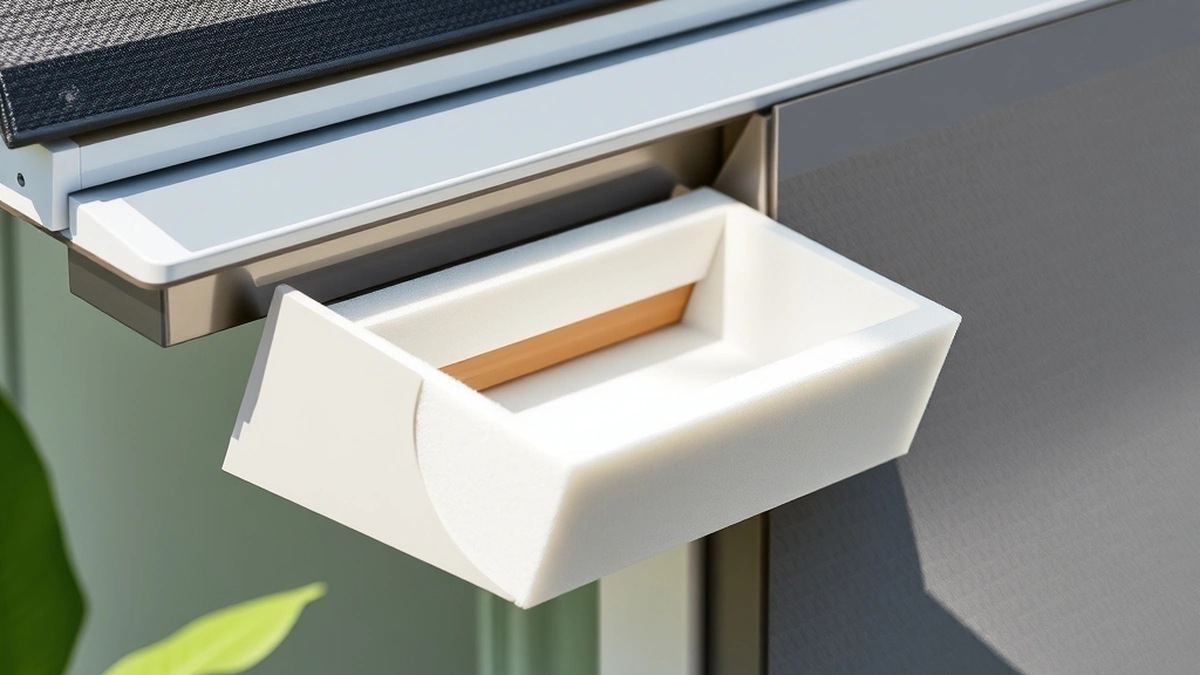
Foam is displacement. A shaped polyurethane block sits in the channel, water passes through the open cells, and debris rests on the top surface instead of sinking into the trough.
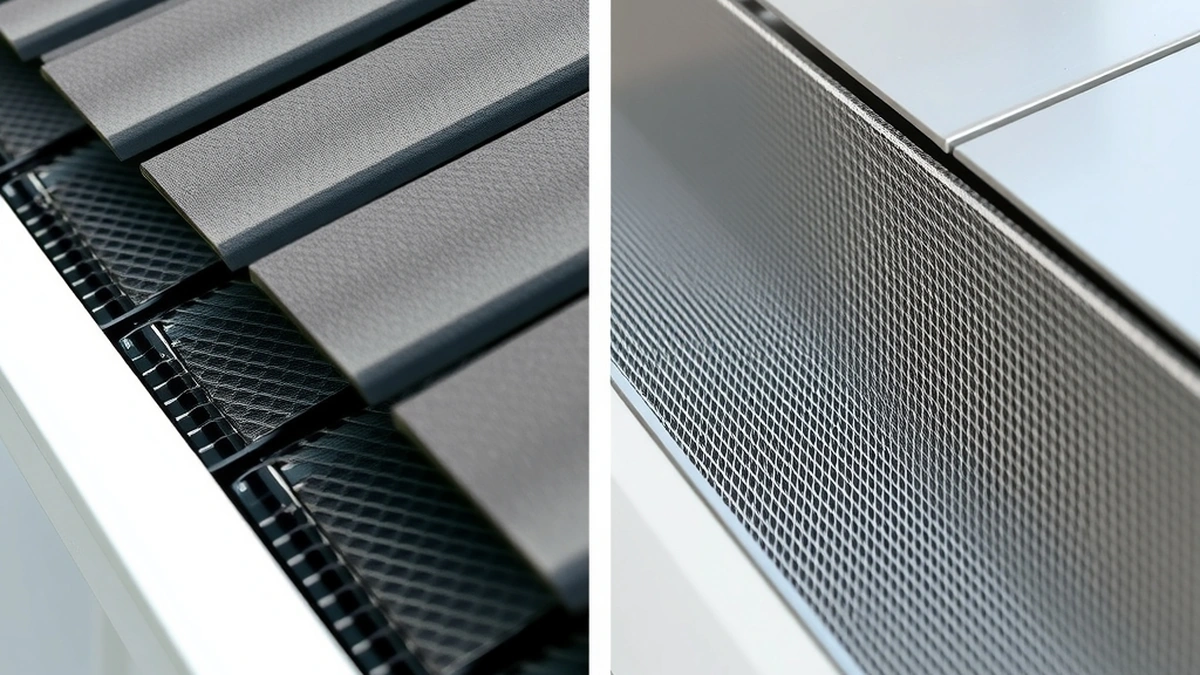
Micro-mesh is filtration. A stainless cloth with a sub-millimetre aperture is bonded into a frame and fastened over the opening. Water passes through the cloth, debris does not, and the trough below stays empty.
Both keep leaves out of the gutter. They differ in what happens when the debris is smaller than a leaf, and in what the trough looks like after a year.
Price and life, with the arithmetic
| Item | Foam insert | Micro-mesh |
|---|---|---|
| Installed | $200 - $800 | $1,800 - $4,500 |
| Per foot at 200 ft | $1.00 - $4.00 | $9.00 - $22.50 |
| Expected life | 2 - 4 years | 10 - 15 years |
| Cost per year | $50 - $400 | $120 - $450 |
| Replacements in 12 years | 3 - 6 | 0 - 1 |
| Cleaning per year | 2 - 4 rinses | 1 - 2 brushes |
The per-year figures are division. Foam at its best is $200 ÷ 4 = $50 per year. At its worst it is $800 ÷ 2 = $400. Mesh runs from $1,800 ÷ 15 = $120 to $4,500 ÷ 10 = $450.
The best-case foam number is the lowest cost per year of any guard, and it is real. The catch is that it requires the cheapest insert, the longest life, and no paid labour to achieve.
Moisture is the deciding difference
A foam insert sits in the water path. After rain it stays saturated for days, and the grit it traps stays wet with it. That is the mechanism behind the corrosion, moss, and smell complaints that show up in owner reviews after two or three seasons.
A mesh panel sits above the water path. The trough drains, dries, and stays clean, and the debris on the cloth dries and blows away. The gutter’s dry cycle is what slows corrosion, and foam removes it.
That is why the two products are not interchangeable even where the debris is coarse. The cheap one changes the environment inside the gutter, and not in a useful direction.
Where foam is defensible
Foam is defensible on a short run, with coarse debris, on a building where the gutter is not worth $1,800: a shed, a garage, a porch, a rental unit with a 40-foot run.
It is also defensible as a temporary measure before a full replacement, and as a DIY job for someone who cannot manage fasteners on a ladder. At $200 to $800 it is the cheapest way to stop leaves lying in a trough for one season.
It is not defensible as a permanent solution on a house with trees, because the replacement cycle and the rinsing labour exceed the purchase price within a few years.
Where mesh pays
Mesh pays on a long run with fine debris and a roof that nobody wants to climb. The sub-millimetre aperture holds needles and grit on the surface, the frame keeps the panel flat, and the trough stays clear for a decade.
It also pays where the gutter is old. A damp trough accelerates corrosion on steel and on aluminium at the cut edges, and a dry trough does not. On a run that is already 20 years old, the difference can be the life of the gutter.
What each one looks like at year five
Year five is where the two products stop being comparable. A foam insert bought at $400 and replaced twice has cost $1,200, and the trough underneath has been damp for most of that time. The bristles or cells are stained, the edges have crumbled, and the water path is slower than it was on day one.
A mesh panel bought at $2,400 in the same year is on its original cloth and frame, and the trough underneath it has been dry between rains. The brushing has been done twice a year, and the panel still passes water at close to its original rate. That is the difference the price buys: not a better barrier, but a system that is still working at the point the cheaper one has been replaced twice.
Six steps to choose
- Measure the run and price both at that length, not at 200 feet.
- Identify what falls: leaves only, or needles, grit, and pollen.
- Check the gutter material and age. An old steel run benefits more from staying dry.
- Decide who cleans it, and how often they will actually go up.
- Multiply the annual cleaning by the years you expect to stay.
- Compare that total with the mesh price, not with the foam price.
Step six is the one that changes the answer. Foam is cheaper to buy and more expensive to own, and the crossover is usually inside four years on a run with fine debris.
The short version
Foam displaces; mesh filters. Foam is $1 to $4 per foot and lasts two to four years; mesh is $9 to $22.50 and lasts ten to fifteen. Buy foam for a short outbuilding run and buy mesh for a house you intend to keep. The installation methods are in foam insert installation and micro-mesh installation, and the per-foot market table is in gutter guard cost.
Frequently asked questions
Is micro-mesh better than a foam insert?
For fine debris and long life, yes. Foam displaces the debris but holds moisture against the gutter, and it degrades within two to four years. Mesh filters at the surface and lasts ten to fifteen years.
Why do foam inserts get a bad reputation?
Because they trap water and grit. The pores load, flow slows, and the insert becomes a wet sponge sitting in the trough. Owners who expected a permanent solution find themselves cleaning it more often than an open gutter.
Can foam inserts be cleaned and reused?
They can be rinsed, but the pores do not fully clear once grit has packed into them. Most inserts are replaced after two to four seasons because flow never returns to the original rate.
How much does each cost per year?
Foam is $50 to $400 per year at $200 to $800 over two to four years. Micro-mesh is $120 to $450 per year at $1,800 to $4,500 over ten to fifteen years. The best foam case is the cheapest guard available.
Do foam inserts work in heavy rain?
Only while the pores are open. Once the surface loads with pollen or grit, water runs over the insert and off the front lip, which reproduces the overflow the product was bought to prevent.
Which is easier to install?
Foam, by a wide margin. It is cut with a knife and pressed into the trough with no fasteners. Mesh panels are cut to width and screwed through the lip or onto a fascia bracket.
Sources
Some links are affiliate links.If you buy through them we may earn a commission at no extra cost to you. We do not accept payment for rankings. Read the full disclosure.