Gutter Guard repair: when it is worth it
Repair a gutter guard when the fault is local and the quote stays under a quarter of replacement cost. Break-even math and what a repair visit should cover.
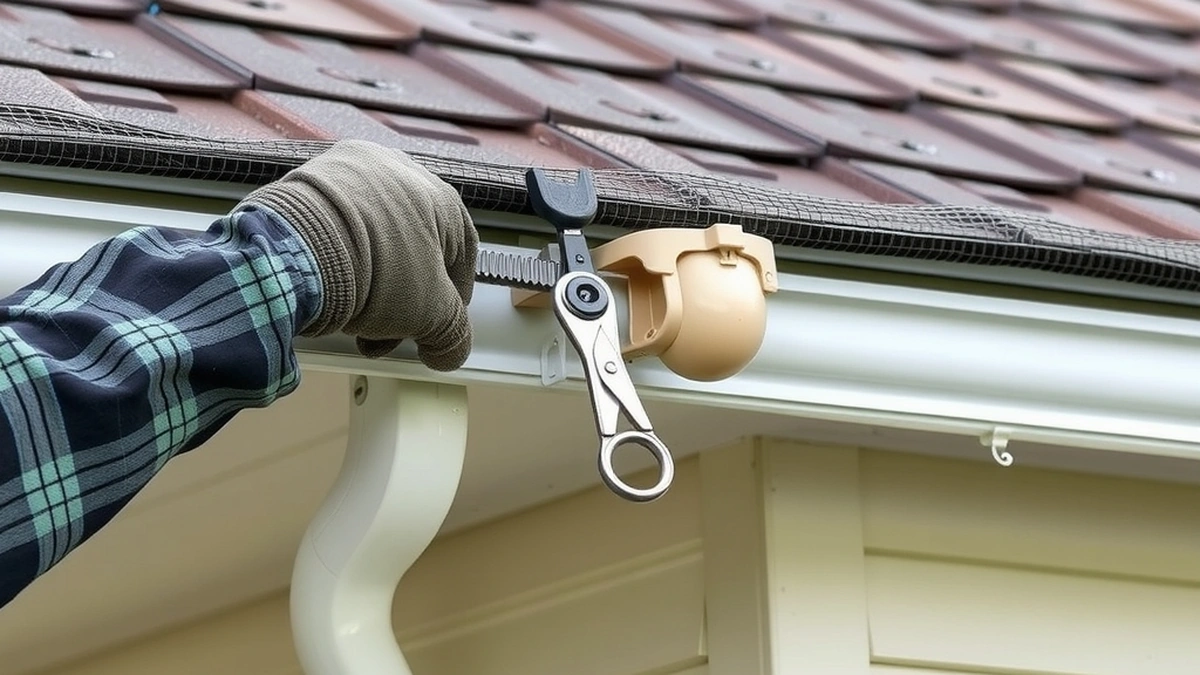
A gutter guard repair is worth it when the damage is local (loose fasteners, sag, a torn panel, or a debris dam) and the quote stays well below replacement cost. Once failures spread across the roofline, replace.
- Installed micro-mesh, new
- $1,800–$4,500
- Installed reverse curve, new
- $2,000–$5,000
- Typical repair visit (estimate)
- $150–$450
- Professional cleaning baseline
- $150–$400
Some links on this page are affiliate links.If you buy through them we may earn a commission at no extra cost to you. We do not accept payment for rankings. Read the full disclosure.
A gutter guard repair is worth it when the failure is local: a pulled fastener, a sagging length, a torn panel, or debris packed on top of the mesh. It stops being worth it when the guard material has failed across the roofline, when the gutters underneath are at end of life, or when the repair quote approaches the price of a new system. The decision is arithmetic, and the arithmetic takes about five minutes.
What a Gutter Guard Repair Covers
A gutter guard repair is any service that returns an existing guard to working order without replacing the full run. That means re-fastening panels, correcting pitch, patching or re-screening torn sections, replacing end caps and clips, and clearing whatever caused the overflow in the first place.
It is not the same as gutter repair. The guard is the cover; the gutter is the trough, hangers, and seams beneath it. If water leaks at a seam or the fascia is soft, repairing the guard will not help. Visible guard failures usually sit at the fixings and edges, not mid-panel.
Repair or Replace: The Break-Even Math
Repair costs vary by fault and by how easy the run is to reach. The figures below are estimates for a single-story home with 150 to 250 linear feet of gutter, covering labor plus minor parts. They are not quotes.
| Failure | Repair approach | Repair cost (estimate) | Replace instead when |
|---|---|---|---|
| Loose or pulled fasteners | Re-clip and re-seat panels | $150–$300 | Fastener holes are stripped along the whole run |
| Sagging or mis-pitched length | Reset hangers and guard pitch | $200–$450 | Hangers or fascia board are rotted |
| Torn mesh or screen panel | Patch or re-screen the section | $150–$350 | Mesh is brittle and failing in several places |
| Debris dam on top of guards | Clear, flush, and re-seat | $150–$400 | The guard type is wrong for the debris load |
| Bent reverse-curve lengths | Swap individual sections | $250–$500 | The profile is deformed over multiple runs |
| Guards over failing gutters | Remove, repair gutter, reinstall | $400 and up | Gutters are at end of life anyway |
The comparison figures come from installed system pricing. New micro-mesh runs $1,800 to $4,500 installed, and new reverse curve runs $2,000 to $5,000 installed. A useful rule of thumb is that a repair stops making sense at roughly a quarter of replacement cost. On the low end of micro-mesh that threshold is $1,800 × 0.25 = $450. A $600 quote on a system that can be replaced for $1,800 is no longer a repair decision; it is a down payment on the same failure happening again.
That is the number a repair has to beat in practice: a professional cleaning costs $150 to $400 per visit, so two visits a year runs $300 to $800.
When Repair Is Worth It
Repair is usually the right call in these situations:
- One clear fault. A single loose run, one torn span, or one low spot that ponds. Localized problems have localized fixes.
- The guard is young. If the system is a few years old and the material is still flexible, a fix restores most of its remaining service life.
- The warranty covers it. Many installed systems carry workmanship terms that cover fastener failure or lifting panels. Call the installer before paying anyone else, because outside work can void the coverage.
- The gutters are sound. Guards over straight, well-hung, sealed gutter with solid fascia are worth keeping.
- The debris source is identifiable. One overhanging branch that fills a single run is a repair plus a pruning job, not a new system.
When Replacement Makes More Sense
Replacement wins when the failures are structural rather than incidental:
- Fasteners pull out of rotted fascia along multiple runs, which means the wood behind the guard needs work regardless.
- The mesh has gone brittle and is cracking at the folds, a sign the material is past its service life.
- The product was the wrong type for the debris load from the start, so repairs only postpone the same clog.
- The repair quote lands above a quarter to a third of replacement cost, at which point you are paying for a new system in installments.
- The gutters themselves are failing, in which case guards get removed anyway during the gutter job.
How to Diagnose the Fault Yourself
Before calling anyone, spend twenty minutes on the ground and get specific about what is wrong. Contractors quote more accurately against a described fault than against “the guards are broken.”
- Watch the system in real rain. Note whether water runs over the front edge, drips behind the gutter onto the fascia, or pours out of a downspout outlet.
- Inspect from the ground with binoculars. Look for lifted panels, visible sag between hangers, and debris sitting on the mesh rather than sliding off.
- Run a hose at the high end of one run for five minutes and follow the water. A dam that forms within a few feet points to surface debris; water that sheets over the edge points to pitch or a clogged aperture.
- Push on the fascia and the gutter lip where you can reach safely. Soft wood or movement means the fasteners have nothing to hold.
- Read the warranty document before booking a repair, and note whether it requires the original installer to do the work.
Ladder work is the part to skip. OSHA publishes fall-protection guidance for working at height, and the hazard is the same for a homeowner and a crew. Above the first story, the inspection belongs to whoever is insured for it.
What a Repair Visit Should Include
A competent repair visit is short and specific: clear the affected run, re-secure or replace the failed components, test flow at the high end, and show photographs of what came out and went back on.
Ask for a written scope and confirm the labor guarantee. A one-year workmanship term on a re-secured run is normal; a lifetime promise on a patch is not.
If the system is a branded dealer product, check the transferable warranty before authorizing third-party work. Some dealer warranties exclude repairs done outside their network, and a $300 patch that voids multi-year coverage is a bad trade.
Keeping the Repair From Repeating
Repeat failures trace back to three causes: debris load, water management, and the gutter underneath. Clearing the roof above the run, extending a downspout that discharges near the foundation, and fixing a low spot in the gutter all reduce the stress on the guard. Our gutter guard maintenance guide covers the checks that catch these early, and how long does gutter guard last sets expectations for when repair gives way to replacement.
Bottom Line
Repair your guards when the fault is local, the material is sound, and the quote sits under roughly $450 on a system that would cost $1,800 to replace. Replace when failures are spread out, the mesh is brittle, or the gutters underneath need work anyway. Compare any repair quote against the $150 to $400 cost of a professional cleaning, because that is the expense the guard exists to reduce. For pricing on a full replacement, see how much does gutter guard cost, and for what a new install involves, read gutter guard installation.
Frequently asked questions
How much does a gutter guard repair cost?
Most single-fault repairs are estimates in the $150 to $450 range for a one-story home, covering labor plus clips, sealant, or a short section of mesh.
Is it cheaper to repair or replace gutter guards?
Repair is cheaper when one or two faults are involved and the guard material is still sound. Once the quote passes about a quarter of replacement cost, replacement is usually the better buy.
Can you repair micro-mesh gutter guards?
Yes. Torn mesh can be patched or the affected length re-screened, and pulled fasteners can be re-clipped, provided the frame and the gutter behind it are intact.
Why do gutter guards come loose?
Fasteners pull out of soft or rotted fascia, clips crack under thermal movement, and panels lift where debris load or ladder contact stresses the leading edge.
Should I repair guards before selling a house?
Fix anything that leaks, sags, or detaches, and keep the receipts. A buyer's inspector will flag guard defects that divert water behind the gutter.
How long should a repair last?
A properly re-secured run should hold for years if the fascia is sound; a patch on brittle, sun-aged mesh may fail again within a season.
Sources
Some links are affiliate links.If you buy through them we may earn a commission at no extra cost to you. We do not accept payment for rankings. Read the full disclosure.