How long does gutter guard last?
Service life by guard type, the four conditions that shorten it, and how to tell a year-ten repair from a replacement. Realistic ranges, not sales claims.
Most guards last 8 to 25 years depending on material: plastic and foam products at the short end, aluminum and stainless micro-mesh at the long end. Debris load and fastener condition decide where in that range yours lands.
- Stainless micro-mesh
- 15–25 years
- Aluminum reverse curve
- 15–25 years
- Plastic or aluminum screen
- 5–12 years
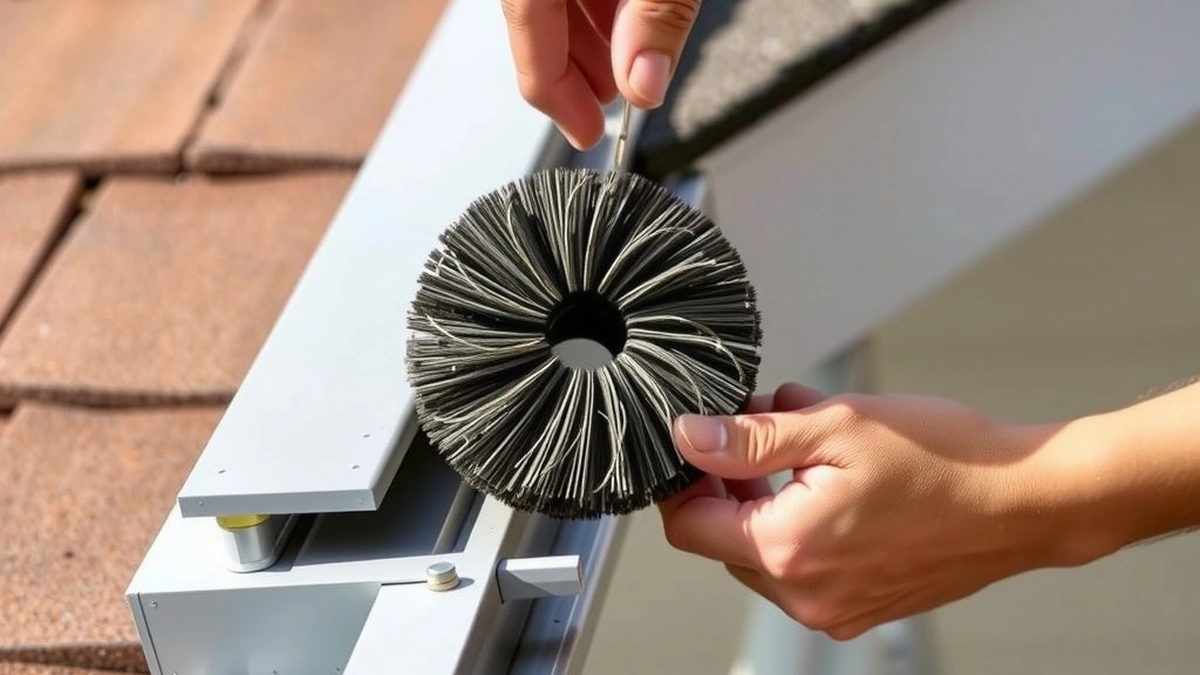
- Brush or foam insert
- 2–5 years
Some links on this page are affiliate links.If you buy through them we may earn a commission at no extra cost to you. We do not accept payment for rankings. Read the full disclosure.
Most gutter guards last between 8 and 25 years, and the spread is almost entirely about material. Foam and brush inserts are a two-to-five-year consumable, plastic screens fade and crack within a decade, and stainless micro-mesh or aluminum reverse-curve systems can hold for two decades or more. What determines where your installation lands is not the brochure, but sun, debris load, and how well the fasteners were set.
Service Life by Guard Type
The ranges below are typical service lives quoted by manufacturers and installers, not laboratory test results. Treat them as planning estimates and expect the top of each range only when the installation was competent and the roof above is kept clear.
| Guard type | Typical service life | What ends it |
|---|---|---|
| Brush or foam insert | 2–5 years | Material degrades, holds moisture, compacts with grit |
| Plastic screen | 5–10 years | UV embrittlement, sag between supports |
| Aluminum screen | 8–12 years | Fastener corrosion, mesh deformation |
| Aluminum reverse curve | 15–25 years | Pitch drift, fascia rot, paint chalk |
| Stainless micro-mesh | 15–25 years | Frame corrosion at cut edges, clogged aperture |
| Dealer-brand system | 15–25 years | Same as above, plus warranty administration |
The installed price tracks that order. Brush and foam inserts run $200 to $800, DIY screens $300 to $900, micro-mesh $1,800 to $4,500, reverse curve $2,000 to $5,000, and dealer-brand systems $3,000 to $8,000. Divide price by expected years and the cheap options look less cheap: a $200 insert replaced every three years costs more per year than a $1,800 micro-mesh system that lasts fifteen.
Micro-Mesh vs Reverse Curve: Which Ages Better
Micro-mesh and reverse curve both sit at the top of the life range, but they fail differently. A micro-mesh panel ages at the mesh itself: the stainless cloth clogs with pollen and roof grit, and cleaning restores it until the frame or fasteners give out. A reverse curve ages at the profile and the paint: the aluminum holds, but the nose can drift out of alignment with the gutter lip, and once water starts running behind it the guard is effectively done.
In a high-debris setting, micro-mesh usually reaches the top of its range. On a long, straight run with heavy leaf volume and few small particles, a reverse curve can last just as long with less surface clearing.
What Shortens a Guard’s Life
Four conditions account for most early failures:
- Sun exposure. South- and west-facing runs take the most UV. Plastic and foam degrade fastest there, and painted aluminum chalks first on those elevations.
- Debris load. A guard buried under wet leaves stays damp, which accelerates corrosion at the fasteners and keeps the aperture blocked.
- Fastener quality. Clips and screws driven into soft or rotted fascia have nothing to grip. The guard then moves, and movement breaks seals and opens gaps.
- Water management. If the gutter is undersized or the downspouts are blocked, water backs up under the guard and sits against the fascia. That is a drainage problem that will outlive any guard.
Ice is a regional wildcard. In cold climates, ice dams at the eave put load on the guard and can pull panels loose even when the material itself is sound.
The Gutter Underneath Ages Too
A guard protects the gutter from debris, not from time. Aluminum gutter commonly lasts 20 to 30 years, and its hangers, seals, and fascia attachments wear on their own schedule. A 20-year-old guard on a 25-year-old gutter is a system at the end of its life, even if the mesh still looks intact.
That matters at replacement time. If the trough is being replaced, reusing the old guard usually costs more in labor than it saves in material, and old fasteners rarely seat cleanly in new gutter. Price the two together rather than as separate projects.
How to Get the Full Service Life
The difference between a guard that lasts eight years and one that lasts twenty is mostly maintenance discipline, and it takes two afternoons a year.
- Clear the roof surface above each run in late fall, so debris does not wash onto the guard in the first winter storm.
- Rinse or brush the guard surface in spring, working from the high end toward the downspout.
- Check three or four fasteners per run by hand. If they spin or pull, the fascia is the problem, not the guard.
- Run a hose at the high end for five minutes and watch the downspout outlet. Weak flow means a partial blockage somewhere in the run.
- Photograph the system once a year. Comparing photos is the only reliable way to catch slow sag or pitch drift before it becomes a leak.
Working at height is the risk in all of this. OSHA’s fall-protection guidance applies to homeowners on ladders as much as to crews, and a single-story roofline is still a fall hazard. If the run is above the first floor, book the inspection rather than doing it.
Repair at Year Ten, or Replace?
At the ten-year mark, most systems are worth one repair and not a second. A re-clipped panel or a patched span is money well spent if the rest of the material flexes without cracking. Once mesh goes brittle, panels lift in wind, or rust bleeds from cut edges on several runs, repairs start repeating and the annual cost climbs toward replacement.
The arithmetic is the same one that governs any guard decision. New micro-mesh installed runs $1,800 to $4,500, and a professional cleaning runs $150 to $400 per visit. When a repair quote approaches a quarter of replacement, at $1,800 × 0.25 = $450, replacement is the better buy. Our gutter guard repair guide walks through that comparison fault by fault.
Warranty Length vs Real Life
Warranty terms are longer than service lives, and that is normal. A 25-year or lifetime material warranty typically covers manufacturing defects, not the wear that actually ends a guard: clogged aperture, UV chalk, fastener pull-out, or damage from ladders and branches. Read what is excluded before you treat a long term as a life estimate.
Labor warranties are shorter still, often one to five years, and they usually require the original installer to do the work. Keep the paperwork. On a dealer system, check whether the coverage transfers to a new owner, because that affects resale value more than the term length does.
Bottom Line
Plan on 8 to 25 years, with stainless micro-mesh and aluminum reverse curve at the top and foam or brush inserts at the bottom. Sun, debris, fastener condition, and drainage decide where in that range a given install lands, and twice-yearly clearing does more for longevity than any product claim. Replace rather than repair once the material itself is failing, and price new guards with new gutters when the trough is due, not separately. For product differences, see types of gutter guard; for installed pricing, see how much does gutter guard cost.
Frequently asked questions
How long do gutter guards last?
Expect 8 to 25 years. Plastic screens and foam inserts sit at the short end, while aluminum reverse curve and stainless micro-mesh systems sit at the long end.
Do expensive gutter guards last longer?
Usually yes, but the price gap is larger than the life gap. A $3,000 to $8,000 dealer system may last five years longer than a $1,800 to $4,500 micro-mesh install.
What makes gutter guards fail early?
Constant sun exposure, heavy debris load, fasteners driven into soft fascia, and water backing up behind the guard all shorten service life considerably.
Should I replace guards when I replace gutters?
Almost always. Reusing guards means paying twice for labor, and old fasteners rarely seat well in new gutter. Price both together.
Do gutter guards last longer than the gutters under them?
Sometimes. Aluminum gutter commonly runs 20 to 30 years, so a stainless guard fitted at year 15 may outlive the trough it covers.
How can I tell my guards are near the end?
Brittle mesh that cracks when flexed, panels that lift in wind, rust bleeding at cut edges, and repeated overflows after cleaning all point to replacement.
Sources
Some links are affiliate links.If you buy through them we may earn a commission at no extra cost to you. We do not accept payment for rankings. Read the full disclosure.