Birds and nests: how to prevent them for good
Stop birds nesting in gutters by closing end caps, fitting outlet strainers and mesh, trimming overhanging branches, and covering the trough with a guard.
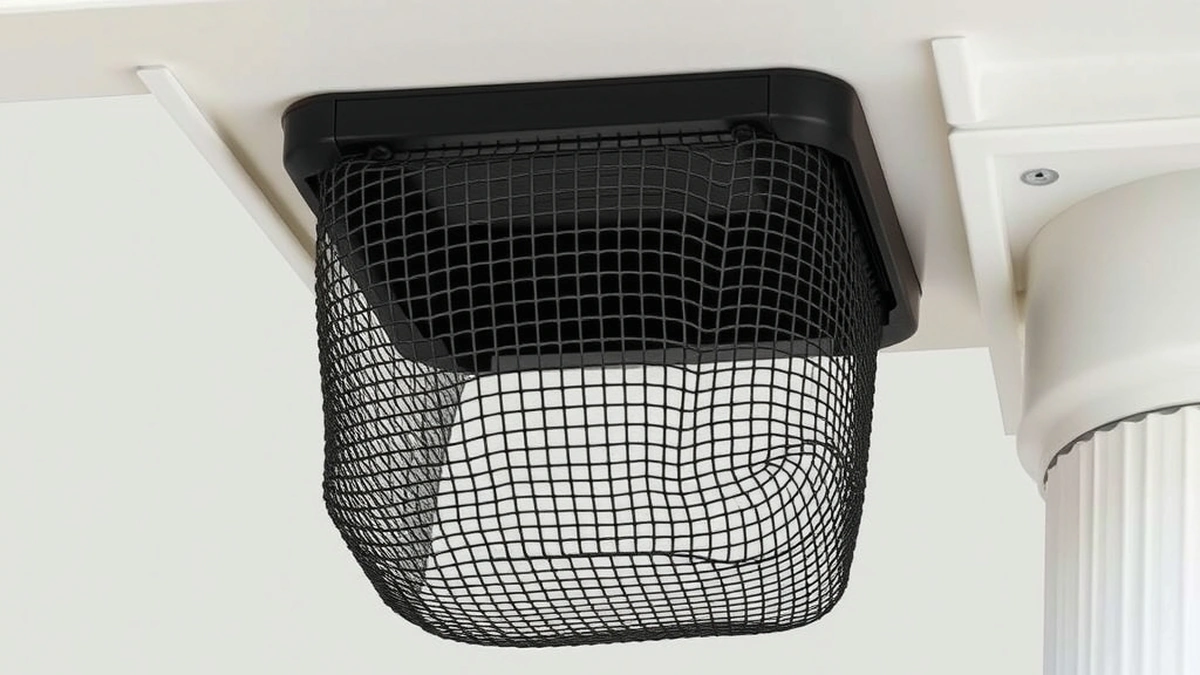
Prevent nesting by closing the ends of the run, fitting downspout strainers, covering the trough with screen or mesh, trimming branches back 6 feet, and removing old nest material before spring. The measures cost $200 to $900.
- End caps and strainers
- $200 - $600
- Screen guard
- $300 - $900
- Micro-mesh guard
- $1,800 - $4,500
- Branch clearance
- 6 feet from the roof
Some links on this page are affiliate links.If you buy through them we may earn a commission at no extra cost to you. We do not accept payment for rankings. Read the full disclosure.
Birds nest in gutters because the trough is a sheltered ledge with an opening at the end, so prevention is a matter of closing the ledge and the opening. End caps and strainers cost $200 to $600, a screen guard $300 to $900, and branch clearance is free apart from the saw. Done together, they end the annual clear-out.
What makes a gutter attractive
Three conditions have to be true. The trough must be open enough to hold a nest, there must be an approach that is not exposed to weather or predators, and there must be material nearby to build with.
A gutter at the end of a run satisfies all three. The end cap is often loose or missing, the void behind the fascia is sheltered, and the roof valleys supply twigs. Even a gutter with a guard can be used if the guard has lifted at a corner, which is why the details matter as much as the product.
Prevention measures compared
| Measure | What it closes | Cost | Best for |
|---|---|---|---|
| Mesh end caps | Open ends of the run | $20 - $60 each | Every house |
| Outlet strainers | Downspout openings | $10 - $40 each | Every house |
| Screen guard | Open trough | $300 - $900 | Leaves and birds |
| Micro-mesh guard | Open trough, fine debris | $1,800 - $4,500 | Needles and birds |
| Branch trimming | Approach routes | $0 - $400 | Overhanging trees |
| Fascia gap sealing | Void behind the gutter | $150 - $400 | Persistent nesting |
The first two rows are the cheap, targeted fix. The guard rows are the comprehensive one. A house that only has a nesting problem does not need a $1,800 mesh system; a house that has nesting and needle debris probably does.
Closing the ends and the outlets
Walk the run and find every opening. There is one at each end of every run, one at every downspout outlet, and often a gap where the gutter meets a corner or a wall. Those are the entries.
End caps are formed aluminium or plastic covers that fit over the open end and are sealed to the gutter. Mesh versions do the same job while letting water escape if the run overfills. Outlet strainers are baskets that sit in the downspout opening and stop nest material entering the pipe.
Neither is expensive, and both are frequently missing on older houses because the original cap corroded away and nobody replaced it.
Covering the trough
A screen guard at $300 to $900 closes the open ledge across the whole run. It is the direct answer to nesting, and it also keeps leaves out, which removes the material birds build with.
A framed micro-mesh system at $1,800 to $4,500 does the same and adds fine filtration. It is the right choice where needles, grit, or pollen are also a problem, but it is more product than a nesting problem requires on its own.
Whichever is fitted, check the corners and the ends after installation. A guard that lifts by half an inch at a corner recreates the gap, and birds find it.
Why one measure is rarely enough
Houses that get this wrong usually do one thing and stop. A guard is fitted but the end caps are left open, so the birds move to the void behind the fascia. Or the caps are fitted but the trough is left full of leaves, so the next pair builds on top of the old material.
The measures work as a set because each closes a different route. The guard closes the top, the end caps close the ends, the strainers close the pipes, and the branch work closes the approach. A house with all four is genuinely unattractive to a nesting pair, and the annual clear-out stops being a fixed cost.
Timing and the legal line
Do the work in late summer or autumn, after the young have fledged and before the next season starts. In the US, most native birds are protected under the Migratory Bird Treaty Act, and an active nest cannot be removed or disturbed. Some introduced species are not protected, but the safe assumption is that the nest is.
That timing also matches the maintenance calendar: the autumn clear-out removes the old nest, and the exclusion goes on straight afterward, so the site is closed before spring.
Six steps to a bird-proof gutter
- Confirm no active nest is present, and wait if there is one.
- Clear the trough and flush the outlets so no material is left to build on.
- Fit mesh end caps to every open end and seal the joints.
- Fit strainers at every downspout outlet.
- Cover the run with a screen or mesh guard, and check the corners after fitting.
- Cut branches back at least 6 feet from the roof and clear the approach.
Step six is the one people skip because it is gardening rather than gutter work. It is also the step that removes the sheltered launch point, and it costs nothing but an afternoon.
The short version
Close the ends, cover the trough, and cut back the branches. The targeted version costs $200 to $600 and the full version $300 to $900 with a screen, or $1,800 to $4,500 with mesh. The removal and sanitising costs are in birds and nests: what a fix costs, the repair sequence is in birds and nests: repair options, and the guard comparison is in gutter guard cost.
Frequently asked questions
How do I stop birds from nesting in my gutters?
Close the access: fit mesh end caps on the open ends of the run, add strainers at the downspout outlets, and cover the trough with a screen or mesh guard. Trim branches back at least 6 feet from the roof.
What is the cheapest way to bird-proof a gutter?
End caps and outlet strainers at $200 to $600 for a typical house. They close the specific gaps birds use without covering the whole run, and they are the right first step if the trough is otherwise clear.
Do gutter guards stop birds nesting?
Yes, because they remove the open ledge. A screen at $300 to $900 is enough for most houses; a framed micro-mesh system at $1,800 to $4,500 also solves fine debris but is not needed for birds alone.
When should the work be done?
Late summer or autumn, after the young have fledged and before the next nesting season. Disturbing an active nest of a protected species is illegal in the US, so timing is a legal issue as well as a practical one.
Does trimming trees help?
It helps. Branches within 6 feet of the roof give birds a launch point and a sheltered approach, and removing that access reduces nesting attempts even when the gutter is not covered.
Why do birds choose my gutter?
Because it is a dry, sheltered ledge with twigs nearby, and because a blocked or damp trough holds material in place. A clean, dry, covered gutter is a poor nest site and is usually passed over.
Sources
Some links are affiliate links.If you buy through them we may earn a commission at no extra cost to you. We do not accept payment for rankings. Read the full disclosure.