Birds and nests: warning signs in the gutter
Nesting material at the end cap, birds flying under the gutter, droppings on the fascia, and chirping at dawn are the signs birds have moved into a run.
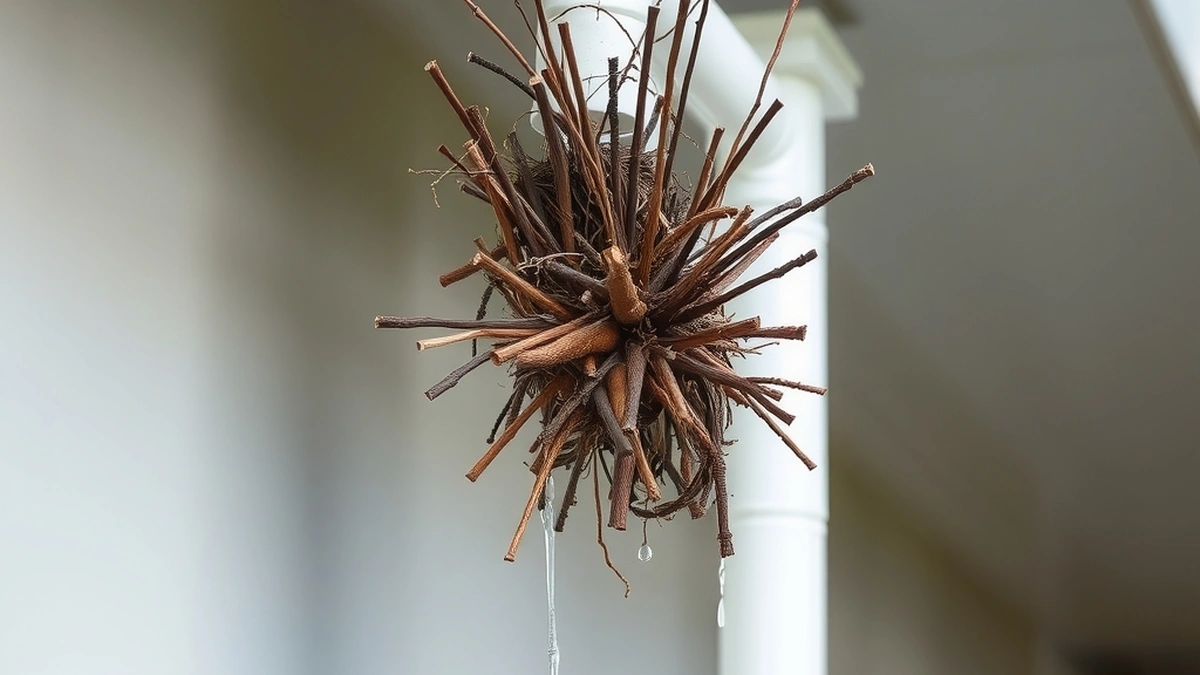
The signs birds are nesting in a gutter are twigs and grass packed at an end cap, birds flying under the lip at dawn, droppings on the fascia and wall, chirping from the run, and water overflowing at one end in dry weather.
- Most obvious sign
- Twigs at the end cap
- Behavioural sign
- Birds flying under the lip
- Damage sign
- Droppings on fascia
- Clear-out cost
- $150 - $400
Some links on this page are affiliate links.If you buy through them we may earn a commission at no extra cost to you. We do not accept payment for rankings. Read the full disclosure.
Birds leave evidence before they cause damage, and most of it is visible from the ground. Twigs and grass packed into an end cap, birds flying up under the gutter lip at dawn, droppings on the fascia, and chirping from the run are the four reliable signs. Catching them early keeps the job at $150 to $400 instead of the fascia repair that follows.
The signs, and what each one tells you
| Sign | Where to look | What it means | Stage |
|---|---|---|---|
| Twigs at an end cap | End of the run | Nest under construction | Early |
| Birds under the lip | Along the run, dawn | Access in use | Early |
| Droppings on fascia | Below the run | Established nest | Mid |
| Chirping from the gutter | At the run, morning | Chicks present | Active |
| Overflow at one end | End of the run | Outlet blocked by nest | Mid |
| Soft fascia, sagging run | Behind the gutter | Long occupation | Late |
The first two are the ones to act on. The third and fourth mean the nest is established, and the fourth also means removal has to wait. The last two mean damage is already happening.
Nesting material at the ends
Look at the end of every run, at the corner where the gutter turns, and at the point where the run meets a wall. Those are the sheltered spots, and they are where material accumulates first.
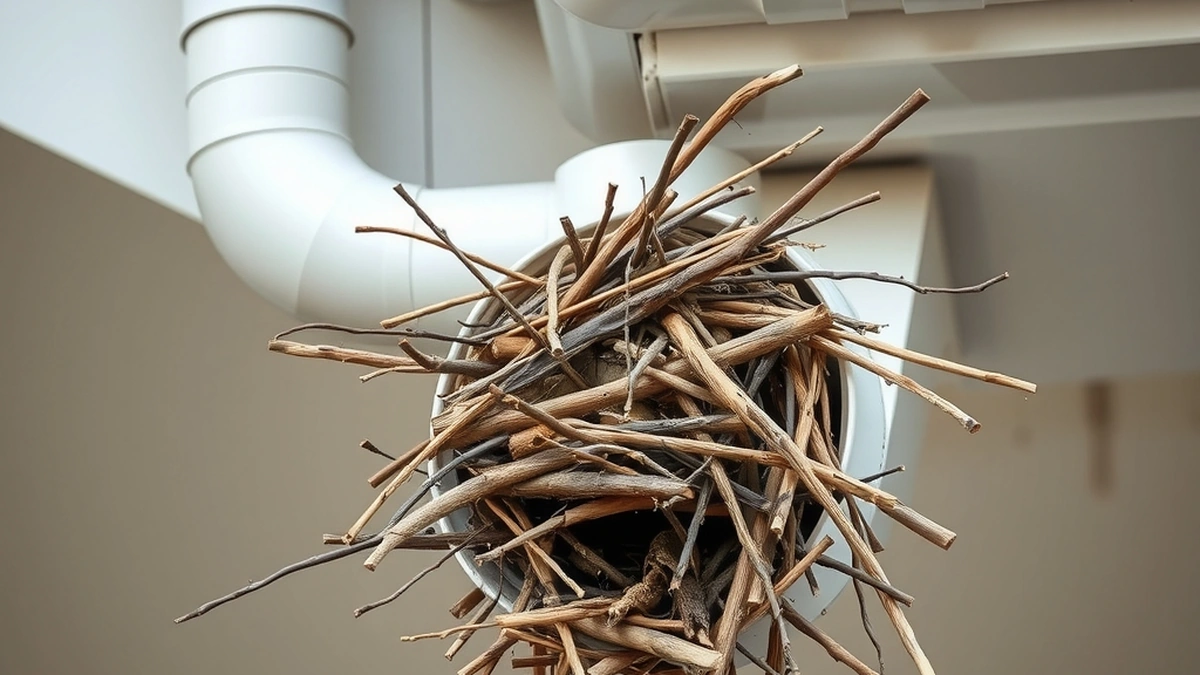
A nest under construction looks like a bundle of twigs and grass wedged into the opening, often with moss or mud binding it. It is distinguishable from a leaf blockage because it is structured, and because it does not wash away in rain.
Check from the ground with binoculars before climbing. A ladder against a gutter that has an active nest is a good way to disturb it, and disturbing a protected nest is a legal problem as well as an ethical one.
Behaviour, not just debris
Birds using a gutter show a consistent pattern. They fly up under the lip rather than landing on the roof, because the access is at the fascia line. They are busiest at dawn and again in the late afternoon, and they carry material in their beaks.
If you see a bird disappear under the gutter and not come out on the roof, there is a void behind the run. That is the space between the gutter and the fascia, and it is the hardest nest site to see and the one most likely to cause rot.
Droppings, stains, and water
Droppings on the fascia and the wall below the run are the mid-stage sign. They streak vertically from the nesting point, and they stain paint and etch metal over a season.
Overflow at one end is the functional sign. A nest packed into the outlet blocks the flow, water backs up the run, and it leaves over the lip at that end. In dry weather the same spot shows a damp patch and a dark stain, which is the residue of many overflows.
That pattern is worth distinguishing from a pitch fault. A pitch fault overflows at the low end consistently; a nest blocks one outlet and the overflow is localised to that end, often with debris visible in the outlet itself.
Chirping, and the legal pause
Chirping from the run in spring means chicks. At that point the nest cannot be removed, and the work has to wait until the young have fledged, which is typically two to four weeks for small birds.
Use the wait to plan the exclusion. Measure the run, count the end caps, and book the clear-out for the week after fledging. The material can be removed and the openings closed in a single visit, which is cheaper than two.
Six checks in ten minutes
- Look at each end of every run for structured twigs and grass.
- Watch the gutter for five minutes at dawn and note where birds enter.
- Check the fascia below the run for vertical droppings.
- Listen for chirping at the run in spring.
- Note whether overflow happens at one end or along the whole lip.
- Probe the fascia at the nesting point for soft wood.
Step six is the one that decides the bill. Soft wood means the clear-out is only the first line, and fascia repair at $6 to $12 per linear foot follows.
What the signs cost to act on
A clear-out at $150 to $400 removes the nest and restores the outlet. Sanitising adds $250 to $600 where droppings are heavy. Exclusion at $200 to $600 closes the gap, and fascia repair at $6 to $12 per foot is the late-stage cost.
The sequence is the same in every case: confirm, remove when legal, sanitise, close the access. Skipping the last step is what turns the repair into an annual bill.
The short version
Read the ends, the behaviour, and the water. Twigs at the cap and birds under the lip are early; droppings and chirping are established; soft wood is late. The removal and sanitising prices are in birds and nests: what a fix costs, the exclusion methods are in birds and nests: how to prevent it, and the repair sequence is in birds and nests: repair options. Overflow that is not caused by a nest is covered in water overflowing: warning signs.
Frequently asked questions
How do I know if birds are nesting in my gutter?
Look for twigs and grass packed into an end cap or under the first shingle course, birds flying up under the gutter lip at dawn, and droppings on the fascia below the run.
Why is water overflowing from one end of my gutter?
A nest or nesting material at the end of the run blocks the outlet, so water backs up and leaves over the lip. Overflow at one end in dry-ish weather is a strong sign of a blockage rather than a pitch fault.
What does chirping from the gutter mean?
It means chicks are in the nest. Chicks are loud at feeding time, usually early morning, and the sound comes from the run rather than the roof. Do not remove the nest while it is active.
Are droppings under the gutter a health risk?
They can carry bacteria and fungal spores, which is why professional removal includes a sanitising step at $250 to $600. Wear gloves and a mask if you are inspecting close to the run.
Do birds damage gutters?
The nest itself does little, but the material holds moisture against the fascia and packs the outlet. The damage is rot behind the hangers and corrosion under the nest, which shows up as soft wood and a sagging run.
When is the best time to check?
Late winter and early spring, before nesting starts, and again in autumn after the young have fledged. Those are the two windows when removal is both legal and effective.
Sources
Some links are affiliate links.If you buy through them we may earn a commission at no extra cost to you. We do not accept payment for rankings. Read the full disclosure.