Foam insert vs screen: block the trough or cover it
Both cost under $900: foam at $200 to $800, screen at $300 to $900. One fills the gutter, one covers it. Compare flow, lifespan, moisture, and debris fit.
Foam inserts cost $200 to $800 and fill the trough; screens cost $300 to $900 and cover it. Foam holds moisture and lasts two to four years, a screen stays drier and lasts five to ten. Both fail on pine needles.
- Foam insert
- $200 - $800
- Screen
- $300 - $900
- Life
- 2 - 4 years vs 5 - 10 years
- Cost per year
- $50 - $400 vs $30 - $180
- Best debris
- Coarse leaves
Some links on this page are affiliate links.If you buy through them we may earn a commission at no extra cost to you. We do not accept payment for rankings. Read the full disclosure.
Foam inserts cost $200 to $800 and screens $300 to $900, so both sit under $1,000 and both are sold as a cheap fix. The difference is where the debris ends up. Foam fills the trough so leaves cannot lie flat; a screen covers the opening so leaves never get in. Given that a screen lasts two to three times as long for roughly $100 more, the screen is usually the better purchase.
Displacement versus exclusion
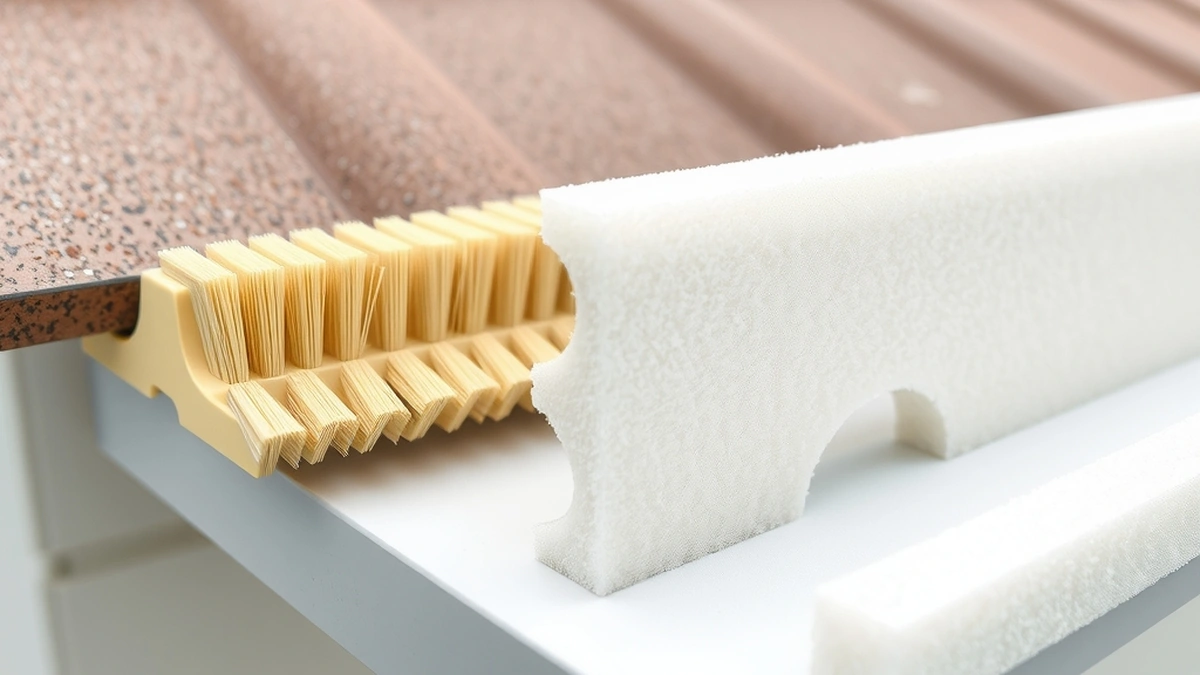
A foam insert is a shaped block pressed into the gutter channel. It occupies the volume, so debris rests on the top face and water passes through the cells.
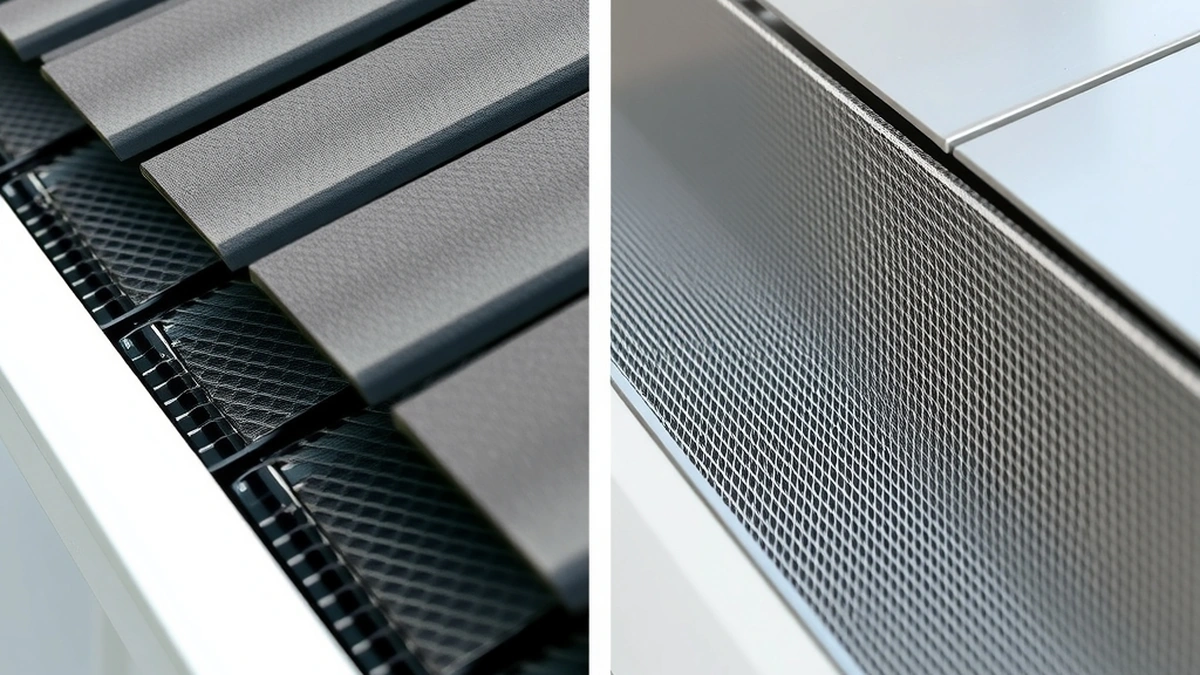
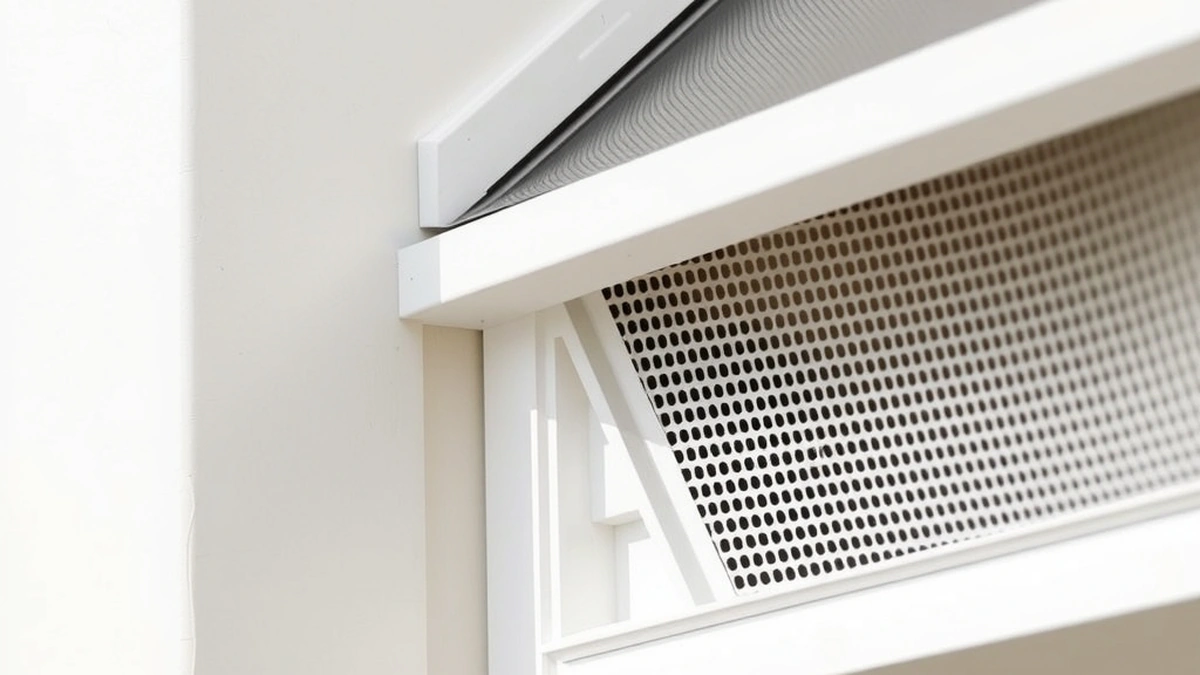
A screen is a perforated sheet clipped or screwed over the opening. Debris stays on the outside, water drops through the perforations, and the trough below stays empty.
Foam displaces. A screen excludes. That is the design difference, and it decides what the gutter looks like a year later.
Price and life
| Item | Foam insert | Screen |
|---|---|---|
| Installed | $200 - $800 | $300 - $900 |
| Per foot at 200 ft | $1.00 - $4.00 | $1.50 - $4.50 |
| Expected life | 2 - 4 years | 5 - 10 years |
| Cost per year | $50 - $400 | $30 - $180 |
| Fasteners needed | None | Screws or clips |
| Cleaning | Pull, rinse, squeeze | Brush or lift and rinse |
The per-year figures are division. Foam: $200 ÷ 4 = $50, $800 ÷ 2 = $400. Screen: $300 ÷ 10 = $30, $900 ÷ 5 = $180.
The foam’s best case is the cheapest number in the guard market. The foam’s worst case is more than double the screen’s worst case, and it needs more cleaning in between.
Moisture, and what it does to the gutter
Foam is the only common guard that sits in the water path for days after rain. The cells hold water, the trapped silt holds water, and the gutter floor under the block stays damp.
That matters on any metal gutter. Aluminium corrodes at cut edges and under silt; steel corrodes anywhere the coating is broken. A damp trough accelerates both, and the foam keeps it damp.
A screen lets the trough dry. Water leaves through the perforations, air moves under the sheet, and the metal returns to ambient between storms. The run lasts longer for that reason alone.
Pull a foam block out in November and it comes out heavy, stained through, and holding water in the cells. The gutter floor beneath it is dark and coated with a silt film that has passed through the block, and the silt is what blocks the outlet strainer.
Lift a screen panel and the trough is mostly clean. What has accumulated is a thin layer of grit at the low end, and the metal is dry within an hour of the rain stopping. The screen itself carries leaves on top, which is where they should be, and they lift off with a brush rather than having to be pulled out of a block.
End of season, and water capacity
A screen has a large open area and passes a heavy rain well while the perforations are clear. When fine debris blinds them, flow drops and water sheets over the front lip.
Foam has a smaller effective flow path. Even when new, the cells restrict flow, and once they load with grit the block becomes a dam. In a downpour, that shows as water running over the front of the gutter within minutes.
Neither product is a high-capacity solution. On a roof with a big catchment and one downspout, neither will prevent overflow in a cloudburst.
Where foam is the right buy
Foam is right for a shed, a garage, a porch, or a short rental run where the gutter is not worth $900 and the debris is coarse. It is also the only guard that needs no tools beyond a knife, which matters for a homeowner who will not fasten anything to the roof.
It is right as a one-season measure before a replacement or a re-roof, when the goal is to stop leaves lying in the trough rather than to solve drainage.
Where the screen wins
The screen wins on a standard house with coarse leaves, a single storey, and a gutter that is sound. It lasts longer, keeps the trough dry, and costs less per year at both ends of its range.
It also wins wherever the gutter will be inspected. A screen is visible and can be checked from the ground; foam hides the trough, so a developing blockage is discovered only when the gutter overflows.
Five steps to choose
- Identify the debris. Needles rule out both.
- Measure the run. Under 40 feet, either is defensible.
- Decide whether the gutter needs to dry between storms.
- Compare per-year cost, not sticker price.
- Check the corners and ends, where both products fail.
Step three is the one that separates them on an older gutter. A dry trough is worth more than the $100 price difference.
The short version
Foam blocks the trough and holds water; a screen covers it and stays dry. At $200 to $800 against $300 to $900, the screen is the better per-year buy and the better choice for the metal underneath. Foam remains a reasonable one-season fix for an outbuilding. Installation is covered in foam insert installation and screen installation, and the step up to a permanent guard is in gutter guard cost.
Frequently asked questions
Is a screen better than a foam insert?
For most houses, yes. A screen keeps leaves out of the trough and lasts five to ten years. Foam holds water against the gutter and lasts two to four, so it is cheaper to buy and more expensive to own.
Why do foam inserts cost less?
Because they are a shaped plastic block with no fasteners and no frame. A screen needs cutting to width and fixing along the lip, and the coated aluminium sheet costs more than the foam.
Which one handles heavy rain better?
A screen, while its perforations are clear. Foam relies on its cells staying open, and once they load with grit the water runs over the block and off the front lip.
Does foam cause corrosion?
It can contribute. The block holds water against the gutter floor and keeps the metal damp, which is the condition that promotes corrosion at cut edges and in the silt underneath.
Can either stop pine needles?
No. Needles pass through a screen's perforations and pack into foam cells. A micro-mesh panel with a sub-millimetre aperture is the product for needle debris.
Which is easier to install?
Foam, because it is cut with a knife and pressed in with no fasteners. A screen has to be measured, cut to width, fastened at the lip, and folded at the corners.
Sources
Some links are affiliate links.If you buy through them we may earn a commission at no extra cost to you. We do not accept payment for rankings. Read the full disclosure.