Foam insert maintenance
What foam gutter insert maintenance involves: twice-yearly inspection, cleaning without soaking the foam, replacement signs, and when to switch products.
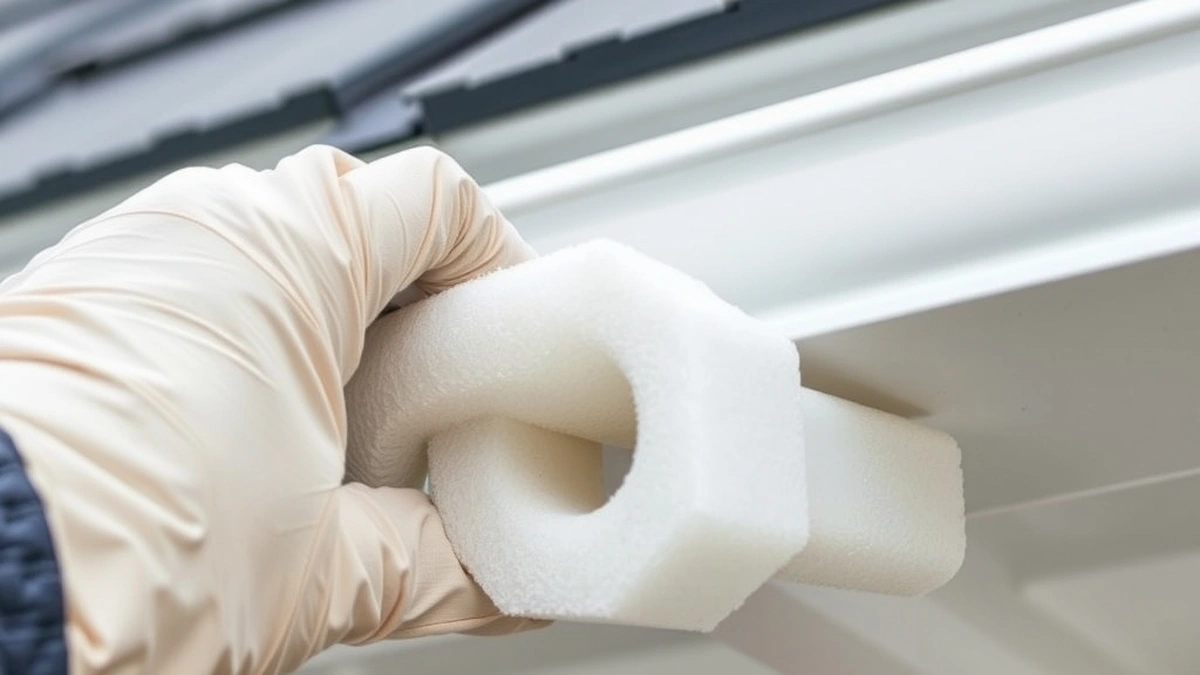
Foam insert maintenance is inspection, not cleaning: check the foam twice a year for waterlogging, crumbling and fit, clear the trough around it, and replace any section that stays damp or sheds material. Degraded foam cannot be reused.
- Frequency
- 2 inspections per year
- Time, 200 ft
- 1–2 hours
- Replacement cost, 200 ft
- $200–$800
- Cleaning per visit
- $150–$400
Some links on this page are affiliate links.If you buy through them we may earn a commission at no extra cost to you. We do not accept payment for rankings. Read the full disclosure.
Foam insert maintenance is mostly inspection, because there is very little you can do to repair foam. You check whether the block is still sound, clear what has collected around it, and replace the sections that have gone soft, heavy or crumbly. Twice a year is enough, and the whole job is quicker than maintaining a brush insert.
What Foam Allows
A foam gutter insert is a rigid trapezoid block sitting in the lower part of the trough, relying on contact with the gutter walls to stay put. It has no moving parts and nothing to adjust. That means maintenance consists of checking fit, checking material condition and clearing debris.
There is no equivalent of lifting a brush insert out and rinsing it. Foam that has taken on water cannot be dried back into a serviceable block, and foam that has started to crumble cannot be re-surfaced. The inspection decides between keeping and replacing, and there is no third option.
The cost frame is the same as every other insert. Installed, $200 to $800 for a typical home. A hired gutter visit, with or without an insert, is $150 to $400. Two visits a year is $300 to $800, which is the price of a new foam set.
The Inspection Calendar
| Season | Task | What you are looking for |
|---|---|---|
| Late fall | Full inspection after leaf drop | Waterlogging, crumble, debris at corners |
| Before first hard frost | Lift foam if freeze is severe | Ice bonding risk |
| Early spring | Refit or replace | Sections that did not survive winter |
| Late spring | Surface clear | Catkins and blossom matted on the face |
| Midsummer | Fit check | Bowing gutters, loose sections, insect nests |
Two full inspections a year suit most climates. Where winters are hard, the pre-frost lift is the step that saves the product, because ice forming inside the foam is what pushes blocks out of the trough.
How to Inspect a Run
- Clear the top face first, pulling debris off toward the downspout rather than pushing it along the run.
- Lift one section at the high end and squeeze it. Water running out means open-cell foam that has waterlogged, and that section is finished.
- Rub the top face with a gloved thumb. Chalky residue or loose granules means UV breakdown has started.
- Check the fit by pressing the block sideways; it should meet both walls with light resistance and should not rock.
- Look at the gutter floor and the outlet while the section is out, then refit it below the lip, not proud of it.
Do that at two or three points along each run rather than at every section. Foam tends to fail in the same way along a whole run, so a sample is usually enough, and lifting every block risks breaking the fit on sections that were sound.
What Cannot Be Fixed
Four conditions end the section’s life, and no amount of maintenance reverses any of them:
- Waterlogging, where the block stays heavy for days after rain.
- Surface crumbling, where the face has gone chalky and sheds granules.
- Loss of shape, where the block no longer sits flat on the floor or presses on both walls.
- Ice damage, where the block has been split or deformed by freezing.
One practical note: do not try to dry a waterlogged block in the sun on the driveway. It will dry on the outside and stay damp in the core, then swell again on the first rain. Replacement is the cheaper answer.
Replacement Arithmetic
Working through a 200-foot run:
- New foam set installed: $200 to $800.
- Hired inspection and clear, twice a year: $300 to $800 annually.
- Replacement every few seasons, plus the labor again: another $200 to $800 each time.
Over a decade of that cycle, the total passes what a mesh system costs once at $1,800 to $4,500 and needs only surface clearing. The foam is not a bad purchase on a short run with light debris, but it is a repeating one, and the arithmetic should include the repeats.
When to Stop Maintaining Foam
Two situations justify switching rather than replacing:
The first is a second replacement in the same run. If the first block failed early, the second will too, because the conditions have not changed.
The second is a debris load that includes pine needles, shingle grit or seed pods. Foam does not stop those, so the block degrades while the gutter silts up around it. A brush insert at the same $200 to $800 is the more durable cheap option, and the brush insert maintenance routine is a lift-and-rinse rather than a replacement.
If neither applies, replace the failed sections, keep the sound ones, and carry on. The foam insert problems page lists the failure modes to watch for, and foam insert cost shows what the replacement sections run per foot. The general schedule is in gutter guard maintenance.
Bottom Line
Foam insert maintenance is two inspections a year, a squeeze test and a fit check, with replacement as the only remedy for a block that has failed. Budget $200 to $800 per replacement set and $300 to $800 a year if you hire the visits. Do the inspection honestly, replace what has gone soft rather than drying it out, and switch product if the foam has failed twice in the same run.
Frequently asked questions
How do you maintain foam gutter inserts?
Inspect twice a year, clear debris from the top face and the trough around the block, check for waterlogging and crumbling, and confirm each section still sits below the gutter lip. There is no cleaning method that restores degraded foam.
Can foam gutter inserts be washed?
Rinse them lightly at most. A hose at full pressure drives water into the cell structure, and on open-cell foam that accelerates the waterlogging that destroys the block. Never pressure-wash foam at close range.
How do I know if the foam needs replacing?
It stays heavy and damp days after rain, the surface has gone chalky or pitted, it sheds granules when rubbed, or it no longer presses against both gutter walls. Any one of those means replacement rather than maintenance.
Does foam insert maintenance cost less than cleaning a bare gutter?
Only if you do it yourself. A hired visit runs $150 to $400, the same as a bare-gutter cleaning, and two visits a year is $300 to $800, which is the price of a new foam set.
Should I remove the foam in winter?
In a hard-freeze climate, lifting the foam before the first hard frost prevents ice from bonding to it and pushing sections out of the trough. Store the sections dry and refit them in spring if they are still sound.
When should I stop maintaining foam and change product?
After the second replacement in the same run, or as soon as the debris load includes needles or shingle grit. At that point a brush insert or mesh system costs less over the life of the gutter.
Sources
Some links are affiliate links.If you buy through them we may earn a commission at no extra cost to you. We do not accept payment for rankings. Read the full disclosure.