Screen vs micro-mesh: price, aperture, and debris type
Screen guards cost $1.50 to $4.50 per foot and stop leaves; micro-mesh costs $9 to $22.50 and stops needles. Compare aperture, lifespan, and payback.
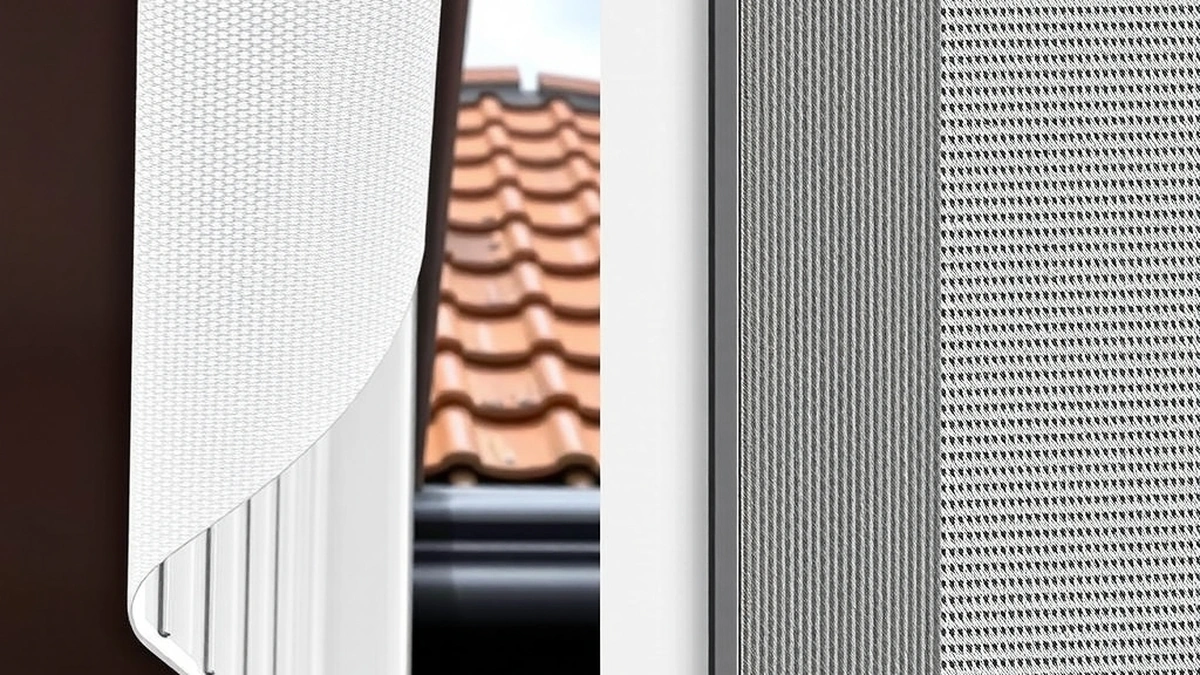
A screen guard costs $300 to $900 DIY, or $1.50 to $4.50 per foot at 200 feet, and stops leaves. Micro-mesh costs $1,800 to $4,500, or $9 to $22.50 per foot, and stops needles and grit because its aperture is under a millimetre.
- Screen, 200 ft
- $300 - $900
- Micro-mesh, 200 ft
- $1,800 - $4,500
- Aperture
- 2 - 5 mm vs under 1 mm
- Expected life
- 5 - 10 years vs 10 - 15 years
Some links on this page are affiliate links.If you buy through them we may earn a commission at no extra cost to you. We do not accept payment for rankings. Read the full disclosure.
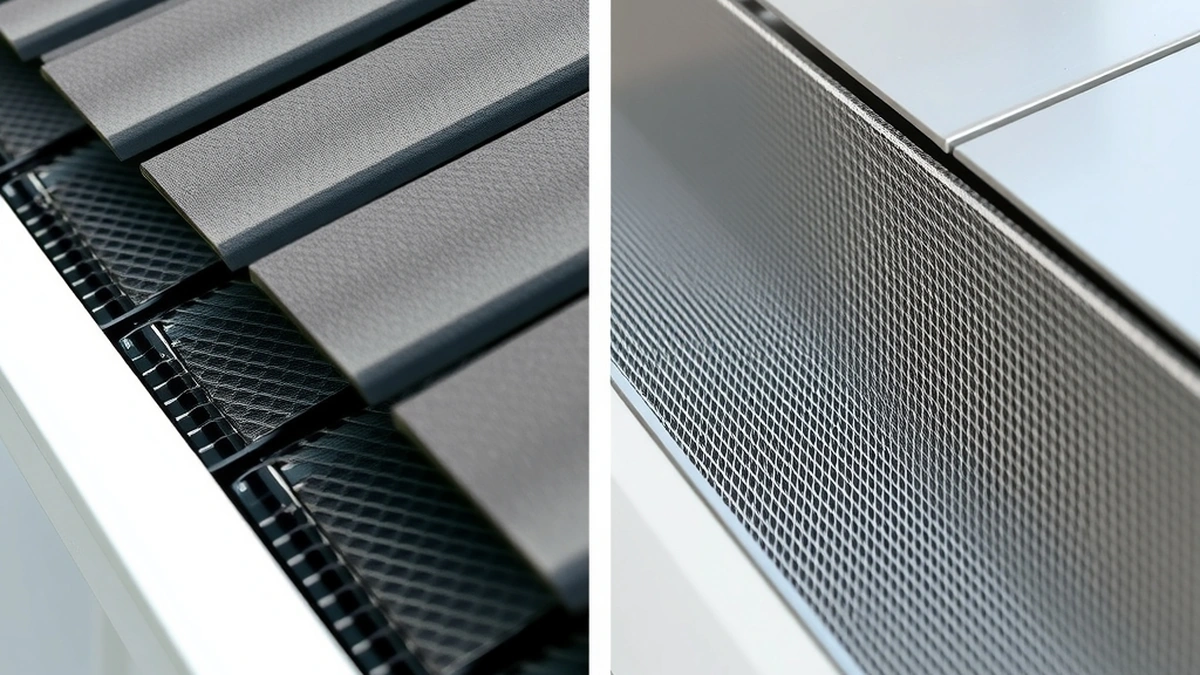
A screen guard is a perforated sheet with holes of roughly 2 to 5 millimetres; micro-mesh is a woven cloth with an aperture under one millimetre, bonded to a rigid frame. On a 200-foot house that difference costs $300 to $900 against $1,800 to $4,500, or $1.50 to $4.50 per foot against $9 to $22.50. The question is not which is better. It is which debris your roof produces.
The definition that decides everything
Screen vs micro-mesh comes down to aperture, which is the size of the opening water passes through. A screen’s perforations are large enough to pass shingle grit, pollen, and most pine needles. A micro-mesh cloth is woven fine enough to hold all three on the surface.
Everything else follows from that. A screen needs no frame because the sheet is stiff enough to span a gutter on its own for a few years. Micro-mesh needs a frame because a cloth that fine has no stiffness, and the frame is most of the cost.
The price gap, per foot and per job
| Item | Screen | Micro-mesh |
|---|---|---|
| DIY material, typical house | $300 - $900 | Not usually sold DIY |
| Installed, typical house | $1,200 - $2,700 | $1,800 - $4,500 |
| Per foot at 200 ft, DIY | $1.50 - $4.50 | $9.00 - $22.50 |
| Per foot at 200 ft, fitted | $6.00 - $13.50 | $9.00 - $22.50 |
| Material share of price | High | Low |
| Labour share of price | Low | High |
The arithmetic is division, not a quote. Screen at 200 feet: $300 ÷ 200 = $1.50 and $900 ÷ 200 = $4.50. Micro-mesh at the same length: $1,800 ÷ 200 = $9.00 and $4,500 ÷ 200 = $22.50.
The interesting row is the fitted comparison. Once a contractor is on the roof, the labour is similar for both products, so the gap narrows to the material difference. That is why a fitted screen at $6 to $13.50 per foot is poor value against mesh at $9 to $22.50: for a few dollars more per foot, the finer product does more.
Performance where it matters
| Condition | Screen | Micro-mesh |
|---|---|---|
| Maple and oak leaves | Good | Good |
| Pine needles | Fails | Good |
| Shingle grit | Passes through | Held on top |
| Pollen and seed fluff | Clogs the surface | Sheds when dry |
| Heavy rain flow | Good until clogged | High by design |
| Snow load | Deforms | Sheds, frame holds |
| Cleaning method | Lift and rinse | Brush from above |
| Service life | 5 - 10 years | 10 - 15 years |
Two rows explain most buyer regret. Pine needles and shingle grit are the debris that turns a cheap screen into a maintenance contract, and both are common on older roofs in windy, dry, or coniferous regions.
What the frame actually buys
A micro-mesh panel is an aluminium extrusion with the cloth bonded into it, and the frame is what keeps the cloth flat across the gutter. That flatness is the whole mechanism: a mesh that sags holds water in a puddle, and a puddle is where debris settles and starts to mat.
The frame also carries load. Snow sits on the panel rather than on the cloth, and the extrusion transfers that weight to the lip and the fascia instead of stretching the weave. A screen has no such structure, which is why a heavy wet snow bends it into the trough and leaves a permanent dip.
Finally, the frame sets the fit. Panels are cut and mitered at corners, so the back edge is closed by geometry rather than by a hopeful fold. That is the detail most DIY screen jobs get wrong, and it is the reason a fitted mesh system clogs less even when both products are clean.
Where the screen wins
The screen wins on price and on simplicity. It is the only guard most homeowners can install in an afternoon, it needs no fabrication, and on a house with coarse deciduous leaves and a shallow roof it does the job for years.
It also wins where the gutter is short. On a 60-foot run, a $300 screen is $5 per foot and a $1,800 mesh minimum is $30 per foot, because the mesh job carries a minimum charge. Small runs rarely justify the framed product.
Where micro-mesh wins
Micro-mesh wins wherever the debris is fine, the roof is tall, or the cleaning bill is already real. Professional cleaning runs $150 to $400 per visit, so twice a year is $300 to $800. At $1,800, the low end of the mesh range breaks even against $800 a year in 2.25 years; at $4,500 against $300 a year it takes 15 years.
That spread is the decision. A house under pines with paid cleaning pays back fast. A house with one maple and a homeowner who cleans his own gutters never pays back in cash, only in ladder trips.
Five steps to choose
- Identify the debris. Look at the roof valleys and the gutter after a storm, not at the trees across the street.
- Measure the run. Per-foot rates only compare at the same length.
- Price both at your actual length, including the minimum charge on a short run.
- Add the cleaning you actually pay for in a year, then divide each purchase price by it.
- Check the gutters first. Neither product fixes a trough that is pitched backwards or a hanger that has pulled out.
For the screen side of the arithmetic, see screen cost; the mesh side is in micro-mesh cost. The failure modes that make people switch are in screen problems, and the full five-type comparison is in types of gutter guard.
The short version
Buy the screen for leaves and a tight budget, and accept that it will need lifting twice a year. Buy micro-mesh when needles, grit, or a two-storey roof make cleaning a chore you will not do. The worst purchase is a fitted screen at $6 to $13.50 per foot, because it costs nearly as much as mesh and filters half as well.
Frequently asked questions
Is micro-mesh better than a screen guard?
For fine debris, yes. The aperture is under a millimetre, so needles, grit, and pollen stay on the surface instead of passing through. For coarse leaves on a tight budget, a screen does the same job for a fifth of the price.
How much more does micro-mesh cost?
On a 200-foot house, $1,500 to $3,600 more. Screen is $300 to $900 and micro-mesh is $1,800 to $4,500, so the difference at the low ends is $1,500 and at the high ends $3,600.
Does a screen guard keep out pine needles?
No. Needles pass through a 2 to 5 mm perforation and mat inside the trough, or they catch on the surface and block water. Micro-mesh is the product designed for that debris.
Can I fit micro-mesh myself?
It is possible on a single storey with sound gutters, because the panels are pre-framed and screw through the lip. Most buyers use a contractor, since a badly fitted panel leaks at the corners.
Which one lasts longer?
Micro-mesh, typically ten to fifteen years against five to ten for a coated aluminium screen. The frame carries the load and the mesh is stainless, so the panel does not deform the way a light screen does.
Do both need cleaning?
Yes, but differently. A screen is lifted and rinsed because debris packs into the perforations. Micro-mesh is brushed from above, because debris sits on the surface and sheds when it dries.
Sources
Some links are affiliate links.If you buy through them we may earn a commission at no extra cost to you. We do not accept payment for rankings. Read the full disclosure.