Screen reviews: what owners report, and what to ignore
An independent read of screen gutter guard reviews: the $300 to $900 DIY price, the complaints that repeat, and how to tell a fault from a bad install.
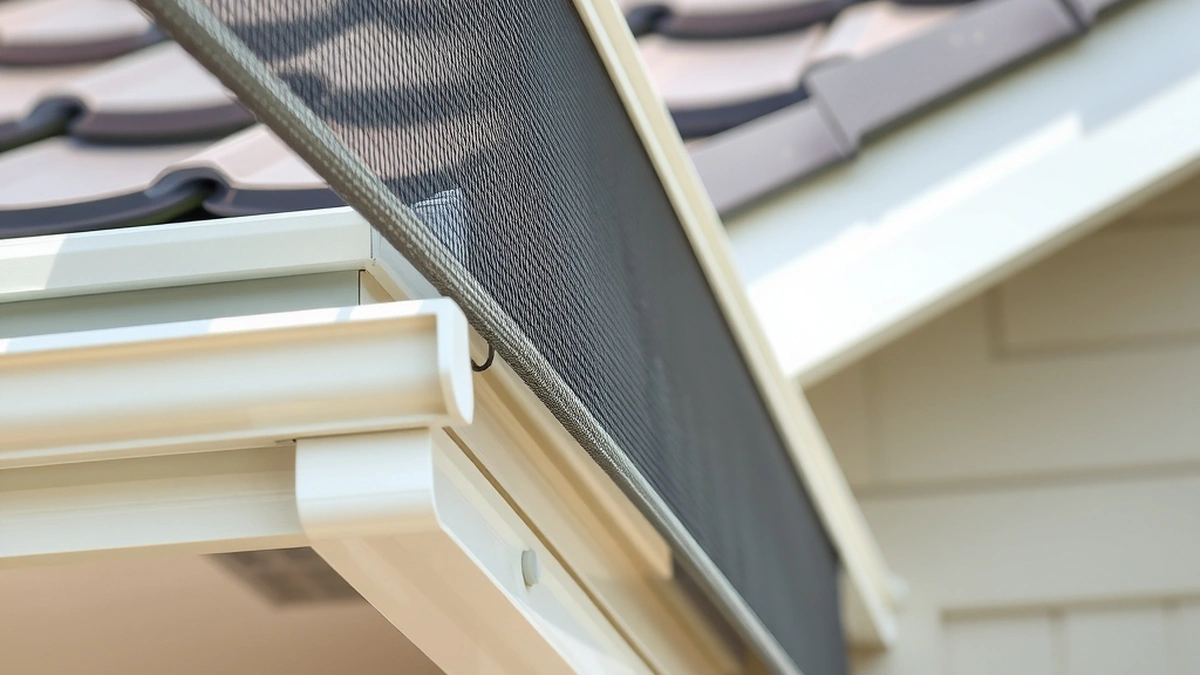
Screen guard reviews mostly track price expectation. At $300 to $900 DIY or $1,200 to $2,700 fitted, buyers forgive a cheap screen that clogs but not an expensive one, and the complaints that repeat are lifting panels, surface clogging, and fasteners pulling out.
- DIY price band
- $300 - $900
- Fitted price band
- $1,200 - $2,700
- Most common complaint
- Surface clogging
- Expected life
- 5 - 10 years
Some links on this page are affiliate links.If you buy through them we may earn a commission at no extra cost to you. We do not accept payment for rankings. Read the full disclosure.
Screen guards cost $300 to $900 as a DIY job and $1,200 to $2,700 fitted, and the reviews you read are written by people who paid one of those two numbers. That single fact explains most of the disagreement. A homeowner who spent $300 on a roll-out screen and cleans it twice a year writes a different review from one who paid $2,400 for a fitted panel and expected it to be self-cleaning.
This guide is independent and does not sell or install guards. It also does not run laboratory tests, so it does not publish scores. What it can do is separate the complaints that indicate a product fault from the complaints that indicate an installation or expectation fault, which is what a review is actually good for.
What the review record covers
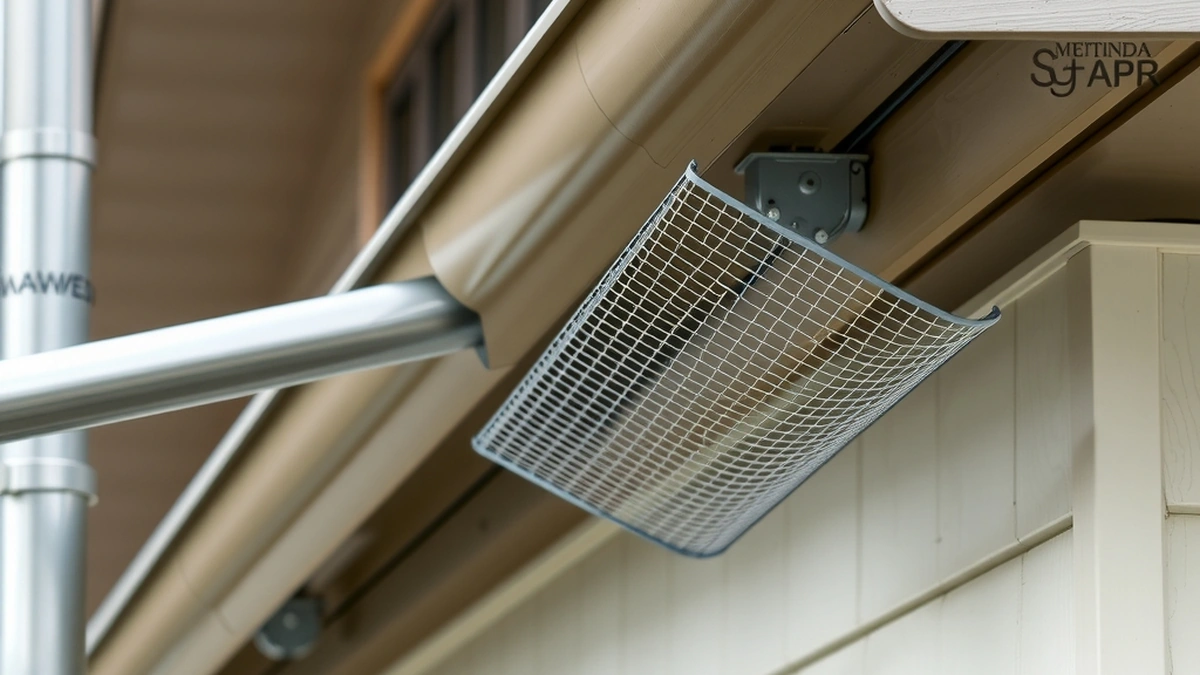
A screen guard is a perforated sheet, usually coated aluminium or galvanised steel, fitted over the gutter opening so leaves stay on top and water drops through. It is the cheapest manufactured guard and the oldest.
Reviews of the category therefore cluster around a narrow set of questions: did it fit, did it stay fastened, did water still go in, and how long before it needed cleaning. Almost nothing in the review record addresses the things that decide those answers, which are gutter width, hanger spacing, roof pitch, and the size of the debris.
The price you should see
| Purchase route | Typical cost | Per foot, 200 ft |
|---|---|---|
| Roll-out screen, DIY | $300 - $500 | $1.50 - $2.50 |
| Fitted aluminium panel, DIY | $500 - $900 | $2.50 - $4.50 |
| Contractor-fitted screen | $1,200 - $2,700 | $6.00 - $13.50 |
| Micro-mesh alternative | $1,800 - $4,500 | $9.00 - $22.50 |
The per-foot figures are division: $300 ÷ 200 = $1.50, $900 ÷ 200 = $4.50, $2,700 ÷ 200 = $13.50. A review that quotes a price well outside these bands is describing a different product, a different house size, or a dealer bundle with an inspection and a warranty attached.
Use the price band to calibrate the review. A complaint that a $400 screen clogged in two years is a fair criticism of a $400 screen. The same complaint about an $1,800 system is a complaint about the category, and the buyer should have been told what they were purchasing.
What owners praise
The recurring positives are consistent and unglamorous. The screen keeps leaves out of the trough, so the annual scoop becomes a surface brush. It stops the gutter filling over winter, which is the failure that leads to fascia rot and ice at the eaves. And it is cheap enough that a homeowner can cover a whole house for less than the cost of one contractor visit in some markets.
Owners also report that the improvement is largest in the first two years, before the surface mat builds. That is honest and worth taking seriously: the product’s best performance is early, and maintenance is what preserves it.
What owners complain about
| Complaint | Real cause | Product fault? |
|---|---|---|
| Water runs over the front | Surface mat of grit and pollen | Partly, by design |
| Panel lifted at the back | Fastened only at the front lip | Install fault |
| Screws pulled out | Soft aluminium lip, over-tightened | Install fault |
| Sagging between hangers | Hanger spacing over 24 inches | Install fault |
| Rust streaks within two years | Uncoated steel on aluminium gutter | Product fault |
| Needles pack into the mesh | Aperture too coarse for the debris | Product mismatch |
Four of the six rows are installation or specification failures, not manufacturing defects. That is the most useful thing the review record tells you: the product is not the variable, the fit is. A buyer who reads twenty reviews and ignores hanger spacing has read the wrong twenty.
How to read a screen guard review
- Find the price paid. A review without a price cannot be calibrated.
- Find the run length. A 60-foot porch and a 240-foot house are different products in practice.
- Find the debris described. Leaves, needles, and grit produce three different outcomes.
- Find the time elapsed. A review after one season is an unboxing; after three winters it is evidence.
- Discount the first and last five percent of any rating distribution. The extremes are usually about delivery and expectations.
- Look for a follow-up edit. Owners who return to update a review after two years are the most reliable source in the category.
Where screens satisfy, and where they do not
Screens satisfy on single-storey houses, shallow roofs, coarse deciduous debris, and a homeowner who will clean twice a year. They satisfy as a cheap barrier that keeps the trough from filling with leaves and keeps the downspout flowing.
They do not satisfy under pines, on roofs that shed shingle grit, on two-storey houses where nobody wants to climb, or on any gutter that is already pitched backwards. In those cases the review complaint is predictable and the product is not the answer.
If the debris is fine, the comparison that matters is screen vs micro-mesh, where the per-foot gap is $1.50 to $4.50 against $9 to $22.50. The maintenance burden behind the complaints is covered in screen maintenance, and the failure modes in more detail in screen problems.
The short version
Screen reviews are a decent guide to price and a poor guide to performance, because the variables that decide performance are not in the review. Buy the screen for what it is: a $300 to $900 barrier that needs cleaning twice a year and lasts five to ten. If you need filtration rather than a barrier, the honest step is to compare it against a framed mesh system before you buy, not after.
Frequently asked questions
Are screen gutter guards worth buying?
At $300 to $900 for a DIY job they are worth it on a single-storey house with coarse leaves and a homeowner willing to clean twice a year. They are poor value where needles and shingle grit are the main debris.
Why do screen guard reviews disagree so much?
The product is the same across most listings; the roof, pitch, debris type, and installation are not. A review written after one autumn says little, and a review written after three winters says a lot.
What is the most common complaint in screen reviews?
That water runs over the front instead of through the mesh. It is almost always a surface mat of fine debris or a gutter pitched the wrong way, not a manufacturing defect.
Do cheap screens last as long as expensive ones?
Rarely. Price buys coating thickness, mesh gauge, and frame rigidity. A $300 roll-out screen and a $900 fitted aluminium panel are different products, and the cheaper one usually shows it by year three.
Should I trust the star rating on a screen listing?
Treat it as a signal about the seller, not the product. Ratings aggregate buyers with different roofs and different expectations, and a screen that suits a maple-shaded ranch may fail under pines.
What should I check before buying a screen guard?
Gutter width, hanger spacing, coating type, and the debris your roof actually sheds. Those four decide whether the product works, and none of them appears in a typical review.
Sources
Some links are affiliate links.If you buy through them we may earn a commission at no extra cost to you. We do not accept payment for rankings. Read the full disclosure.