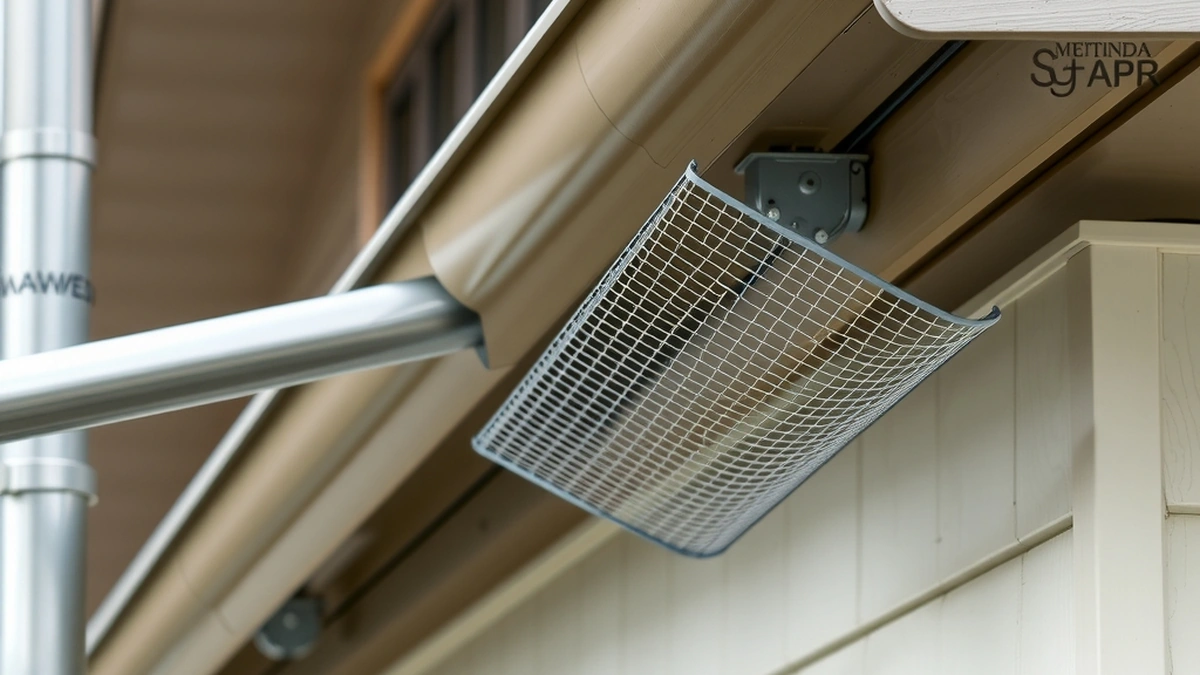
Best gutter guard: what actually matters
Best gutter guard: what actually matters: practical numbers, costs, and trade-offs, written independently.
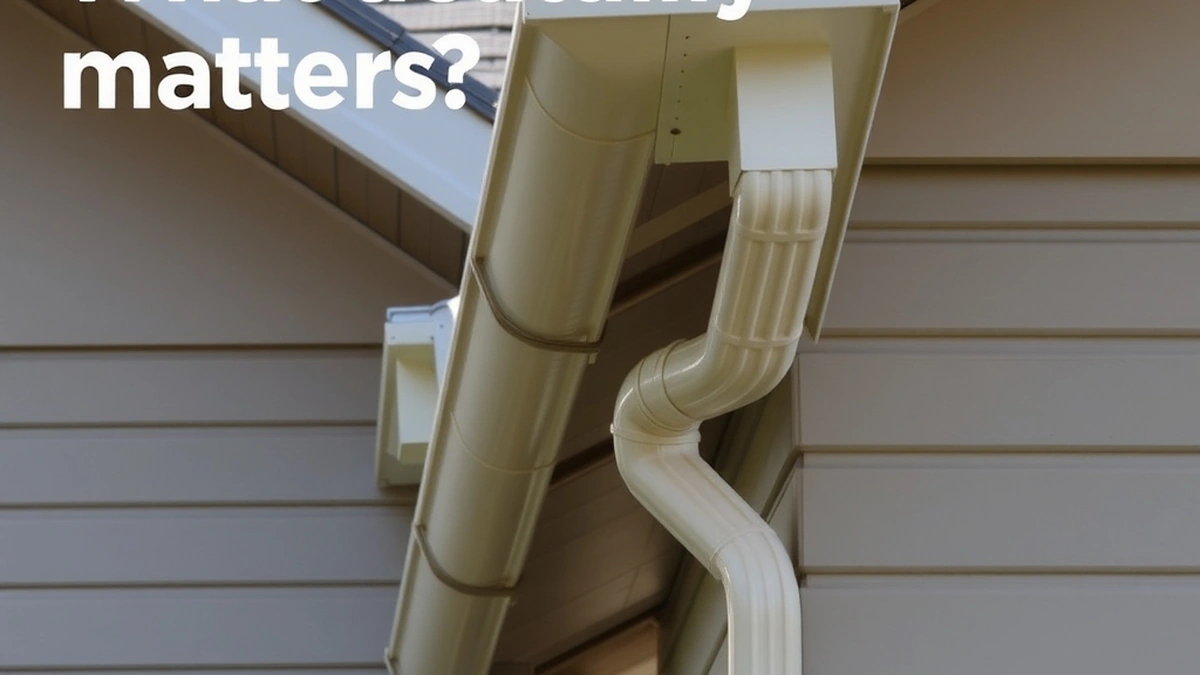
Best gutter guard: what actually matters: practical numbers, costs, and trade-offs, written independently. The guide below shows the numbers and the trade-offs.
- Typical range
- Varies by system and site
- First step
- Measure the space and confirm the load
- Professional help
- Recommended for structural or electrical work
Some links on this page are affiliate links.If you buy through them we may earn a commission at no extra cost to you. We do not accept payment for rankings. Read the full disclosure.
The best gutter guard is the one that matches the debris your roof actually sheds, the length of the run, and who is going to install it. On a lot ringed by pines that is usually a fine stainless mesh at $1,800 to $4,500 installed; on a long straight run under maples it can be a reverse-curve cover at $2,000 to $5,000. Brand and price tell you very little until those three facts are settled.
What “Best” Actually Means
A gutter guard is a cover fixed over the open top of a gutter that lets rainwater in and keeps leaves, needles, and grit out. That is the whole job. Everything else — alloy, aperture, frame, fastening — is a means of doing it under a particular debris load.
So “best” is not a product ranking. It is a fit between four variables: what falls on the roof, how much gutter there is, how high it sits, and whether the trough underneath is sound. A premium panel on a sagging gutter is a worse purchase than a cheap screen on a straight, well-pitched run.
Start With the Debris, Not the Product
Walk the roof edge in late fall and look at what has collected. The material on the ground under the drip line is the material the guard has to handle.
- Whole leaves. Oak, maple, and sycamore leaves are large and light. They slide off a curved cover and mat on a flat screen. Either design works if the surface stays steep enough to shed them.
- Pine and spruce needles. These behave like a liquid. They pass through coarse screens, weave into brush inserts, and blanket anything with an aperture above roughly a millimeter.
- Shingle grit. Granules washed off an aging roof settle into the trough as sand. Only a fine weave holds them back, and even then they accumulate on the surface.
- Seed pods and catkins. Helicopter seeds and birch catkins bridge across openings and dam water behind them, which looks like a pitch problem and is not.
- Moss and algae. These grow where water stands. No guard fixes standing water; correct the pitch first.
Two houses on the same street can need different products because one has a pine over the north elevation and the other has only shingle grit.
The Price Ladder
The installed ranges below are the numbers to plan against on a typical single-family house, not quotes for your address. On a 200-foot run they convert to a per-foot figure:
- Micro-mesh: $1,800 ÷ 200 = $9.00 per foot; $4,500 ÷ 200 = $22.50 per foot
- Reverse-curve: $2,000 ÷ 200 = $10.00; $5,000 ÷ 200 = $25.00 per foot
- Brush or foam: $200 ÷ 200 = $1.00; $800 ÷ 200 = $4.00 per foot
- DIY screen: $300 ÷ 200 = $1.50; $900 ÷ 200 = $4.50 per foot
- Dealer system: $3,000 ÷ 200 = $15.00; $8,000 ÷ 200 = $40.00 per foot
- Cleaning baseline: $150 to $400 per visit
The comparison that matters over time is against cleaning. Two visits a year at $150 to $400 each is $300 to $800 annually, or $3,000 to $8,000 across ten years. A $1,800 to $4,500 mesh system sits inside that band, which is why the pitch works at all, and why a $6,000 quote is a hard sell on arithmetic alone.
Filtration Against Flow
Every guard trades one against the other. A fine aperture holds fine debris and drains slowly; a wide aperture drains fast and passes the debris that causes the worst clogs. The table sets out where each type lands.
| Type | How it separates debris | Installed cost | Per foot at 200 ft | Typical failure |
|---|---|---|---|---|
| Micro-mesh | Pore size under 1 mm | $1,800–$4,500 | $9.00–$22.50 | Surface blankets with wet leaves or pollen |
| Reverse-curve | Surface tension on a curved nose | $2,000–$5,000 | $10.00–$25.00 | Overflow in a downpour |
| Brush or foam | Bristles or foam fill the trough | $200–$800 | $1.00–$4.00 | Fines pass through and settle |
| Screen | Coarse woven or perforated sheet | $300–$900 | $1.50–$4.50 | Needles and grit wash through |
| Dealer system | Fine panel sold and serviced by a dealer | $3,000–$8,000 | $15.00–$40.00 | Cost; service depends on the dealer |
The two premium designs fail in opposite directions. A reverse-curve cover rarely clogs because little gets in, but it can only carry so much water around its nose. A micro-mesh panel carries heavy flow until its surface seals. Both are limits you can predict from the roof.
Fit and Fastening Decide the Outcome
Most complaints about guards are not about the guard. They are about the fit.
Corners are the first weak point. A panel cut and butted at a 90-degree turn leaves a slit that debris pours through, and the slit widens as the metal moves. Fabricated corners with a riveted mitre cost more and stay closed.
The frame is the second. A rigid frame holds the panel flat between fasteners and grips the gutter lip without crushing it. A light channel sags over a long run, and a sag is a low spot where water pools. On runs over about 40 feet, frame stiffness matters more than mesh alloy.
Fasteners are the third. Short screws into a thin aluminum lip deform it, and a deformed lip opens a gap the guard was supposed to close. Stainless fasteners into sound fascia outlast any mesh.
Under all of that sits the gutter itself. Loose hangers, separated seams, and standing water all have to be repaired before a cover goes on. A guard hides those faults, and hidden water damage is the expensive kind.
How to Shortlist
- Measure every run in linear feet and note the height of each; both set the product and the labor.
- Identify the dominant debris from the ground under the drip line, not from a brochure.
- Count the downspouts. Fewer than one outlet per 35 feet of run favors a mesh product.
- Check the pitch with a 4-foot level: water should fall about 1 inch per 10 feet. Fix it before buying anything.
- Get two quotes that state footage, per-foot price, aperture or curve specification, fastener type, and whether fascia repair is included.
- Compare each total against ten years of cleaning at $3,000 to $8,000.
For the per-type cost breakdown, see gutter guard cost and gutter guard cost per square foot. The installation sequence is in gutter guard installation, and the alternatives are set out in types of gutter guard.
Bottom Line
The best gutter guard is a fine mesh where needles and grit dominate, a reverse-curve cover where large leaves fall on long straight runs, and an insert or screen where the budget binds. Spend the money on corners, frame, and fasteners before you spend it on a brand, and repair the gutter first: every guard is only as good as the trough it covers.
Frequently asked questions
What is the most important measurement?
Start with the ceiling or clearance number; it decides which systems can fit.
What does a typical project cost?
Costs vary by system and site access; the guide shows the line items and a planning range.
Can I install this myself?
Some tasks are DIY-friendly, but structural, electrical, and load-bearing work should be done by a licensed professional.
How long does installation take?
A simple setup is a weekend; a full build with electrical or structural work can take several weeks.
What should I check before buying?
Confirm dimensions, load ratings, and the manufacturer's installation requirements for your exact model.
Where can I find local help?
Ask a licensed contractor or installer who has worked with the same system and can inspect your site.
Sources
Some links are affiliate links.If you buy through them we may earn a commission at no extra cost to you. We do not accept payment for rankings. Read the full disclosure.