Reverse-curve vs foam insert: diversion or block
Reverse-curve costs $2,000 to $5,000 and diverts water around a curved nose. Foam costs $200 to $800 and fills the trough. Compare life, pitch, and snow.
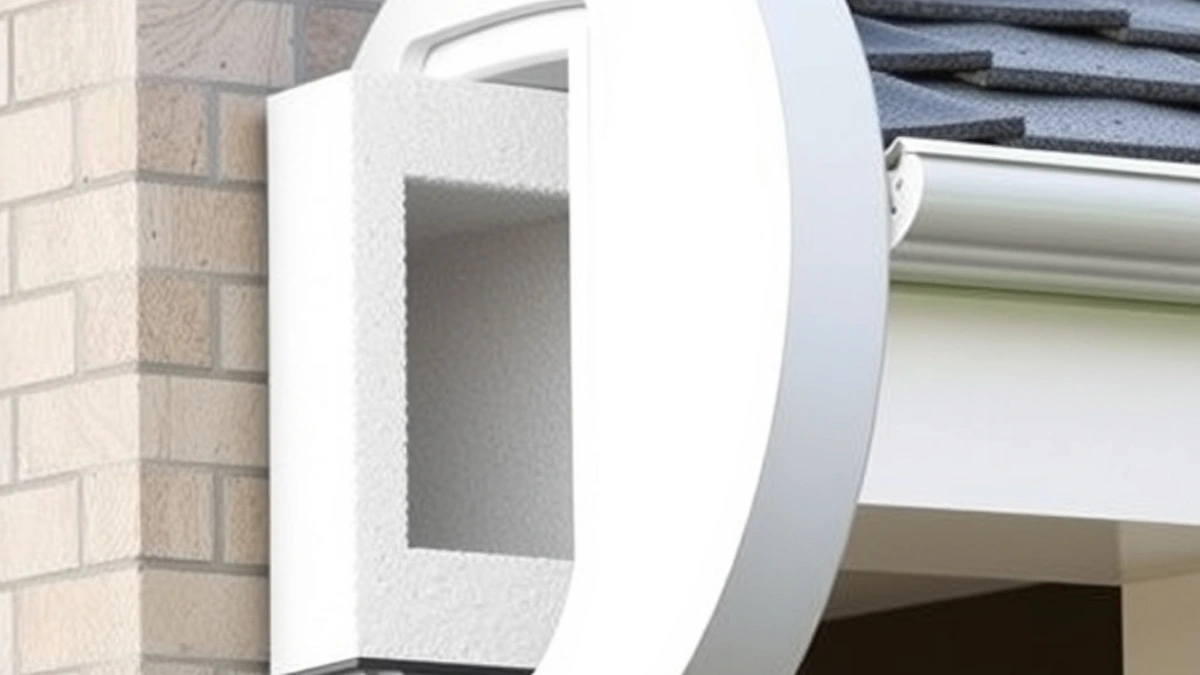
Reverse-curve costs $2,000 to $5,000 installed, or $10 to $25 per foot at 200 feet, and diverts water over a curved nose. Foam costs $200 to $800, or $1 to $4 per foot, and fills the trough to block debris. They are not the same class of product.
- Reverse-curve
- $2,000 - $5,000
- Foam insert
- $200 - $800
- Per foot at 200 ft
- $10 - $25 vs $1 - $4
- Life
- 15 - 20 years vs 2 - 4 years
Some links on this page are affiliate links.If you buy through them we may earn a commission at no extra cost to you. We do not accept payment for rankings. Read the full disclosure.
Reverse-curve and foam sit at opposite ends of the guard market: $2,000 to $5,000 against $200 to $800 installed, or $10 to $25 per foot against $1 to $4 at 200 feet. The price gap is six to ten times, and it buys two different mechanisms. One diverts water around a formed aluminium nose; the other fills the gutter with a block and hopes the water finds its way through.
The two mechanisms
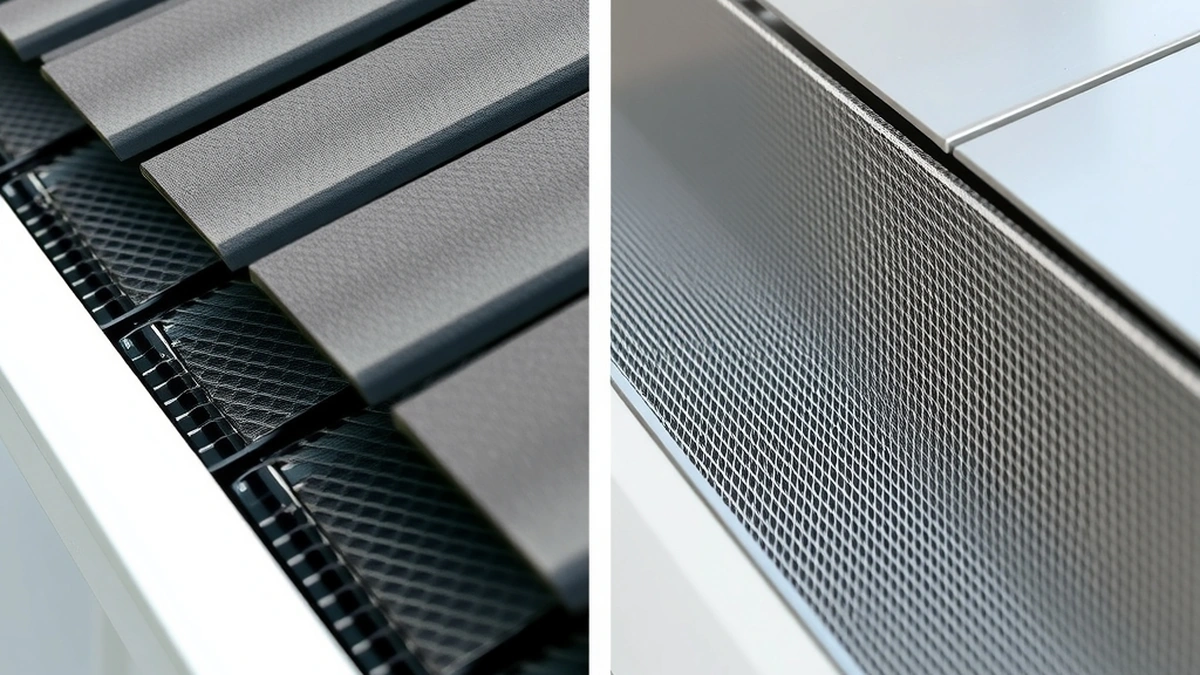
A reverse-curve cover is a curved aluminium section fitted over the gutter. Water clings to the curve, wraps around the nose, and drops into the trough; debris is too stiff to follow the curve and slides off the roof.
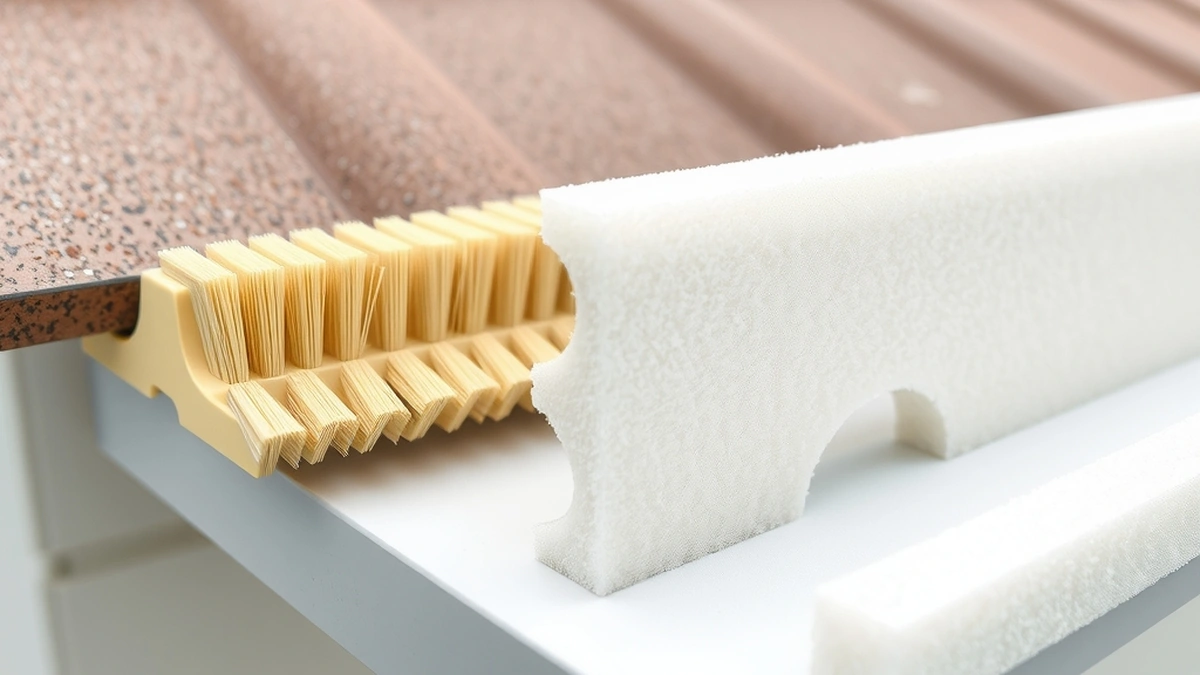
A foam insert is a shaped polyurethane block pressed into the channel. It displaces debris so leaves cannot lie flat, and water is supposed to pass through the open cells.
The first is a water-handling device. The second is a volume filler. That difference explains both the price and the failure modes.
Price, life, and cost per year
| Item | Reverse-curve | Foam insert |
|---|---|---|
| Installed | $2,000 - $5,000 | $200 - $800 |
| Per foot at 200 ft | $10.00 - $25.00 | $1.00 - $4.00 |
| Expected life | 15 - 20 years | 2 - 4 years |
| Cost per year | $100 - $333 | $50 - $400 |
| Maintenance | Occasional brush | 2 - 4 rinses a year |
| DIY | No | Yes |
The per-year figures are division. Reverse-curve: $2,000 ÷ 20 = $100, and $5,000 ÷ 15 = $333. Foam: $200 ÷ 4 = $50, and $800 ÷ 2 = $400.
That table contains the only real argument for foam: at its best case it is the cheapest guard per year on the market. At its worst case it costs more per year than a reverse-curve system, and it needs several times the attention.
Where reverse-curve earns its price
Reverse-curve earns its price on a steep roof with high rainfall. The design moves a large volume of water quickly, the aluminium section is robust, and there is nothing to tear, blind, or replace.
It also earns it on appearance. The continuous curved profile reads as part of the roofline rather than an added mesh, which matters on a house where the gutter is visible from the street.
And it earns it on life. Fifteen to twenty years with occasional brushing is a different ownership experience from a product that is replaced every two to four years.
What the installation involves
Reverse-curve is a contractor job. The cover sections are cut to the run, the nose is set to clear the roof edge, and the profile is fastened through the front lip and the fascia. On a shallow trough or a short overhang, the fitter may need a sub-frame to get the mounting height right, and that is where the labour climbs.
Foam is a knife and ten minutes. Cut the block to the width of the trough, press it in, and butt the lengths together at the corners. There is no fastening, no cutting to a profile, and no way to get the height wrong.
That difference is why the two products are bought by different people. One is a building alteration; the other is a consumable.
Where the design falls short
The weakness is pitch. Reverse-curve relies on water clinging to the curve, and that needs enough flow and slope. On a roof below about 3/12, water tends to fall short of the nose or overshoot it, and the gutter gets wet either way.
The second weakness is fine debris. Needles, grit, and seed pods pass the nose and settle in the trough. A reverse-curve system on a pine-heavy roof still needs the gutter cleared, which is not what the buyer expected.
Where foam is defensible
Foam is defensible on a shed, a garage, a porch, or a short rental run where the gutter is not worth a four-figure installation. It is also the only guard that requires no fasteners and no cutting to width, so it is the one a nervous DIYer can fit.
It is not defensible as a permanent solution on a house with trees. The cells load with grit, the block holds water against the gutter floor, and the flow rate never returns to what it was on day one. Owners who buy foam twice in five years have spent $400 to $1,600 and still have a damp trough, which is the point at which the reverse-curve quote stops looking expensive.
Six steps to choose
- Decide how long you will own the property.
- Measure the roof pitch. Below 3/12, rule out reverse-curve.
- Identify the debris. Needles rule out both products.
- Price both at your run length.
- Add the annual maintenance time, paid or unpaid.
- Divide by expected life and compare the per-year figure.
Step six usually settles it. On a ten-year hold, reverse-curve at $3,000 is $300 per year; foam at $500 replaced three times is $150 per year plus the rinsing. The gap is smaller than the sticker price suggests, and the maintenance is not.
The short version
Reverse-curve is a long-life water-handling system, and foam is a cheap volume filler. Buy the cover for a steep roof on a house you are keeping; buy the foam for an outbuilding or a season. The price structures are in reverse-curve cost and foam insert cost, and the full market table is in gutter guard cost.
Frequently asked questions
Is reverse-curve worth ten times a foam insert?
On a house you intend to keep, usually. Reverse-curve lasts 15 to 20 years and needs little maintenance; foam lasts two to four years, holds water, and needs rinsing several times a season.
Does reverse-curve work on a low-pitch roof?
Poorly. The design relies on water clinging to the curve, which needs enough flow and pitch. Below about 3/12 the water tends to fall short of the nose or overshoot it, and the cover underperforms.
Why is foam so much cheaper?
Because it is a block of polyurethane with no frame, no fasteners, and no forming. Reverse-curve is an extruded aluminium section with a precise curve, cut and fitted to the gutter, and that fabrication is most of the price.
Which handles snow better?
Reverse-curve, generally. The aluminium section carries load and sheds snow, while foam holds water that freezes and crumbles the cells. Neither is immune to an ice ridge at the eave.
Can foam be used as a temporary measure before reverse-curve?
It can, but it is money spent twice. A foam insert at $200 to $800 buys one or two seasons, and the reverse-curve job still costs the same afterward.
Which is better for pine needles?
Neither is ideal. Needles pass the reverse-curve nose and settle in the trough, and they pack into foam pores. A micro-mesh panel is the product designed for that debris.
Sources
Some links are affiliate links.If you buy through them we may earn a commission at no extra cost to you. We do not accept payment for rankings. Read the full disclosure.