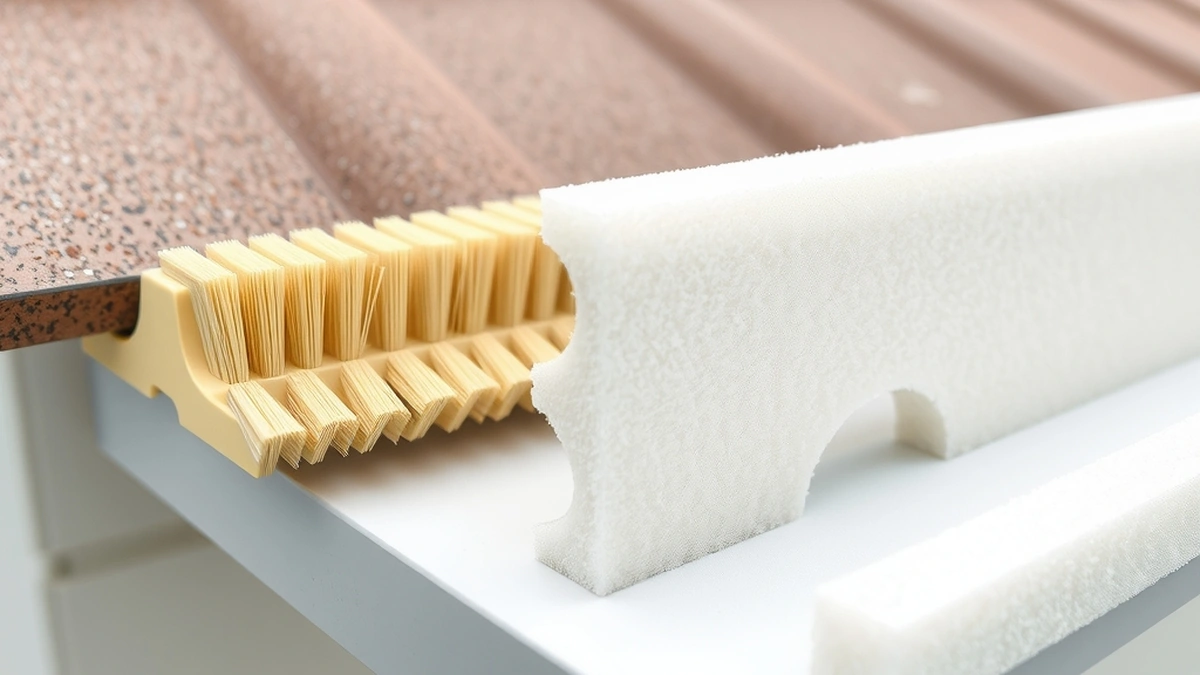
Micro-mesh vs screen: the aperture decides the job
Screen guards cost $1.50 to $4.50 per foot and hold leaves; micro-mesh costs $9 to $22.50 and holds needles. Compare aperture, flow, lifespan, and payback.
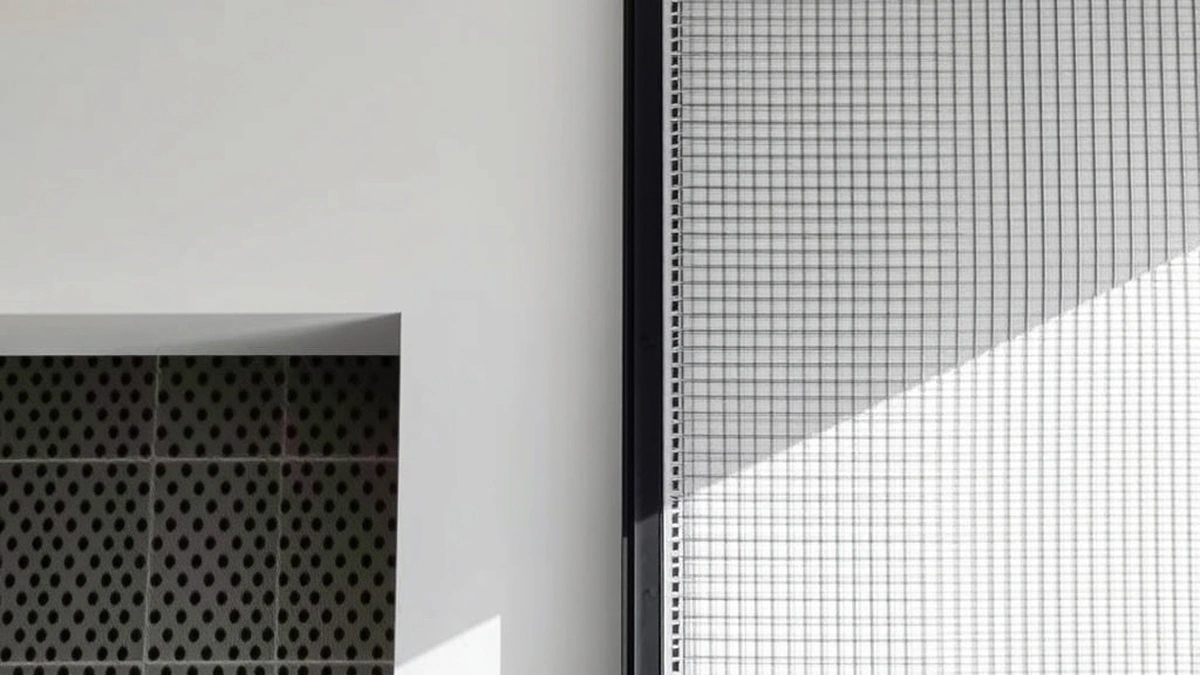
A screen guard has 2 to 5 mm perforations and costs $300 to $900 DIY, or $1.50 to $4.50 per foot at 200 feet. Micro-mesh has a sub-millimetre aperture and costs $1,800 to $4,500, or $9 to $22.50, and it holds the debris a screen passes.
- Screen, 200 ft
- $300 - $900
- Micro-mesh, 200 ft
- $1,800 - $4,500
- Aperture
- 2 - 5 mm vs under 1 mm
- Life
- 5 - 10 years vs 10 - 15 years
Some links on this page are affiliate links.If you buy through them we may earn a commission at no extra cost to you. We do not accept payment for rankings. Read the full disclosure.
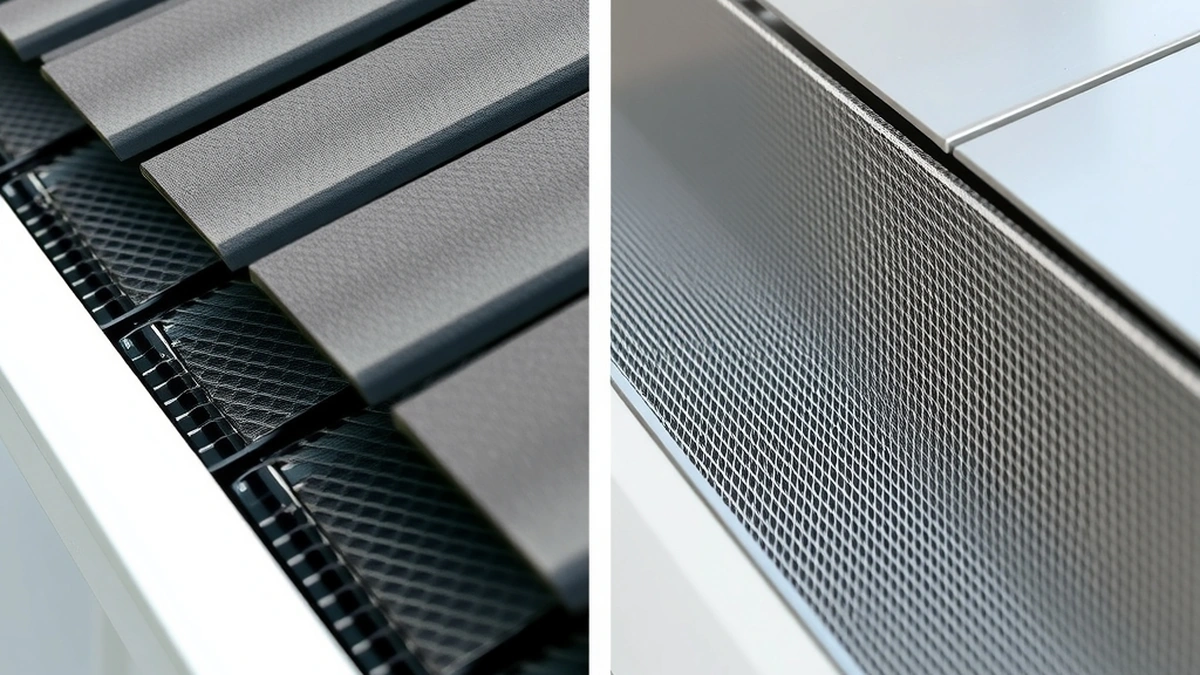
A screen guard is a perforated sheet with holes of 2 to 5 millimetres. Micro-mesh is a woven cloth with openings under one millimetre, bonded into a frame. That single difference explains the price, $300 to $900 against $1,800 to $4,500 on a typical house, and it explains why a screen that works perfectly under maples fails completely under pines.
Aperture, and why it is the whole argument
Aperture is the size of the opening water passes through. It sets what the guard can hold and how fast water can leave.
A 3-millimetre perforation passes shingle grit, pollen, bud scales, and most pine needles. A 0.5-millimetre woven aperture holds all of them on the surface. Neither is better in the abstract; each is matched to a debris size.
Price per foot and per job
| Item | Screen | Micro-mesh |
|---|---|---|
| DIY material | $300 - $900 | Not usually sold DIY |
| Contractor fitted | $1,200 - $2,700 | $1,800 - $4,500 |
| Per foot at 200 ft, DIY | $1.50 - $4.50 | $9.00 - $22.50 |
| Per foot at 200 ft, fitted | $6.00 - $13.50 | $9.00 - $22.50 |
| Expected life | 5 - 10 years | 10 - 15 years |
| Cost per year | $30 - $180 | $120 - $450 |
The fitted row is the one that matters for most buyers. Once a contractor is on the roof, the labour is similar for both products, so the gap narrows to the material difference: $6 to $13.50 per foot for a fitted screen against $9 to $22.50 for mesh.
That is a much smaller gap than the DIY comparison suggests, and it is the reason a fitted screen is rarely good value. For a few dollars per foot more, the finer product does more.
Performance compared
| Condition | Screen | Micro-mesh |
|---|---|---|
| Leaves and twigs | Good | Good |
| Pine needles | Fails | Good |
| Shingle grit | Passes through | Held |
| Pollen | Clogs surface | Sheds when dry |
| Heavy rain | Good until clogged | High flow |
| Snow load | Deforms | Frame carries it |
| Cleaning | Lift and rinse | Brush on top |
| DIY fitting | Easy | Moderate |
The screen’s failure mode is a surface mat. Once fine debris packs the perforations, water runs across the sheet and over the front lip, and the gutter behaves as if it were full.
Where the screen wins
The screen wins on price, on simplicity, and on short runs. It is the only guard most homeowners can install in an afternoon, it needs no fabrication, and on a single-storey house with coarse deciduous leaves it does the job for five to ten years.
It also wins where the run is short enough that the mesh minimum charge dominates. On 60 feet, a $300 screen is $5 per foot and an $1,800 mesh job is $30 per foot.
Where mesh wins
Mesh wins wherever the debris is fine. Needles, grit, and pollen stay on the surface, the frame keeps the panel flat, and the trough stays clear for a decade. On a roof surrounded by conifers, the screen is not a cheaper version of the mesh; it is a different product that does not solve the problem.
It also wins on a tall house, because the maintenance interval is longer and the panel does not need lifting. A screen has to be lifted and rinsed; a mesh panel is brushed from above.
A screen that is working leaves a trough with a thin layer of fine material in the bottom, because the perforations pass whatever is smaller than the hole. Over a season that layer becomes a silt bed, and silt is what blocks an outlet.
A mesh panel leaves the trough empty apart from a little dust. The debris stays on top where wind moves it, and what does reach the gutter is water. That is why mesh systems are associated with fewer blocked downspouts even though both products keep leaves out.
What the trough looks like, and the payback
Professional cleaning runs $150 to $400 per visit, so twice a year is $300 to $800. At $1,800, mesh breaks even against $800 a year in 2.25 years. At $4,500 against $300 a year, it takes 15 years.
The screen’s payback is different because it does not eliminate cleaning on a fine-debris roof; it just changes the surface being cleaned. On a coarse-leaf roof, a $300 screen that ends $600 of annual cleaning pays back in six months.
Six steps to decide
- Look at what collects in the gutter now, not at the trees.
- Measure the run and price both at that length.
- If needles or grit are present, choose mesh.
- If the debris is leaves and the house is single storey, a screen is adequate.
- If a contractor is fitting it, compare the fitted prices, not the DIY ones.
- Divide each price by its expected life before deciding.
Step five is the one that surprises buyers. The DIY gap is five to one; the fitted gap is closer to two to one.
The short version
Screens hold leaves, mesh holds everything. Screens are $1.50 to $4.50 per foot DIY, mesh is $9 to $22.50, and the fitted prices are much closer than the DIY prices suggest. The screen price structure is in screen cost, the mesh side is in micro-mesh cost, and the installation methods are in screen installation and micro-mesh installation.
Frequently asked questions
What is the difference between a screen and micro-mesh?
Aperture. A screen has perforations of 2 to 5 millimetres and lets grit, pollen, and needles through. Micro-mesh uses a woven cloth with openings under a millimetre, so those particles stay on the surface.
How much cheaper is a screen?
On a 200-foot house, $300 to $900 against $1,800 to $4,500. That is $1.50 to $4.50 per foot against $9 to $22.50, so the screen is roughly a sixth of the price at the low end.
Does a screen keep pine needles out?
No. Needles pass through the perforations and mat in the trough, or catch on the surface and block flow. Micro-mesh is the product designed for needle debris.
Which lasts longer?
Micro-mesh, at ten to fifteen years against five to ten for a coated aluminium screen. The frame carries the load and the stainless cloth does not deform the way a light perforated sheet does.
Can a screen be fitted over an existing gutter?
Yes, and it is the easiest guard to retrofit. It clips or screws over the lip without changing the gutter, which is why it is the most common DIY product.
Is micro-mesh worth it over a screen?
Where the debris is fine or the roof is tall, yes. Where the debris is coarse leaves and the gutter is on a single storey, a screen at a sixth of the price does the same job.
Sources
Some links are affiliate links.If you buy through them we may earn a commission at no extra cost to you. We do not accept payment for rankings. Read the full disclosure.