Micro-mesh maintenance
A season-by-season micro-mesh maintenance routine: surface brushing, trough flushing, fastener checks, and what a professional visit costs at $150 to $400.

Micro-mesh maintenance is mostly surface work: brush the panels in late fall and spring, flush the trough once a year, check fasteners and corners after winter, and clear the roof above each run. Two short visits a year replace four gutter cleanings.
- Surface clearing
- 2 times per year
- Trough flush
- 1 time per year
- Professional visit
- $150 - $400
- Installed system
- $1,800 - $4,500
Some links on this page are affiliate links.If you buy through them we may earn a commission at no extra cost to you. We do not accept payment for rankings. Read the full disclosure.
Micro-mesh maintenance is two surface clearings a year and one trough flush, plus a fastener check after winter. That is the whole routine. The guard moves the work from inside the gutter to the top of it, where a brush and a hose can reach it, and it cuts the frequency from three or four cleanings a year to one or two short visits. A professional visit runs $150 to $400, and on a guarded gutter it usually lands at the low end.
What Maintenance Actually Involves
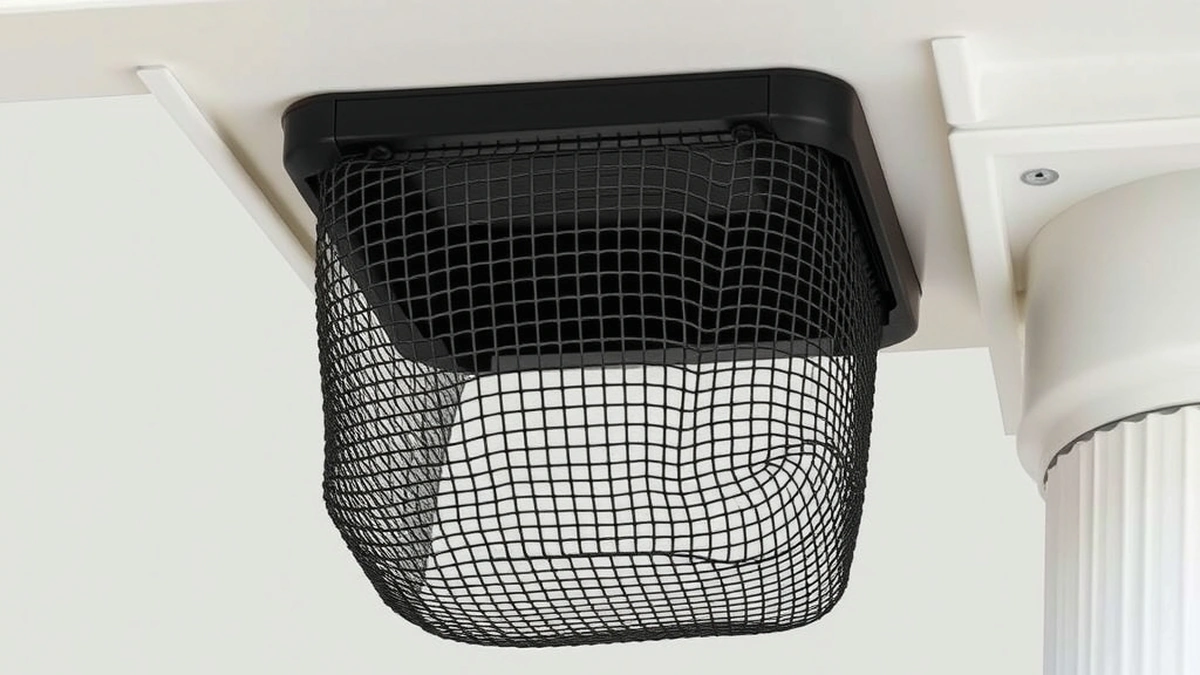
Micro-mesh is a fine woven panel over the gutter opening. Debris stays on top, water passes through, and particles smaller than the aperture settle in the trough. Maintenance therefore has three targets: the panel surface, the trough floor, and the fasteners that hold the frame.
Each has a different interval. The surface needs work twice a year, the trough once, and the fasteners an inspection after the freeze-thaw season. None of it requires removing the system, which is the point of buying one.
The Seasonal Schedule
| Season | Task | Why it matters |
|---|---|---|
| Late fall | Brush panels, clear corners | Leaf drop mats the mesh |
| Early spring | Brush again, check for winter damage | Ice and snow shift fasteners |
| Late spring | Flush trough, lift one panel | Sediment check |
| Midsummer | Spot-clear under trees | Pollen and seed pods seal the weave |
| After any major storm | Inspect corners and outlets | First place debris dams |
Two visits a year covers most houses. Under pines, add the midsummer pass, because needles work into the weave and hold moisture against the frame.
How to Clear the Panel
Work from a stable ladder with a helper footing it, and never reach sideways beyond arm’s length. A soft brush or a leaf blower on low does most of the job.
- Start at the high end of the run and work toward the downspout, so debris moves the way water does.
- Brush leaves and needles off the panel and over the front edge, not into the gutter.
- Clear inside corners and valleys first when you reach them, since that is where a dam forms.
- Rinse the panel at low pressure, holding the nozzle a foot back from the mesh.
- Check the outlet at the bottom of the run and confirm water leaves freely.
A pressure washer used close will flatten the weave and push grit into the aperture, which is worse than leaving the debris. Low pressure and patience is the whole technique.
Flushing the Trough
Once a year, lift a panel at a joint and look at the trough floor. If sediment is more than a thin film, flush the run.
| Sediment depth | Action |
|---|---|
| Film, less than 1/8 inch | Leave it, recheck next year |
| 1/8 to 1/2 inch | Flush from the high end with the outlet clear |
| Over 1/2 inch | Remove panels on that run and scoop, then flush |
Flushing means running water at the high end while a helper watches the outlet. If the outlet runs clear within a minute, the run is fine. If water backs up, the blockage is in the downspout, not the trough, and the downspout needs to be rodded from the bottom.
Fasteners, Corners, and Frame
Winter is hard on the frame. Ice expands in the joints, and freeze-thaw cycles work screws loose a fraction at a time.
Check four things in spring:
- Screw heads for rust and missing washers
- Panel movement under light hand pressure
- Sealant at corners and end caps
- Frame straightness along the run
A loose screw gets replaced, not tightened into the same hole. A cracked sealant bead at a corner gets cut out and renewed rather than smeared over.
What It Costs
The arithmetic is straightforward. Professional cleaning is $150 to $400 per visit. Two visits a year is $300 to $800 annually. Against four unguarded cleanings at $250 each, or $1,000 a year, the guarded routine saves $200 to $700 a year in labor.
Set that against the installed cost of $1,800 to $4,500 and the payback is five to nine years if the only benefit were cleaning labor. The stronger case is the avoided overflow damage and the ladder time you do not spend.
Doing It Safely
Most micro-mesh maintenance happens at the eave, which on a one-story house is a stepladder job and on a two-story house is not. OSHA’s fall-protection rules apply above six feet, and a homeowner is not exempt from the physics.
Three rules cover most of it: keep three points of contact, never stand above the second rung from the top, and do not work alone. If the run is two stories or the roof pitch is steep, the $150 to $400 professional visit is the cheaper option by a wide margin.
When Maintenance Turns Into Repair
Some findings are beyond a brush. Sagging panels, torn mesh, corroded frames, and fasteners that will not hold in soft fascia are repair items, and they usually appear at corners and outlets first.
Catch them in spring and a section replacement is a small job. Ignore them and the panel lifts in the first autumn gale, taking the fastening points with it. Our micro-mesh problems guide maps each symptom to its cause, and micro-mesh installation shows how the panels should be fastened so the check has a baseline. For the cost side, micro-mesh cost and gutter cleaning cost put the two routines side by side.
Frequently asked questions
How often does micro-mesh need cleaning?
Twice a year in most climates, in late fall after leaf drop and again in spring. Houses under pines or with heavy tree cover may need a third clearing in midsummer.
Can I hose down micro-mesh?
Yes, at low pressure from the high end toward the outlet. A pressure washer held close will damage the mesh and drive debris into the aperture, so keep the nozzle back and the setting low.
Do I need to remove the panels to clean the gutter?
Not for routine surface work. Lift one panel a year at a joint to check the trough floor for sediment, and remove a run only when sediment has built up enough to restrict flow.
What does professional micro-mesh cleaning cost?
Professional cleaning runs $150 to $400 per visit, and surface clearing on a guarded gutter usually sits at the lower end because there is less volume to remove.
How do I know the mesh is clogged?
Water pools on the panel, runs to the low end, or sheets over the front lip in rain. Hold a light behind the mesh: if you cannot see it through the weave, the aperture is sealed.
Does micro-mesh need replacing after a few years?
The mesh usually lasts 15 to 25 years. Frames, rivets, and fasteners fail first, and individual panels or sections can often be replaced without renewing the whole run.
Sources
Some links are affiliate links.If you buy through them we may earn a commission at no extra cost to you. We do not accept payment for rankings. Read the full disclosure.