Brush insert installation
How to install brush gutter inserts step by step: measuring each run, cutting to length, fitting corners and downspout outlets, and checking flow.
Brush insert installation is a one-person job: clear the gutter, measure each run, cut the bristle cylinders to length, butt them at corners and stop short of every downspout outlet. A 200-foot run takes two to four hours.
- Skill level
- Beginner, one person
- Time for 200 ft
- 2–4 hours
- Insert diameter
- 3–4 inches
- Installed cost, 200 ft
- $200–$800
Some links on this page are affiliate links.If you buy through them we may earn a commission at no extra cost to you. We do not accept payment for rankings. Read the full disclosure.
Brush insert installation means laying bristle cylinders end to end inside a clean gutter until the run is filled, then repeating on the next run. There are no fasteners, no cutting to a gutter profile and no frame to align. The parts that decide whether it works are the measurements, the corners and the downspout outlets.
What the Job Is
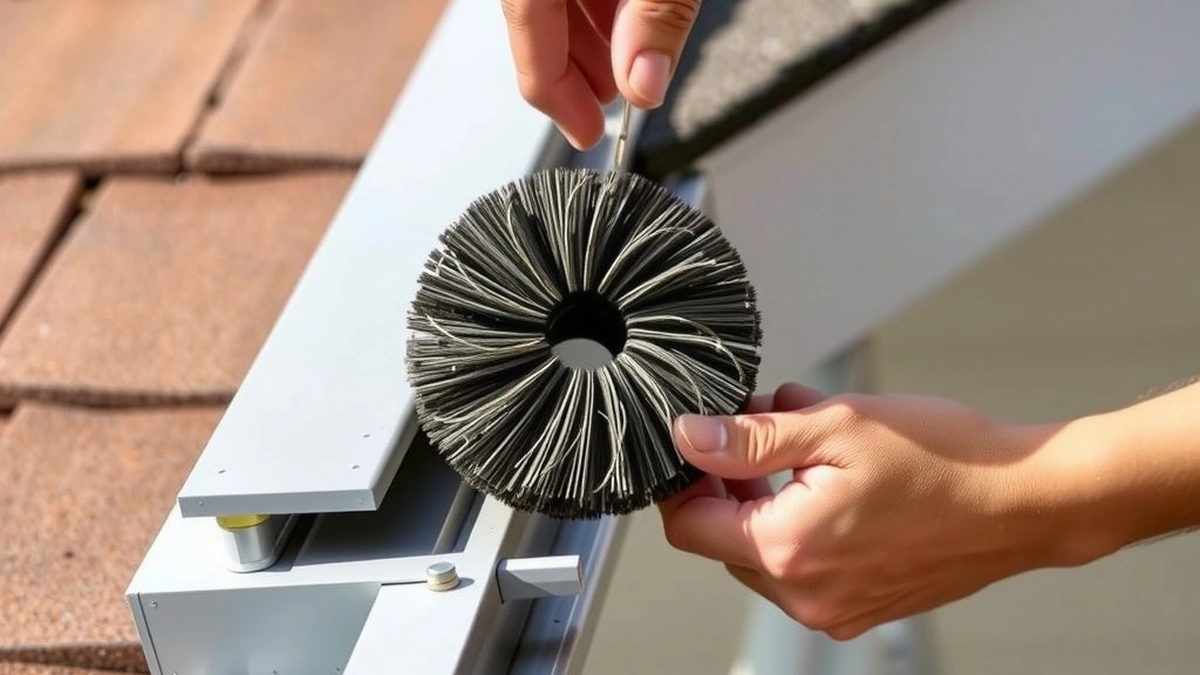
A brush gutter insert is a cylinder of stiff polypropylene bristles, 3 to 4 inches in diameter, that sits inside the trough and lets water pass between the bristles while holding coarse debris on top. Installation is pushing lengths into the gutter and trimming them where the run ends or turns.
Professionally installed, the job runs $200 to $800 on a typical home. Material alone is a fraction of that, and the labor is mostly measuring, clearing and handling, which is why the task is genuinely within reach of a homeowner on a single-story house.
Tools and Materials
| Item | Why it matters |
|---|---|
| Tape measure | Run lengths and trough width |
| Utility knife or fine-tooth saw | Cutting bristle cores cleanly |
| Work gloves | Cut bristle ends are sharp |
| Garden trowel or scoop | Lifting debris out of the trough |
| Bucket or tarp | Catching what comes out |
| Garden hose | Flow test at the end |
| Stepladder or stands | Stable footing at the roof edge |
Buy inserts in the length the manufacturer sells, usually 3 or 4 feet, and calculate pieces per run rather than for the house total. A 200-foot house with four separate runs needs the pieces counted four times, because each run loses a few inches to trimming at both ends.
Measure Each Run Separately
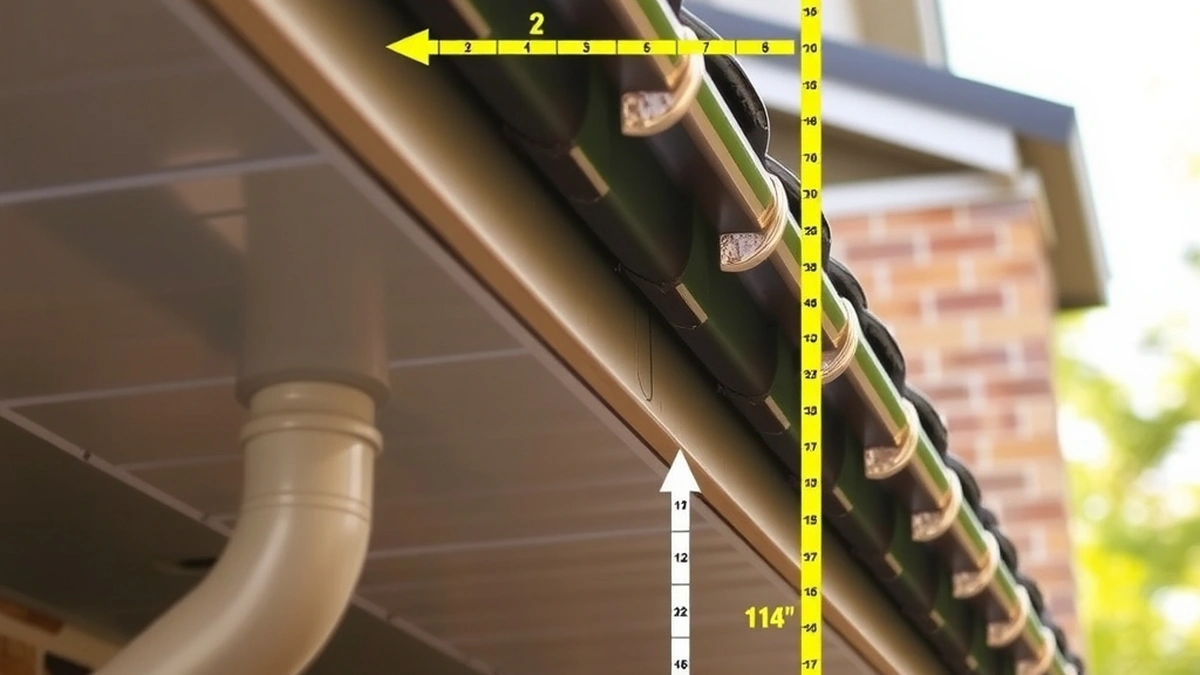
Walk the perimeter with a tape and write down every straight run as its own number: front, back, and each side. Note the inside depth of the trough and the width across the top at the same time.
Two measurements follow from that. Depth decides diameter: a standard 5-inch K-style gutter usually takes a 3-inch insert, while a deeper 6-inch profile takes a 4-inch one. Width decides whether the bristles actually touch both walls, because an insert that floats in the middle lets debris slide past on either side.
Add up the runs, then add 5 percent for trimming. If the runs total 180 feet and the inserts come in 4-foot lengths, 180 ÷ 4 = 45 pieces, plus two spare is 47.
The Install, Step by Step
- Clear the gutter completely. Scoop out leaves, grit and silt with a trowel, working from the high end toward the outlet, and put the debris in a bucket rather than on the roof.
- Flush the trough and check the flow. Run a hose at the high end and confirm water reaches the downspout without pooling, because an insert will not fix a pitch problem.
- Fix anything loose first. Push down any lifted hanger, and seal a leaking joint, since the insert hides both once it is in.
- Start at one end and push the first length in, compressing the bristles slightly against both walls. Work along the run without stretching the coil.
- Cut the last length to fit with a square end, leaving the insert flush with the end of the run rather than proud of it.
- Repeat on the next run, and re-check the outlet as you go.
Corners, Outlets and End Caps
Corners are where a brush insert either works or quietly fails. An outside corner needs two square-cut ends butted hard together; an inside corner needs the same, and any gap wider than about a quarter inch becomes a funnel for leaves. Some installers fold the last few inches of bristle back on itself to fill the corner, which is acceptable if the fold stays compressed.
At each downspout outlet, stop the insert 4 to 6 inches short. The outlet is the lowest point of the run and has to stay open; bristles laid across it dam water and send it over the front lip in the first heavy rain. If the outlet is a drop-in type at the end of the run, leave the last foot clear.
Working at Height
On a single-story house, most of the work is done from a stepladder placed on firm ground, with the ladder’s feet clear of the downspouts. On a two-story house the work is overhead, the lengths are awkward to handle, and a fall from gutter height is a serious injury. OSHA’s fall-protection standard applies to work above six feet, and a homeowner is not exempt from gravity even when they are exempt from the rule.
If the run is above a porch roof, a slope or a shrub bed, get the ladder footing checked before you climb. Stability, not height, is what people get wrong.
Checking the Result
Test the finished job with a hose at the high end of each run. Water should move along the gutter, pass through the bristles, and exit the downspout without standing at any point. Then look along the length for daylight gaps at corners and at the outlet.
Expect the insert to sit slightly below the gutter lip on a correctly sized product. If it stands proud, debris will catch on the exposed bristle ends at the edge and the insert will collect leaves along the front wall instead of shedding them.
Installed cost sits at $200 to $800 versus $1,800 to $4,500 for a mesh system and $300 to $900 for a DIY screen, so a failed install is a small loss. The cost that matters later is cleaning: $150 to $400 per visit, and an insert that dams water at an outlet turns one cleaning into a repair. For pricing detail see brush insert cost, and for what goes wrong after installation see brush insert problems and gutter guard maintenance.
Bottom Line
Brush insert installation is measuring, clearing, cutting and pushing, in that order. Measure each run separately, size the diameter to the trough depth, butt the ends hard at corners, and leave every downspout outlet open. Do that on a single-story run and the job is a couple of hours; skip the clearing or the outlet detail and the $200 to $800 you spent buys a dam instead of a guard.
Frequently asked questions
Do brush inserts need fasteners?
No. The bristles press against the front and back walls of the gutter and hold themselves in place by friction, so there are no screws, clips or brackets to fit.
How do I know what diameter to buy?
Measure the inside depth of the trough and the width across the top. A 3-inch insert suits a standard 5-inch K-style gutter; a 4-inch insert suits deeper or wider profiles, and the bristles should touch both walls with light compression.
Should brush inserts run through the downspout outlet?
No. Stop the insert short of the outlet or the water will dam at the lowest point of the run and back up over the lip, which is the most common installation mistake.
Can I install brush inserts on a two-story house?
It can be done from a ladder, but the work is overhead, the lengths are awkward, and a fall from gutter height is serious. Most homeowners hire out two-story runs and do single-story runs themselves.
How tight should the lengths be at corners?
Butt them hard together and cut the ends square. A gap wider than about a quarter inch at a corner gives leaves a path straight into the gutter, which defeats the purpose of the insert.
Do I need to clean the gutter before installing?
Yes. Debris left under the insert is trapped out of sight, and wet leaves or grit under the bristles hold moisture against the gutter floor, which shortens the life of the metal.
Sources
Some links are affiliate links.If you buy through them we may earn a commission at no extra cost to you. We do not accept payment for rankings. Read the full disclosure.