Water overflowing: how to prevent it before the next storm
Prevent gutter overflow with correct pitch at 1 inch per 10 feet, hangers at 24 inches, enough downspouts, and two clean-outs a year. What each measure costs.

Prevent overflow by setting the fall at 1 inch per 10 feet, spacing hangers 24 inches apart, matching downspouts to roof area, and clearing the trough twice a year. Prevention costs $0 to $500; the repair it avoids starts at $150 and reaches $2,500.
- Correct fall
- 1 inch per 10 feet
- Hanger spacing
- 24 inches
- Clean-out frequency
- Twice a year
- Prevention cost
- $0 - $500
Some links on this page are affiliate links.If you buy through them we may earn a commission at no extra cost to you. We do not accept payment for rankings. Read the full disclosure.
Overflow is prevented by getting four things right: a fall of 1 inch per 10 feet, hangers at 24-inch centres, downspout capacity matched to the roof area, and a clean-out twice a year. None of those is expensive. The correction work costs $0 to $500 on a sound gutter, against $150 to $2,500 for the repairs that follow a season of ignored overflow.
The four things that decide whether a gutter drains
A gutter is a channel with a fall, a support, an outlet, and a maintenance interval. Water leaves the trough when all four work. Overflow means one of them has stopped, and prevention means checking each in that order.
The order matters because the fixes differ in price by an order of magnitude. Cleaning is a hose and an hour. Re-pitching is a crew. Capacity is new pipe. Doing them out of order means paying for the expensive fix before the cheap one.
Pitch, and why 1 inch per 10 feet
The standard fall is 1 inch per 10 feet toward the outlet. On a 30-foot run that is 3 inches of drop end to end, and on a 60-foot run it is 6 inches, which is enough to be visible if you sight along the lip.
Too little fall and water stands in the trough, which is where mosquito larvae and algae appear and where the first freeze cracks a seam. Too much fall and the outlet end sits low enough that the gutter looks crooked against the fascia, and the high end may hold water behind a hanger.
Check it with a 4-foot level and a tape. Measure the gap at the low end, then multiply to your run length. If the run is 30 feet and the gap over 4 feet is under 3/8 inch, the fall is marginal.
Hangers and load
Hangers at 24-inch centres carry a filled gutter without visible deflection. At 36 inches, a 5-inch aluminium trough with water in it will sag between supports, and the sag becomes a dam.
| Hanger spacing | Behaviour under load | Risk |
|---|---|---|
| 24 inches | Stable, no visible dip | Low |
| 30 inches | Slight deflection when full | Moderate |
| 36 inches | Visible sag, water pools | High |
| 48 inches | Run fails at the fasteners | Severe |
Prevention here is cheap: add hangers where the spacing is wide, especially on the spans either side of a downspout, where the water is deepest. Adding four hangers is a $40 to $80 hardware job plus an hour of labour, and it is the single highest-return correction on an older gutter.
Downspout capacity
Capacity is the measure most often missed because the gutter looks fine. A 2x3-inch downspout drains roughly 600 square feet of roof; a 3x4 drains about 1,200. A 2,000-square-foot roof therefore needs at least four 2x3 outlets, or two 3x4s, distributed along the run.
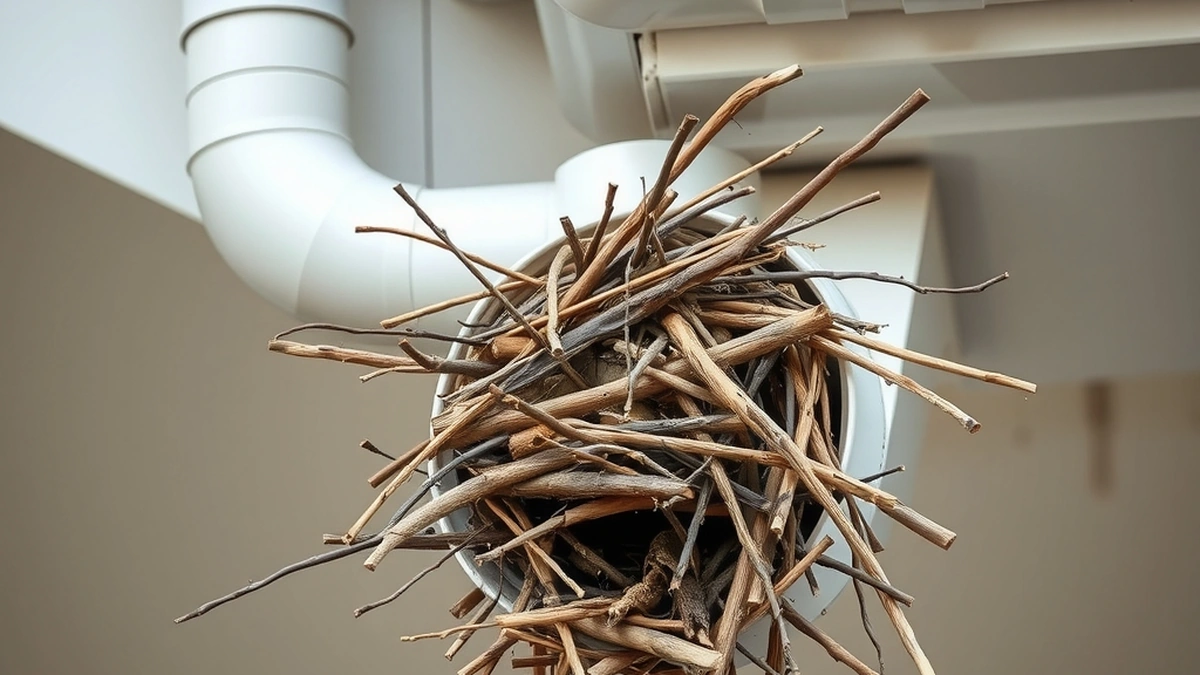
The classic failure is a long run with a single outlet at one end. Water has to travel the full length, the trough fills faster than the pipe can take it, and the overflow appears at the far end within minutes of a heavy storm. Adding an outlet at the far end costs $108 to $240 for a 12-foot run, and it solves a problem that no amount of cleaning will.
Guards and the maintenance interval
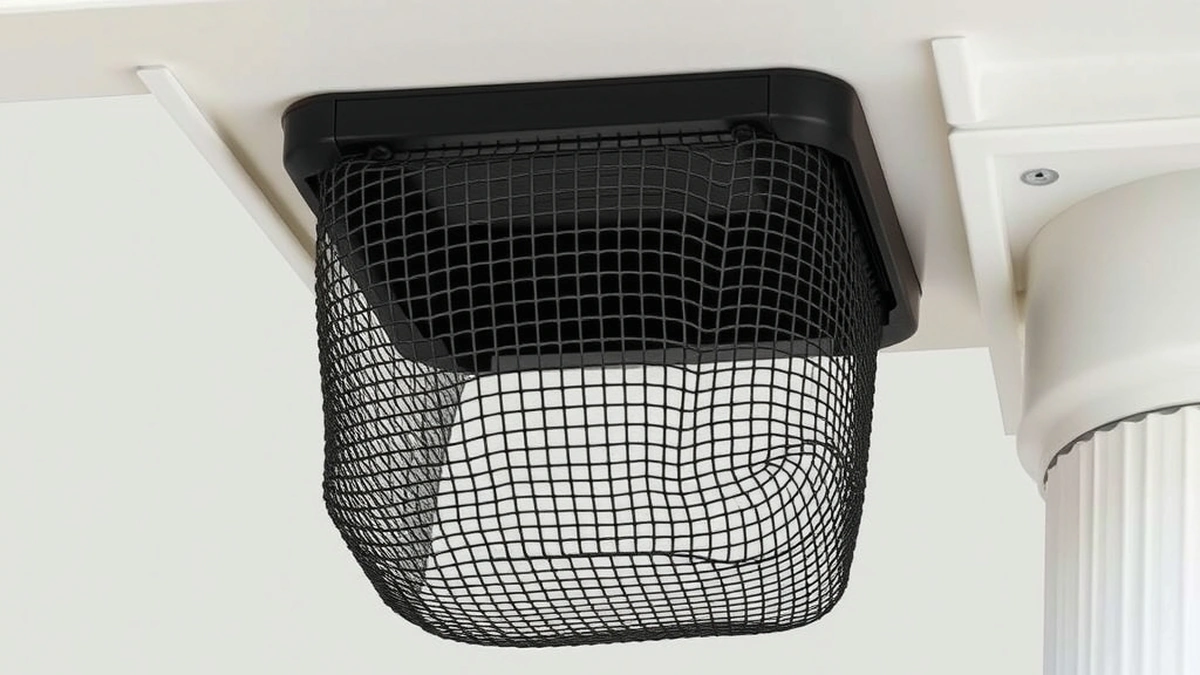
A guard is a debris measure, not a capacity measure. It reduces how often the trough has to be cleared, which is worth real money at $150 to $400 per clean-out. It does not add fall, hangers, or pipe, and a clogged panel will cause the overflow it was bought to prevent.
The sensible sequence is: fix pitch, hangers, and outlets first, then fit a guard if debris is the remaining problem. On a house with fine debris, micro-mesh at $1,800 to $4,500 reduces the cleaning interval; on a house with coarse leaves and a tight budget, a screen at $300 to $900 is adequate if you will clean it.
Six prevention steps
- Sight along the gutter from the ground and look for a dip or a high end.
- Check the fall with a level at 1 inch per 10 feet, and mark the hangers that need to move.
- Count the downspouts and compare the roof area to the pipe size at 600 square feet per 2x3 outlet.
- Clear the trough and flush every outlet in late autumn and again in spring.
- Fit strainers or outlet guards so debris cannot enter the pipe between clean-outs.
- Extend discharge 4 feet from the foundation with a splash block, and check that the ground falls away.
Step six is the one that protects the basement. A gutter that drains correctly but discharges at the wall has solved the roof problem and created a foundation one.
What prevention costs against repair
| Measure | Cost | Avoids |
|---|---|---|
| Clear-out, twice a year | $0 DIY, $300 - $800 paid | Blocked outlet, $150 - $400 |
| Add four hangers | $40 - $80 plus labour | Sag repair, $200 - $450 |
| Re-pitch a run | $200 - $500 | Repeat overflow, fascia rot |
| Add one downspout | $108 - $240 | Storm overflow at the far end |
| Splash block or extension | $8 - $25 | Soil erosion at the foundation |
The table is the argument. The most expensive prevention line is a re-pitch at $200 to $500, and it is still below the $800 to $2,500 cost of a long failed section with fascia damage.
The short version
Overflow is a maintenance and geometry problem, and both are cheaper to fix than the water damage they cause. Set the fall, close the hanger spacing, add an outlet where the run is long, and clean twice a year. Then, and only then, consider a guard. The repairs you are avoiding are priced in water overflowing: what a fix costs, and the symptoms to watch for are in water overflowing: warning signs.
Two related pages are worth reading before any work is booked: gutter cleaning cost for the maintenance baseline, and gutter guard cost for the per-foot price of the debris measure if you decide you need one.
Frequently asked questions
How do I stop my gutters from overflowing?
Four measures cover it: set the fall at 1 inch per 10 feet, keep hangers at 24-inch centres, match downspout capacity to the roof area, and clear the trough and outlets twice a year.
What is the correct gutter slope?
About 1 inch of drop per 10 feet of run toward the downspout, which is 3 inches over a 30-foot run. Less than that and water stands; much more and the outlet end looks visibly low.
How often should gutters be cleaned to prevent overflow?
Twice a year in most climates, once after leaf fall and once after spring seed drop. Under pines or on a wooded lot, three times is realistic because needles mat into the trough.
Do gutter guards prevent overflow?
They prevent the debris that causes most overflow, but they do not fix pitch or capacity, and a clogged guard causes overflow itself. Fit a guard after the water path works, then maintain it.
How many downspouts does a house need?
Roughly one 2x3 outlet per 600 square feet of roof area, or one 3x4 per 1,200 square feet. A long run with one outlet at the end is a common cause of overflow in heavy rain.
Does extending the downspout help?
It does not change gutter capacity, but it keeps discharge away from the foundation. A $8 to $25 splash block or extension is the cheapest part of the whole system and the one most often missing.
Sources
Some links are affiliate links.If you buy through them we may earn a commission at no extra cost to you. We do not accept payment for rankings. Read the full disclosure.