Sagging gutters: how to prevent it on an older house
Prevent gutter sag with hangers at 24 inches, sound fascia, no ice load, and guards fitted last. What each measure costs and how often to check.
Prevent sag by keeping hangers at 24-inch centres, replacing soft fascia before it fails, clearing debris and ice load, and checking the fall once a year. The measures cost $40 to $500, against $200 to $2,500 for the repair they avoid.
- Hanger spacing
- 24 inches
- Fall to maintain
- 1 inch per 10 feet
- Extra hangers
- $8 - $15 each
- Full prevention budget
- $40 - $500
Some links on this page are affiliate links.If you buy through them we may earn a commission at no extra cost to you. We do not accept payment for rankings. Read the full disclosure.
Sagging is prevented by keeping the load off the fasteners and the strength in the board they hold: hangers at 24-inch centres, sound fascia, no standing water or ice, and a fall of 1 inch per 10 feet. The measures cost $40 to $500, against $200 to $2,500 for the repair that follows a support failure. It is the cheapest work in the exterior maintenance budget and the one most often skipped.
Why gutters sag at all
A gutter is a long, thin channel holding water. The water is heavy: a 5-inch aluminium trough full to the lip holds roughly a gallon per 10 feet, which is about 8 pounds, and wet debris can double that. Ice adds more.
All of that load is carried by fasteners spaced along a board. When the spacing is too wide, the load between supports bends the metal. When the board is soft, the fastener pulls out. When both are marginal, the run sags at the first heavy storm and never recovers its line.
The four preventive measures
| Measure | What it does | Cost |
|---|---|---|
| Hangers at 24 inches | Spreads load, stops deflection | $8 - $15 each |
| Sound fascia | Gives fasteners something to hold | $6 - $12 per ft if replaced |
| Clear debris and ice | Removes the weight | $150 - $400 per clean-out |
| Correct fall | Stops standing water | $200 - $500 to re-pitch |
Only the third is recurring. The other three are one-time corrections that decide whether the run survives a decade.
Hanger spacing and hardware
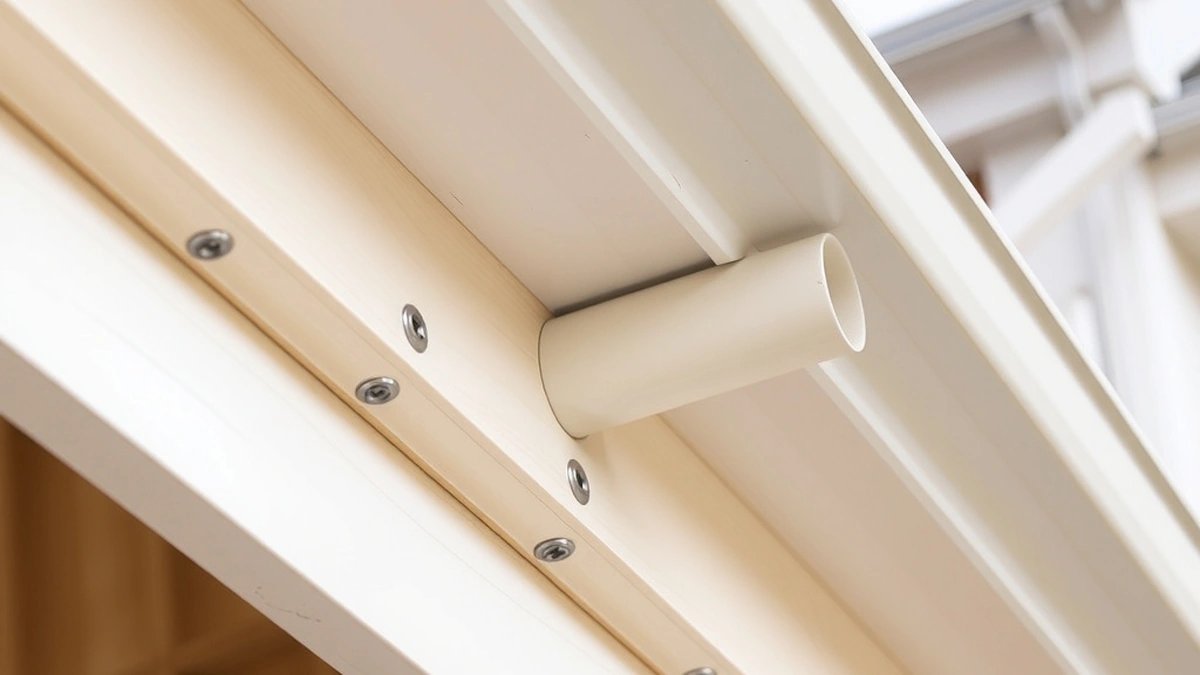
Spikes driven through the face of the gutter are the weakest common fixing. They rely on a single point of contact, they loosen as the metal moves, and they cannot be tightened without crushing the face. Hidden hangers screw into the fascia and clip the inner lip, so the load is spread along the board.
Adding hangers to a 40-foot run at 24-inch centres takes 20 positions. If the run currently has 12, adding eight at $8 to $15 each is $64 to $120 in hardware plus about an hour of labour. That is the whole cost of removing the most common cause of sag.
Put the extra hangers where the load concentrates: either side of a downspout outlet, at the ends of the run, and anywhere a ladder is regularly leaned.
The fascia is the foundation
A hanger is only as good as the wood behind it. Water that runs behind the gutter, or a leak at a joint, softens the board from the top down, and the first sign is usually a hanger that will not tighten.
Test with a screwdriver at three points along the run. If the tip sinks more than a quarter inch without pressure, the board is compromised. Replacing it costs $6 to $12 per linear foot, and it is better done before the gutter is re-hung than after.
The prevention here is drainage, not carpentry. Water gets behind the gutter when the back edge overflows, when a joint leaks, or when the gutter is pitched toward the house. Fixing those is cheaper than replacing the board.
Ice, debris, and the winter load
In a cold climate, the failure sequence is consistent. Debris blocks the outlet, water stands, the standing water freezes, and the ice expands against the hangers. A run that was marginal in October fails in January.
Clearing the trough before the first freeze is the preventive step, and it costs $150 to $400 if paid. A roof rake at $50 to $150 handles snow on the lower roof, which reduces the meltwater reaching the gutter. Neither measure is expensive; both are routinely deferred.
Never hammer ice out of a gutter. The impact deforms the lip and cracks the coating, and the repair costs more than the clearing.
Guards and the order of work
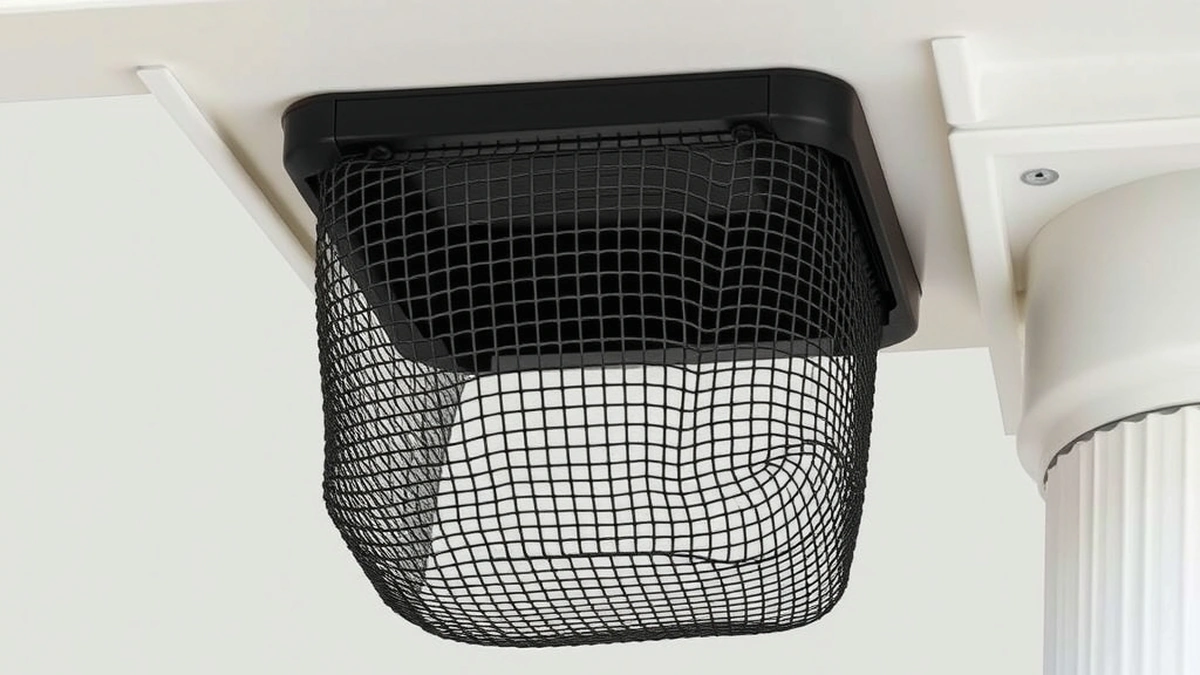
A guard is a debris measure, and it should come after the support is sound. Mesh systems at $1,800 to $4,500 are fastened to the gutter, so a run that sags will carry the panels down with it. A screen at $300 to $900 adds less load but still traps material against the trough.
The correct sequence is: fix the fascia, re-hang at 24 inches, set the fall, then fit the guard if debris remains a problem. Doing it in the other order means paying twice for the same ladder time.
A yearly check in six steps
- Sight along the run from both ends and look for a dip in the line.
- Lay a 4-foot level on the trough and measure the fall over that length.
- Press down between hangers. Movement over half an inch is a developing sag.
- Probe the fascia at the lowest hanger with a screwdriver.
- Check that every outlet is clear and that water reaches it.
- Look for ice ridges or debris dams at the ends of the run before winter.
That is under an hour of work, and it catches the failure while it is still a $40 hardware job rather than a $500 repair.
The short version
Sag prevention is support and drainage, in that order. Hangers at 24 inches, sound wood, a correct fall, and a clear trough. The costs are small and the repair they avoid is priced in sagging gutters: what a fix costs; the repair methods are in sagging gutters: repair options. If the run is already beyond saving, gutter replacement cost has the replacement arithmetic.
Frequently asked questions
How do I stop my gutters from sagging?
Keep hangers at 24-inch centres, fix soft fascia before the fasteners pull out, clear debris and ice so the trough is not carrying extra weight, and check the fall once a year with a level.
What spacing should gutter hangers be?
Twenty-four inches on centre for residential aluminium in snow country, and no more than 30 inches in mild climates. Wider spacing is the single most common reason a run develops a dip.
Do gutter guards cause sagging?
They can contribute. A guard adds weight and traps debris that holds water, so a run with marginal hanger spacing can sag after a guard is fitted. Correct the support first.
How much does prevention cost?
Four extra hangers is $32 to $60 in hardware plus an hour of labour. A full re-hang is $200 to $450. Compared with a fascia repair at $6 to $12 per foot, prevention is the cheaper line every time.
How often should gutters be inspected?
Once a year in autumn before the wet season, and again after the first hard freeze if you are in a cold climate. The inspection is visual plus a level check and takes under an hour.
Can I add hangers to an existing gutter?
Yes. Hidden hangers screw into the fascia and clip the inner lip without removing the gutter, provided the board behind is sound. If the wood is soft, the fascia has to be replaced first.
Sources
Some links are affiliate links.If you buy through them we may earn a commission at no extra cost to you. We do not accept payment for rankings. Read the full disclosure.