Micro-mesh vs reverse-curve: which system suits your roof
Micro-mesh costs $1,800 to $4,500 and filters fine debris; reverse-curve costs $2,000 to $5,000 and diverts water over a curved nose. Where each one fails.
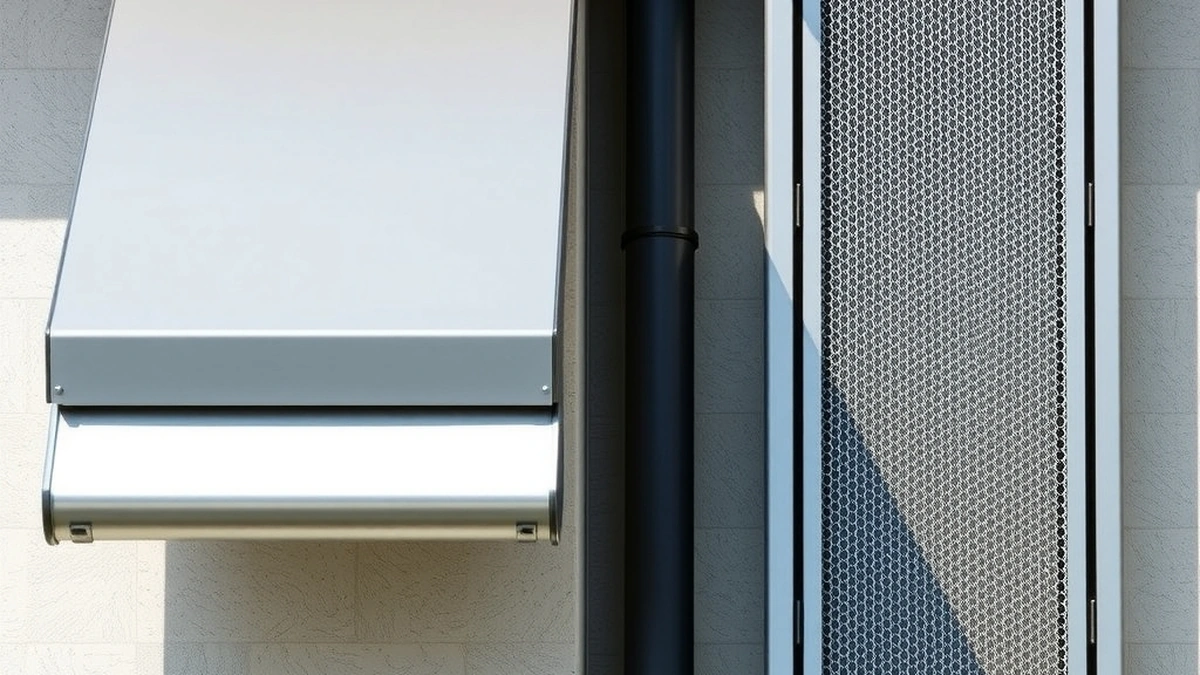
Micro-mesh runs $1,800 to $4,500 and filters debris through a stainless cloth. Reverse-curve runs $2,000 to $5,000 and uses surface tension to send water around a curved nose. Mesh handles fine debris; reverse-curve handles volume.
- Micro-mesh installed
- $1,800 - $4,500
- Reverse-curve installed
- $2,000 - $5,000
- Per foot at 200 ft
- $9 - $22.50 vs $10 - $25
- Best debris type
- Fine vs coarse
Some links on this page are affiliate links.If you buy through them we may earn a commission at no extra cost to you. We do not accept payment for rankings. Read the full disclosure.
Micro-mesh and reverse-curve are the two premium guard designs, and they cost about the same: $1,800 to $4,500 against $2,000 to $5,000 installed, or $9 to $22.50 per foot against $10 to $25 at 200 feet. The choice is not about price. It is about whether your problem is fine debris, which mesh handles, or water volume on a steep roof, which reverse-curve handles.
Two mechanisms, one job
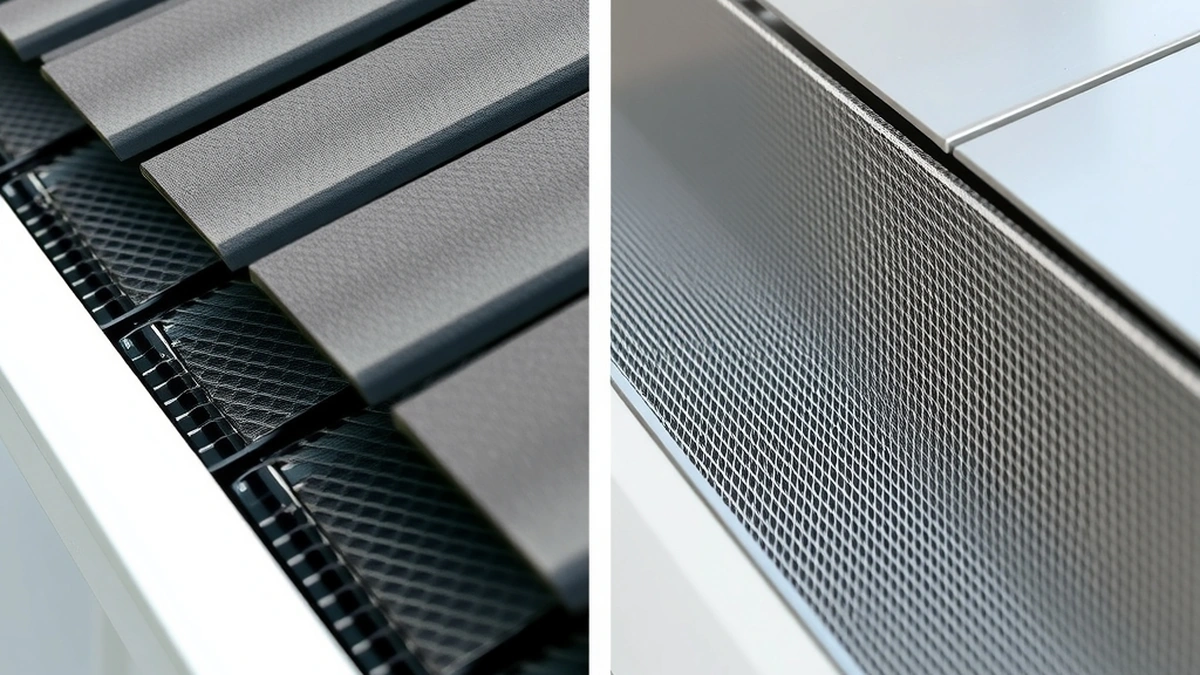
Micro-mesh is a filtration system. A woven stainless cloth with an aperture under a millimetre is bonded into an aluminium frame, and water passes through while debris stays on top.
Reverse-curve is a diversion system. The cover is a curved aluminium surface that sits over the gutter, and water clings to the curve by surface tension, wraps around the nose, and drops into the trough. Debris, being lighter and stiffer, flies past the nose and off the roof.
Both keep leaves out. They differ in what happens to everything smaller than a leaf.
The price, side by side
| Item | Micro-mesh | Reverse-curve |
|---|---|---|
| Installed, typical house | $1,800 - $4,500 | $2,000 - $5,000 |
| Per foot at 200 ft | $9.00 - $22.50 | $10.00 - $25.00 |
| Per foot at 150 ft | $12.00 - $30.00 | $13.33 - $33.33 |
| Material share | High | High |
| Installation complexity | Moderate | Moderate to high |
| Dealer-brand equivalent | $3,000 - $8,000 | $3,000 - $8,000 |
The arithmetic is division: $1,800 ÷ 200 = $9.00 and $4,500 ÷ 200 = $22.50 for mesh; $2,000 ÷ 200 = $10.00 and $5,000 ÷ 200 = $25.00 for reverse-curve. At 150 feet the totals stay the same and the rate rises, which is why small jobs quote higher per foot.
The gap is $200 to $500 on a typical house. That is small enough that the decision should be made on performance, not on the invoice.
Performance where they differ
| Condition | Micro-mesh | Reverse-curve |
|---|---|---|
| Coarse leaves | Good | Good |
| Pine needles | Held on top | Wash into trough |
| Shingle grit | Held on top | Washes in |
| Pollen film | Brushes off | Passes through |
| Heavy rain, steep roof | Good | Very good |
| Heavy rain, low pitch | Good | Can overshoot |
| Snow and ice | Sheds, frame carries load | Nose can ice over |
| Trough access | Panels lift out | Cover lifts off |
| Expected life | 10 - 15 years | 15 - 20 years |
The two rows that decide most installations are pine needles and roof pitch. A reverse-curve cover on a roof under 3/12 pitch is a known weak combination, because the water does not have enough momentum to wrap the nose cleanly. A mesh panel is pitch-independent as long as the gutter drains.
Where reverse-curve wins
Reverse-curve wins on steep roofs with high rainfall and coarse debris. The design moves a lot of water fast, the aluminium surface is robust, and there is no cloth to tear or blind.
It also wins on appearance for some buyers. The continuous curved profile looks like a formed part of the roofline rather than an added mesh, and on a high-end house that matters.
Its weakness is the small stuff. Needles, grit, and seed pods pass the nose and settle in the trough, so a reverse-curve system on a pine-heavy roof still needs the gutter cleared.
Where micro-mesh wins
Micro-mesh wins wherever the debris is fine. Needles, shingle grit, pollen, and bud scales stay on the surface, where wind and brushing remove them, instead of accumulating in the trough.
It also wins in snow country, because a flat panel sheds load into a frame rather than forming a ridge on a curved nose. And it wins on adaptability: the panels fit a standard 5-inch gutter without changing the mounting height.
Its weakness is surface blinding. A film of pollen or sap reduces flow until it is brushed off, which is a twice-yearly job rather than a never job.
What installation actually changes
Both systems are fitted by a contractor, and both need a sound gutter and a correct fall before anything goes on. The difference is in what the fitting does to the run.
Mesh panels are cut to the gutter width and screw through the lip or onto a fascia bracket. The trough itself is untouched, so a gutter that is 4 inches deep stays 4 inches deep and the panels sit at the original height.
A reverse-curve cover is a formed section that sits above the trough, and its nose projects forward of the gutter face. That projection has to clear the roof edge and still catch the water sheet, so the mounting height is set by the roof rather than by the gutter. On a short overhang or a shallow trough, the cover may need a sub-frame, and that is where the installation cost climbs.
Six steps to choose
- Identify the debris. Needles and grit point to mesh; coarse leaves and heavy rain point to reverse-curve.
- Measure the roof pitch. Under 3/12, favour mesh.
- Check the gutter depth and mounting. Reverse-curve needs a trough that accepts the cover.
- Price both at your actual run length, including the minimum charge.
- Ask what the warranty covers: the panel, the finish, or labour as well.
- Compare cost per year, not sticker price, by dividing by expected life.
Step six is the one that reframes the decision. Mesh at $4,500 over 10 years is $450 per year; reverse-curve at $5,000 over 20 years is $250 per year. On a long hold, the cheaper sticker can be the more expensive system.
The short version
Mesh filters; reverse-curve diverts. Both cost $9 to $25 per foot and both are a premium purchase. Choose on debris size and roof pitch, then check the per-year figure. The full price structure is in micro-mesh cost and reverse-curve cost, and the five-type comparison is in types of gutter guard.
Frequently asked questions
Is micro-mesh better than reverse-curve?
For fine debris, yes. Mesh holds needles and grit on the surface, while a reverse-curve cover lets small particles wash into the trough. Reverse-curve handles high water volume better on a steep roof.
Which costs more, micro-mesh or reverse-curve?
Reverse-curve, slightly. Mesh is $1,800 to $4,500 and reverse-curve is $2,000 to $5,000, so the gap is $200 to $500 on a typical house, or about $1 to $2.50 per foot at 200 feet.
Does reverse-curve work in heavy rain?
It is designed for volume, and on a roof pitch above about 3/12 it sheds water well. In a cloudburst, some water can overshoot the nose and miss the gutter, which is the known trade-off of the design.
Will micro-mesh clog with pollen?
Pollen sits on the surface and dries into a film, so the panel needs brushing once or twice a year. It does not pass into the trough the way it does with a reverse-curve cover.
Which is better in snow country?
Micro-mesh, generally. A reverse-curve nose can hold an ice ridge that blocks the opening, while a flat mesh panel sheds snow and carries load into its frame.
Can either be fitted to an existing gutter?
Both can, provided the gutter is sound and pitched correctly. Reverse-curve usually needs a deeper trough and a specific mounting height, so it is less adaptable to an old narrow gutter.
Sources
Some links are affiliate links.If you buy through them we may earn a commission at no extra cost to you. We do not accept payment for rankings. Read the full disclosure.