Micro-mesh reviews
What micro-mesh gutter guard reviews actually say: the praise themes, the complaint themes, which complaints are install errors, and how to judge a quote.

Micro-mesh reviews are consistent on two points: the panels keep leaves and pine needles out of the trough, and they still need surface clearing once or twice a year. Complaints cluster around price, corner gaps, and water sheeting over the lip in downpours.
- Installed cost
- $1,800 - $4,500
- Dealer equivalent
- $3,000 - $8,000
- Repeated praise
- No more trough cleaning
- Repeated complaint
- Price and corner overflow
Some links on this page are affiliate links.If you buy through them we may earn a commission at no extra cost to you. We do not accept payment for rankings. Read the full disclosure.
Micro-mesh reviews agree on the mechanism and disagree on the value. Owners consistently report that leaves and pine needles stop reaching the trough, and just as consistently report that the panels themselves need clearing once or twice a year. The complaints that follow are mostly about price and about water at corners, and the second one is usually an installation problem rather than a product one. Read the reviews for those patterns, not for a star average.
What Owners Praise
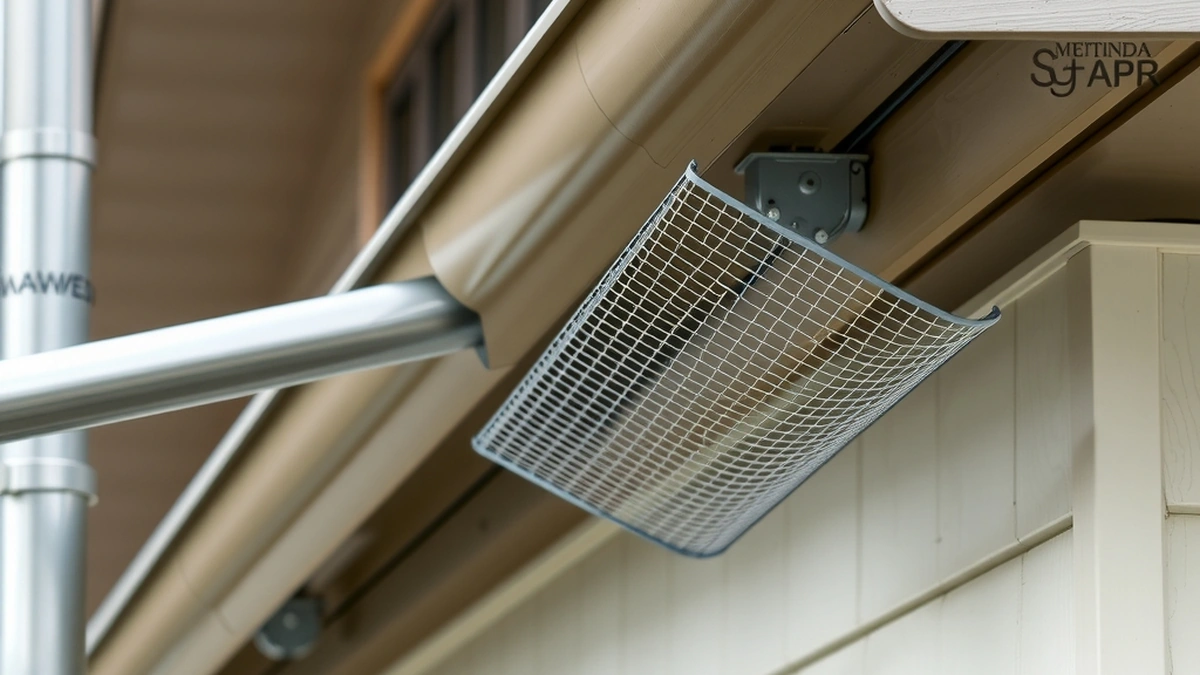
Micro-mesh is a woven stainless or coated panel with an aperture under a millimeter, fixed over the gutter opening to hold fine debris out of the trough. Three themes recur in positive reviews of it, and all three are about the trough rather than the panel.
No more scooping. The strongest reports come from owners under pines, where a coarse screen let needles wash in and pack the trough. Micro-mesh holds them on top.
Fewer ladder trips. Owners describe going from three or four cleanings a year to one or two short surface clearings. On a two-story house, that is the difference between hiring a crew and doing it yourself.
Cleaner water at the outlet. Because grit and needles stay out, the downspout runs clear longer, and the staining at the outlet slows.
None of those claims require a specific brand. They follow from the aperture, which is the one specification that actually separates micro-mesh from a screen.
What Owners Complain About
The negative themes are equally consistent, and they are worth sorting by cause.
| Complaint | Frequency in reviews | Usual cause |
|---|---|---|
| Price | High | Premium over screens, dealer markup |
| Water over the front lip | High | Pitch, outlet capacity, or storm volume |
| Debris matting on top | Medium | Normal, needs clearing |
| Gap at an inside corner | Medium | Installation, not product |
| Panel lifting in wind | Low | Fastener into soft fascia |
| Warranty denied | Low | Clogging excluded from cover |
The price complaint is real and cannot be argued away. At $1,800 to $4,500 installed against $300 to $900 for a DIY screen, micro-mesh costs four to five times as much. A buyer who expected the cheaper product’s price with the premium product’s performance will write a bad review no matter how well the panel works.
The overflow complaint needs separating. Water over the front lip in a downpour can mean the panel is shedding faster than the gutter accepts, which is a drainage capacity issue. It can also mean a debris dam at a corner. Only one of those is the guard’s fault.
The Dealer Premium in Reviews
Dealer-branded systems use the same basic mechanism and run $3,000 to $8,000, against $1,800 to $4,500 for a contractor-installed micro-mesh job. Reviews of dealer systems often mention the sales visit, the financing, and the lifetime warranty, and the complaints often mention the price and the warranty exclusions.
The arithmetic on a 200-foot house is $15 to $40 per foot for the dealer system ($3,000 ÷ 200 and $8,000 ÷ 200), against $9 to $22.50 for the contractor micro-mesh ($1,800 ÷ 200 and $4,500 ÷ 200). The difference buys a warranty and a single accountable company, not a different aperture.
Whether that is worth $1,200 to $3,500 depends on how much you value the warranty. Read the exclusion list before deciding, because “lifetime” usually covers the mesh and not the clog.
Reviews Versus the Specification
A review tells you how a panel behaved. A specification tells you what it is. The four numbers that matter are:
- Aperture, in millimeters or microns
- Mesh alloy, stainless or coated
- Frame gauge and material
- Fastener type and warranty term
If a product page cannot state those, the reviews are the only information you have, and that is a poor position to buy from. Ask the contractor for the panel data sheet and compare it across quotes.
Reading a Review Set Properly
- Sort by lowest rating and read the two-star reviews first.
- Classify each complaint as product, install, maintenance, or expectation.
- Count how many mention corners or the front lip, since those point to install.
- Note the tree cover in each review. A pine-shaded lot is not your lot.
- Check the date, because a two-week-old review measures the crew.
- Look for the warranty outcome, not the warranty claim.
What the Reviews Do Not Tell You
No review set will tell you whether your gutter is pitched, whether your downspouts are sized for the roof area, or whether your fascia will hold a screw. Those three facts decide whether any guard works, and they are visible only on a ladder.
They also will not tell you the labor share of the price, which is where quotes differ most. A $2,400 micro-mesh job and a $4,200 micro-mesh job can use identical panels, with the difference sitting in access, fittings, and callbacks.
One more gap is who writes the reviews. An owner who paid $4,500 is more likely to post than one who paid $1,900, and dealer customers are often invited to review at the end of the sales process. That does not make the reviews false, but it does mean the sample leans toward the top of the price range and toward buyers who were already committed to the purchase.
A Realistic Expectation
Buy micro-mesh expecting a panel that keeps debris out of the trough and needs surface clearing twice a year. Do not buy it expecting a maintenance-free roof, and do not buy it to fix an overflow that comes from pitch or outlet capacity.
For the arithmetic, see micro-mesh cost and is gutter guard worth it. If the price is the sticking point, reverse-curve reviews covers the other premium option at a similar cost, and gutter guard reviews explains how to weigh any review set. The installation detail behind most complaints is in micro-mesh installation.
Frequently asked questions
Are micro-mesh gutter guards well reviewed?
Reviews are generally positive on debris blocking and mixed on value. Owners who live under pines report the biggest change, and owners who paid dealer prices report the most buyer regret.
What do negative micro-mesh reviews complain about?
Price relative to a screen, water over the front lip in heavy rain, gaps at inside corners, debris matting after leaf drop, and warranty claims denied because the panel clogged rather than broke.
Do reviews say micro-mesh stops pine needles?
Yes, that is the most consistent praise. Pine needles pass through coarse screens, and the finer aperture is the reason most pine-shaded owners buy the product.
Is micro-mesh worth the extra cost over a screen?
Reviews suggest yes under fine, heavy debris and no on a light-debris lot. The installed gap is $1,800 to $4,500 against $300 to $900, which is a large premium for a convenience gain.
How long do reviewers say micro-mesh lasts?
Owners who report long service describe 10 to 20 years with the mesh intact and the frame or fasteners failing first. Reviews written within a month say nothing about life span.
Should I believe a one-star micro-mesh review?
Read it for the failure mode, not the verdict. A complaint about water at a corner or a panel lifting usually describes an installation defect that a different crew would not repeat.
Sources
Some links are affiliate links.If you buy through them we may earn a commission at no extra cost to you. We do not accept payment for rankings. Read the full disclosure.