Finding a gutter guard contractor near you
How to vet local gutter guard installers: licensing, insurance, itemized quotes, warranty transfer, and the sales tactics that inflate a job.
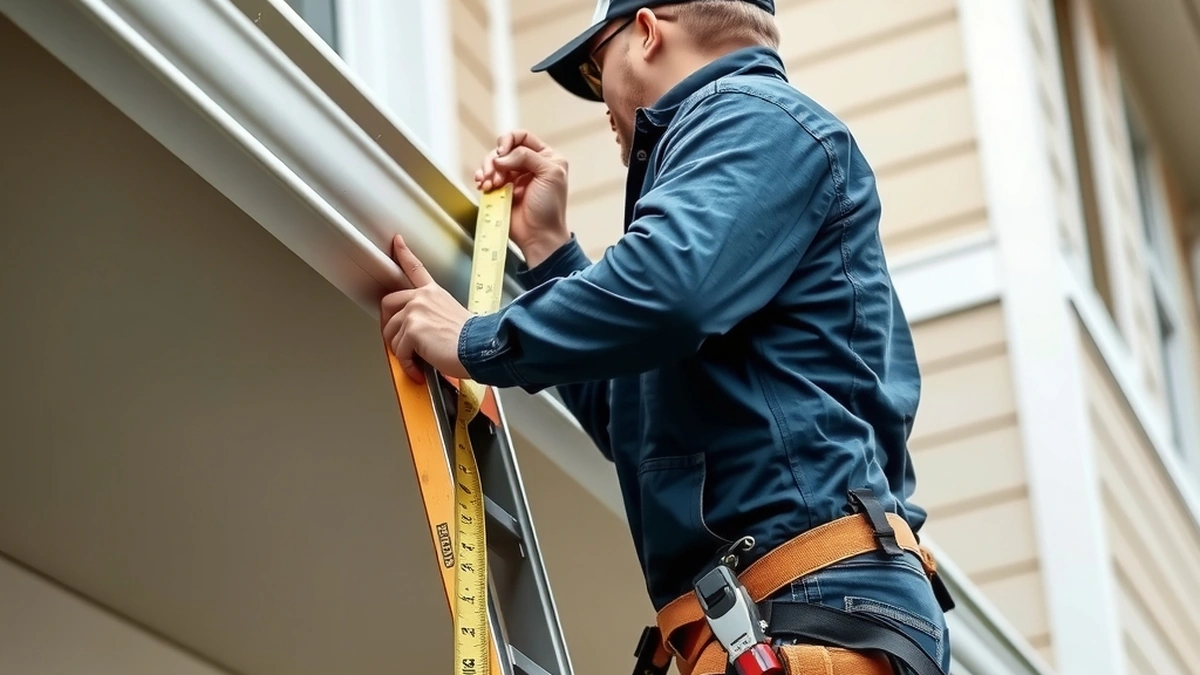
A good local contractor quotes in linear feet, carries liability and workers' comp insurance, will put the scope in writing, and installs a product you could buy elsewhere. Expect $1,800 to $4,500 for micro-mesh.
- Micro-mesh, installed
- $1,800–$4,500
- Reverse curve, installed
- $2,000–$5,000
- Dealer-brand system
- $3,000–$8,000
- Cleaning baseline
- $150–$400
Some links on this page are affiliate links.If you buy through them we may earn a commission at no extra cost to you. We do not accept payment for rankings. Read the full disclosure.
Finding a gutter guard contractor near you is mostly a filtering problem, not a search problem. There are always installers willing to take the job; the work is separating the ones who quote in linear feet, carry insurance, and install a product you could buy yourself from the ones selling a packaged price and a sales script. The best local contractor is usually the one who puts the scope in writing before asking for a deposit.
What “Near You” Should Actually Mean
Distance matters less than it appears. A crew that works your county regularly knows the roof styles, the permit office, and the local tree cover. That familiarity is worth more than a 20-minute shorter drive.
What you actually want is a contractor whose service area covers your address, who has completed jobs on comparable homes nearby, and who can return for warranty work without a two-hour drive being treated as a favor. Ask how far they travel for callbacks, and get the answer in the contract rather than in conversation.
Three Ways to Buy, and What Each Costs
The market splits into three tiers, and the price gap between them is real.
| Option | Typical installed cost | What you get |
|---|---|---|
| Local contractor, micro-mesh | $1,800–$4,500 | Comparable product, shorter warranty, direct accountability |
| Dealer-brand system | $3,000–$8,000 | In-home sales process, packaged warranty, brand-backed service |
| DIY screens or inserts | $200–$900 | Materials only, your labor, no installation warranty |
The dealer premium buys a warranty structure and a service network, not necessarily better mesh. A local installer fitting stainless micro-mesh at the low end of $1,800 is installing much the same material as a dealer charging $6,000, and the difference is the sales model. Whether that premium is worth paying depends on how much you value a transferable warranty and a single number to call.
Credentials to Verify Before You Book
This takes about twenty minutes and eliminates most of the risk.
- Get the contractor’s license number and check it against your state’s licensing board database. Many states license home improvement contractors generally rather than gutter work specifically, so confirm the category covers exterior work.
- Ask for a certificate of insurance showing both general liability and workers’ compensation, and call the insurer to confirm the policy is current. If a worker is injured on your roof and the crew is uninsured, the claim can follow your homeowner policy.
- Confirm the crew’s fall-protection practice. OSHA requires fall protection above six feet in construction work, and a contractor who shrugs at the question is telling you something.
- Ask for two recent addresses in your town and, where possible, look at the work from the street. Uniform color and clean fastening lines are easy to spot.
- Check that the business address and phone number resolve to a real local operation, not a lead-generation call center that subcontracts the job.
Reading a Quote Line by Line
A quote that states only a total price cannot be compared to anything. The document should show linear footage, product and material, and what is excluded.
Watch for these specific items:
- Footage. Two quotes for the same house should show similar linear footage. A large discrepancy usually means one measured the gutter and the other measured the roof perimeter plus every downspout.
- Old guard removal. If you already have guards, removal and disposal is labor. A quote that omits it will add it later.
- Pre-install cleaning. Guards go on a clean gutter. If cleaning is not included, budget the $150 to $400 baseline separately.
- Gutter repair. Sagging runs, bad hangers, and open seams should be itemized as repair, not folded silently into the guard price.
- Fastening method. Screws into fascia, hidden hangers, or clips bonded to the gutter lip all behave differently over ten years. Ask which, and why.
- Downspout screens and extensions. These are separate parts and separate prices.
Warranty Terms That Change the Value
Two systems at the same price are not the same purchase if one carries a transferable 20-year material warranty and the other carries a one-year workmanship note.
Ask four questions about any warranty: what it covers, who performs the work, whether labor is included, and whether it transfers to a new owner. Material-only coverage that excludes labor means you pay for the reinstall when a panel fails. A warranty that requires the original installer to do the work is only as good as that company’s willingness to answer the phone in year eight.
Get the terms in writing before signing, not after. Manufacturer warranties are usually available as a PDF from the product maker, independent of whatever the salesperson says in the kitchen.
The Sales Visit, and What to Watch For
In-home sales is where the dealer tier earns its price and where the worst pressure shows up. A few patterns are worth naming:
- A price that drops sharply after you hesitate, or a “today only” discount. Real material costs do not move 30 percent in an afternoon.
- A demonstration that pours debris and water over a sample while claiming a competitor’s product fails. A tabletop demo does not reproduce your roof pitch or your debris mix.
- Refusal to leave a written quote. If you cannot take the number away and compare it, the number is a negotiating position, not a price.
- A pitch for financing presented as a monthly payment. Ask for the cash price and the total financed cost separately.
- Claims that the product eliminates cleaning entirely. No guard does. Surface debris still collects and still needs clearing.
Questions Worth Asking Every Contractor
Beyond price, four answers separate a professional from a salesperson:
Ask what happens at the valleys and where the roof pitch changes, because those are the leak points. Ask how the guard is fastened and what happens to the fastener when the fascia is soft. Ask for the crew’s own name rather than a subcontractor’s, and whether the same people who quote the job install it. Ask what the callback policy is if water runs over the edge in the first storm.
Compare the answers across two or three contractors. Our is gutter guard worth it analysis helps you decide whether to buy at all, and how much does gutter guard cost gives the price ranges to benchmark each quote against.
Bottom Line
Look for a licensed, insured local contractor who quotes in linear feet, itemizes removal and cleaning, and hands you the warranty terms before you sign. Expect $1,800 to $4,500 for micro-mesh and $2,000 to $5,000 for reverse curve, with dealer systems at $3,000 to $8,000 for the same broad product plus a packaged warranty. Verify the license and insurance yourself, get three written quotes, and treat any same-day discount as a reason to slow down. For what the installation visit itself involves, see gutter guard installation.
Frequently asked questions
How do I find a good gutter guard contractor near me?
Ask for two or three local referrals, verify state licensing and insurance, and compare itemized quotes that state linear footage, product, and warranty terms.
Should I use a dealer or a local contractor?
Dealers at $3,000 to $8,000 bring a packaged warranty and in-home sales process. Local contractors at $1,800 to $4,500 typically install comparable micro-mesh for less, with less warranty backing.
What license does a gutter installer need?
Requirements vary by state. Many states license home improvement contractors generally rather than gutters specifically, so ask for the license number and verify it with the state board.
How long should installation take?
A typical one-story home with 150 to 250 linear feet usually takes one day for a two- or three-person crew, weather permitting.
Is a deposit normal?
A materials deposit is common, but keep it small. Paying a third up front is typical; paying half or more before any material arrives is not.
What should a gutter guard quote include?
Total linear footage, product name and material, removal of old guards, gutter cleaning before install, fastening method, and the written warranty terms.
Sources
Some links are affiliate links.If you buy through them we may earn a commission at no extra cost to you. We do not accept payment for rankings. Read the full disclosure.