Leafguard cost per linear foot
What a LeafGuard dealer system costs, how the price converts per foot, and how a locally installed reverse-curve guard compares on coverage.
A LeafGuard system costs $3,000 to $8,000 installed, or $15 to $40 per linear foot on a 200-foot house. A locally installed reverse-curve guard runs $2,000 to $5,000 for broadly similar coverage.
- Dealer-installed system
- $3,000–$8,000
- Per foot, 200 ft run
- $15–$40
- Local reverse curve
- $2,000–$5,000
- Cleaning baseline
- $150–$400
Some links on this page are affiliate links.If you buy through them we may earn a commission at no extra cost to you. We do not accept payment for rankings. Read the full disclosure.
A LeafGuard system costs $3,000 to $8,000 installed, which puts it in the same band as other dealer-sold gutter protection. The product is a one-piece aluminum reverse-curve cover formed to the gutter and roof edge, and it is sold through in-home consultation rather than over the counter. A local contractor fitting a comparable reverse-curve profile typically charges $2,000 to $5,000, so the premium is roughly $1,000 to $3,000 for the dealer model.
What LeafGuard Is
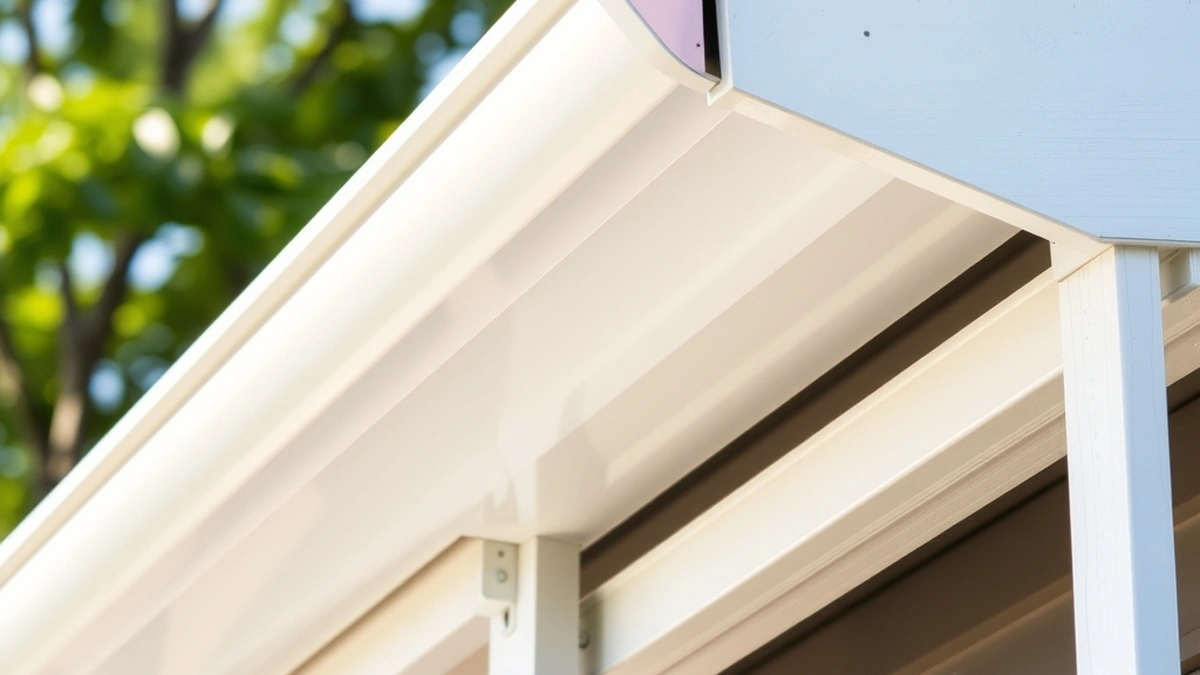
LeafGuard is a seamless aluminum cover that combines the gutter and the guard in one formed piece. Instead of a mesh panel sitting on top of an existing trough, the cover’s curved nose uses surface tension to draw rainwater around the edge and into the channel while leaves and debris slide off the front.
That one-piece design is the product’s main technical argument. There is no separate guard to come loose, no clips to fail, and no gap between cover and gutter for debris to enter. It also means the system replaces the gutter rather than adding to it, which is why the price is higher than a guard-only install and why it only makes sense when the existing gutter is due for replacement anyway.
What the System Costs
Pricing is set at the in-home consultation, so there is no published list price to compare against. What the market consistently shows is a dealer-installed range of $3,000 to $8,000 for a typical single-family house, with the figure moving on footage, roof height, and how many runs need custom forming.
| Scenario | Estimated installed cost |
|---|---|
| Single story, 150 ft, simple roofline | $3,000–$5,000 |
| Single story, 200 ft, average complexity | $4,000–$6,500 |
| Two story, 200 ft, dormers or valleys | $5,500–$8,000 |
| Two story, 250 ft and up | Top of the $3,000–$8,000 band |
Those are estimates built from the dealer range and how labor scales, not published quotes. Treat the table as a budget band and expect the actual number to be set in the home. Above roughly 250 linear feet on a two-story house, quotes sit at the top of that band, and some dealers price beyond it.
Per Linear Foot
Dealer quotes arrive as a single figure, so convert before comparing. Divide the total by the linear footage of gutter on the house.
On a 200-foot run, $3,000 is $15.00 per foot and $8,000 is $40.00 per foot. The same money on a 150-foot house is $20.00 to $53.33 per foot, because the fixed costs of the sales visit and mobilization are spread over less material. On a 250-foot house it drops to $12.00 to $32.00 per foot.
That conversion is the single most useful step in evaluating the quote, because it makes the system comparable to a local reverse-curve bid, which is usually quoted in exactly those terms. A local install at $2,000 to $5,000 on 200 feet is $10 to $25 per foot. The dealer premium is then visible as a dollar figure per foot rather than a feeling.
LeafGuard vs a Locally Installed Reverse Curve
The two products work on the same principle, and the differences are in construction and support rather than in physics.
| Factor | LeafGuard dealer system | Local reverse-curve install |
|---|---|---|
| Installed cost | $3,000–$8,000 | $2,000–$5,000 |
| Construction | One-piece formed aluminum | Cover fitted to existing gutter |
| Warranty | Factory-backed, often transferable | Contractor-backed, varies widely |
| Service network | Regional company crews | One local business |
| Best fit | Gutter replacement due anyway | Sound gutter, guard added |
The one-piece construction is a real advantage when the existing gutter is failing, because you are replacing both at once and the joint between them disappears. It is a poor value when the existing gutter is sound, since you are paying to discard a working trough.
Warranty durability is the other consideration. A regional dealer is more likely to exist in year twelve than a two-person outfit, and a transferable warranty has real value at resale. Weigh that against the $1,000 to $3,000 premium honestly rather than dismissing either side.
What the Dealer Price Includes
The quoted figure bundles several things, and knowing which ones matter to you is how you decide whether the premium is worth paying.
- The formed cover and gutter in one piece, cut to your roofline
- Removal and disposal of the existing gutter and any old guard
- Installation by the dealer’s own crew
- A factory-backed warranty, typically transferable to a new owner
- A service commitment for clog callbacks, whose terms vary by dealer and region
- The in-home consultation and measurement visit
Local quotes typically itemize removal, material, and labor separately, and may or may not include disposal. Neither format is dishonest, but only the itemized one lets you see what you are paying for each part.
Questions to Ask the Dealer
- Ask for the total and the linear footage in writing, so you can compute the per-foot price.
- Ask whether the existing gutter is removed and replaced, or covered in place.
- Ask what the warranty covers, whether labor is included, and whether it transfers on sale.
- Ask what counts as a clog under the service commitment, and whether surface clearing is included.
- Ask for the cash price and the financed total separately, since monthly payment framing hides the interest.
- Ask what happens to the price if fascia repair is needed once the old gutter comes off.
Take the written quote away and get one local reverse-curve bid to compare against it. If the dealer will not leave a number, that is information too. Our guide to finding a gutter guard contractor near you covers what the local bid should contain.
Bottom Line
A LeafGuard system runs $3,000 to $8,000 installed, or $15 to $40 per linear foot on a 200-foot house, against $2,000 to $5,000 for a locally installed reverse-curve guard. The premium buys one-piece construction, a factory warranty, and a service network, and it is easiest to justify when the existing gutter needs replacing anyway. Divide every quote by your footage before deciding. For the comparable micro-mesh option, see leaf filter cost; for reverse-curve performance issues, read reverse curve problems.
Frequently asked questions
How much does LeafGuard cost?
LeafGuard-style systems typically run $3,000 to $8,000 installed, with the exact figure set at an in-home consultation rather than published as a list price.
How much is LeafGuard per foot?
On a 200-foot gutter run, $3,000 to $8,000 works out to $15 to $40 per linear foot installed, including material and labor.
Is LeafGuard cheaper than LeafFilter?
Both sit in the $3,000 to $8,000 dealer band. LeafGuard is a one-piece reverse-curve system; LeafFilter-style products use micro-mesh, so the products differ more than the prices.
Why is LeafGuard more expensive than a local reverse-curve install?
The dealer price includes an in-home sales process, a factory-backed warranty, and a service network. Local installers fit comparable reverse-curve profiles at $2,000 to $5,000.
Does LeafGuard really stop clogs?
It keeps debris out of the trough by design, but no system eliminates maintenance. Surface debris still collects on the nose and should be cleared periodically.
Can LeafGuard be installed on any roof?
The system is formed to match the gutter and roof edge, so steep pitches, unusual profiles, and some roofline shapes limit where it can go. The dealer should confirm fit on site.
Sources
Some links are affiliate links.If you buy through them we may earn a commission at no extra cost to you. We do not accept payment for rankings. Read the full disclosure.